Why does foundation shade matching matter for melanin-rich skin?
Foundation for melanin-rich skin requires precise shade matching with undertone accuracy (warm, cool, neutral) because darker skin tones show mismatches more visibly, creating ashy or orange casts. Proper foundation should blend seamlessly, enhance your natural beauty, and be formulated specifically for deeper skin tones, not adapted as an afterthought. Representation in beauty means having options designed for you from the start, with shades that honor the full spectrum of Black and Brown skin.

The clinic borrowed the beauty aisle's homework
When three dermatologic surgeons set out in 2023 to update the Fitzpatrick scale, the instrument dermatology had used for half a century, they did not start from clinical data. They record that "an extensive internet search was conducted using makeup foundation ranges as a starting point for skin tone matching", and found that "Fitzpatrick types 4 and 5 ratings were the most confusing". 1 The cosmetics industry's shade work, driven by customers who would not accept two token dark shades, had become finer grained than the clinical standard. Your insistence on a real match quietly improved medicine's ruler.

People rated the scales themselves
A survey of 2,214 people in the United States compared three ways of describing skin tone and found "the Fitzpatrick scale is perceived to be less inclusive than the Fenty and Monk skin tone scales", most strongly among people from communities the older scale served worst. 2 Perception is not clinical validity, and it does not need to be: a forty-shade range simply describes more people than a six-point scale, and the people being described noticed.

Why announcements are not enough
Seven consumer studies published in 2024 looked at how people respond when a brand announces an inclusive shade extension, and found "those who feel underrepresented have less favorable responses than those who feel represented", an effect the authors trace to doubt that the new shades will actually match. 3 That skepticism was earned by every range that treated deep shades as an afterthought. The only answer to it is the product itself: depth built with undertone accuracy, worn on real skin, in real light.

Built for depth, on your terms
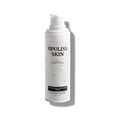
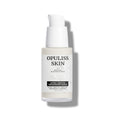
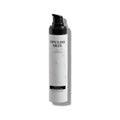
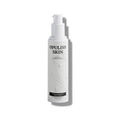
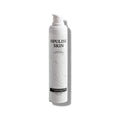
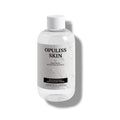
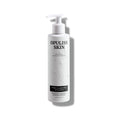
That is the standard the Opuliss complexion range is built against: shades organised by depth and undertone rather than tacked onto the end, finishes that set without casting grey, and formulas meant to hold from morning through evening.

The message in the mirror
A foundation that matches perfectly is not vanity, and it is no longer a small thing to ask. The research now says what the mirror always did: the range that fits you was supposed to exist all along. Wear it on your terms.
Welcome to The World of Opuliss
Foundation is where representation stops being abstract. Either the shade exists and blends, or it does not. What has changed in the last few years is that the research caught up with what every deep-skinned shopper already knew, and it did so in three findings worth reading before the next bottle.
- The radiant base. Foundation Maple for a dewy, buildable glow with warmth kept true.
- The set that never mutes. Dual Blend Powder Foundation in Royal, wet or dry, for rich depth with a clean matte finish.
- The lock. The Ultra Fine Finishing Powder for a shine-free hold that leaves tone alone.
- The dimension. Bronzer in Caramel for sun-kissed warmth that reads as light, not dust.
- The flush. The Talc Free Blush in Macaron for a seamless finish that shows up on deep skin.
Find your depth and undertone across the full Foundation collection.
References
- Coleman W, Mariwalla K, Grimes P. Updating the Fitzpatrick Classification: The Skin Color and Ethnicity Scale. Dermatol Surg. 2023;49(8):725-731. PMID 37523593. doi.org/10.1097/DSS.0000000000003860
- Heldreth CM, Monk EP, Clark AT, et al. Which Skin Tone Measures Are the Most Inclusive? An Investigation of Skin Tone Measures for Artificial Intelligence. ACM Journal on Responsible Computing. 2024;1(1):1-21. doi.org/10.1145/3632120
- D'Angelo JK, Dunn L, Valsesia F. Is This for Me? Differential Responses to Skin Tone Inclusivity Initiatives by Underrepresented Consumers and Represented Consumers. Journal of Marketing. 2024;89(2):25-42. doi.org/10.1177/00222429241268634