A science-backed alternative to La Mer for a compromised moisture barrier
The short answer. If you are looking for a science-backed alternative to Crème de la Mer for dehydrated, barrier-compromised skin, the more useful question is not "what is a cheaper La Mer," it is "what actually rebuilds a moisture barrier." Crème de la Mer softens and seals skin with a heavy occlusive base and a proprietary algae ferment. A ceramide-first cream takes a different route: it resupplies the specific lipids the barrier is built from. Below is the honest, ingredient-by-ingredient case, with every claim sourced, and where the Opuliss Ceramide Barrier Night Cream fits.
What Crème de la Mer actually is
Read past the story and Crème de la Mer is a rich, largely anhydrous balm. On its official ingredient list, the first three ingredients are Algae (Seaweed) Extract, Mineral Oil, and Petrolatum. Water sits far down the list, after the oils, waxes and mineral salts. Its signature is the trademarked Miracle Broth, a fermented sea-kelp ingredient, and La Mer sells it as an Anti-Aging Moisturizing Face Cream that, in the brand's words, helps repair the skin barrier. Retail is $100 for 0.5 oz, $200 for 1 oz, $390 for 2 oz, and $645 for 3.4 oz (official site, 2026).
Two things are true at once, and both matter:
- The moisturizing mechanism is real, and it is well understood. Occlusives such as petrolatum and mineral oil reduce water loss by sealing the surface of the skin. That is textbook moisturization (Rajkumar et al., 2023), and a clinical review of basic emollients confirms petrolatum and plant oils improve dry skin (Wollenberg et al., 2025). Occlusion works.
- The premium is the ferment, and its evidence is the brand's own. The part of the formula you pay extra for is the proprietary, trademarked algae ferment. La Mer has published peer-reviewed research on that ferment (a 2025 Journal of Clinical and Aesthetic Dermatology paper), but the study was led by the brand and its parent company, not an independent group, and it tested a separate serum, not this cream. By contrast, every mechanism in a ceramide-first cream traces to independent, published science you can open and check.
For a luxury shopper that is a fair trade to make with eyes open. The point of this page is to show what the alternative trade looks like.
What "barrier repair" actually requires
Your skin barrier lives in the outermost layer, the stratum corneum, where flattened cells are held in a mortar of lipids. That mortar is dominated by three lipid classes: ceramides, cholesterol, and free fatty acids, stacked into ordered layers that keep water in and irritants out (van Smeden and Bouwstra, 2016; Proksch et al., 2008). When skin is dehydrated, wind-stripped, or reactive, that lipid matrix is what has thinned.
There are two ways a cream can help:
- Occlusion seals the surface so less water escapes. This is what petrolatum and mineral oil do, and it is most of what Crème de la Mer does.
- Replenishment supplies the actual barrier lipids, so the lipid matrix is restored rather than only sealed. This is what a ceramide is for. Ceramides are not an exotic active. They are the same molecule the barrier is already made of.
A well-built cream does both. Crème de la Mer is strong on occlusion and does not contain ceramides. That is the gap a ceramide-first alternative is designed to fill.
The alternative: Opuliss Ceramide Barrier Night Cream
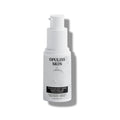
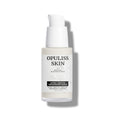
The Opuliss Ceramide Barrier Night Cream is a 50 ml overnight moisturizer built around a natural Ceramide Complex (Glycosphingolipids and Glycolipids), with Sodium Hyaluronate for surface hydration and a base of organic Cocoa Butter, Jojoba Seed Oil, and Sunflower Seed Oil. It is 99% natural origin, 27% organic origin, and vegan eligible.
- The Ceramide Complex supplies ceramide-family barrier lipids to help condition and comfort the look of the overnight barrier (van Smeden and Bouwstra, 2016).
- Sodium Hyaluronate, a humectant, draws water to the surface for immediate hydration (Rajkumar et al., 2023).
- The plant-oil emollient base softens dry skin and lends its own occlusive, barrier-supporting benefit, so the cream seals as well as replenishes (Lin et al., 2018).
Every mechanism above links to a citation you can open. That is the whole idea: where Crème de la Mer asks you to trust a proprietary ferment, the Opuliss cream shows its work.
A note on honesty, because it is the brand's entire premise: this cream is not free of all fragrance compounds. It adds no fragrance (Parfum) and no denatured alcohol, but it does contain the naturally occurring fragrance compounds Linalool and Limonene from its plant oils, and the label says so. By contrast, Crème de la Mer adds Fragrance (Parfum), Alcohol Denat., and a broader set of fragrance allergens, including Limonene, Geraniol, Linalool, Citronellol and Citral. If your skin is reactive, that difference is worth reading.
Side by side
| Crème de la Mer | Opuliss Ceramide Barrier Night Cream | |
|---|---|---|
| The job | Anti-aging and barrier repair (brand's own positioning) | Overnight barrier comfort for dry and sensitive skin |
| How it moisturizes | Occlusion (Mineral Oil, Petrolatum) + a proprietary algae ferment | Ceramide replenishment + humectant (Sodium Hyaluronate) + plant-oil emollient base |
| Ceramides | None | Natural Ceramide Complex (Glycosphingolipids + Glycolipids) |
| Evidence you can read | The proprietary ferment's claims are the brand's own | Every mechanism cited to independent peer-reviewed sources |
| Added fragrance / alcohol | Adds Parfum + Alcohol Denat. + a broad allergen set | No added Parfum or denatured alcohol. Discloses naturally occurring Linalool + Limonene |
| Size / price | 2 oz / $390 (0.5 oz / $100 to 3.4 oz / $645) | 50 ml / $281 |
Which one is for you
- Choose Crème de la Mer if the ritual, the texture, and the heritage are part of what you are buying, and a proprietary ferment at a luxury price is a trade you are happy to make.
- Choose a ceramide-first cream like the Opuliss Ceramide Barrier Night Cream if you want an overnight barrier-repair routine built on the lipids skin already uses, no added fragrance or alcohol, and a formula whose every claim traces to a source you can check.
Same job, two philosophies: a proprietary formula you take on trust, or a mechanism you can read the evidence for. Opuliss is built for the second kind of shopper.
Frequently asked
Does Crème de la Mer contain ceramides? No. Its barrier support comes from occlusion (mineral oil and petrolatum) and a proprietary algae ferment. Ceramides are the lipids the skin barrier is actually built from (van Smeden and Bouwstra, 2016), and they are not in the formula.
What is a science-backed alternative to La Mer for a damaged moisture barrier? A ceramide-first moisturizer, one that resupplies barrier lipids rather than only sealing the surface. The Opuliss Ceramide Barrier Night Cream is built on a natural Ceramide Complex with Sodium Hyaluronate and a plant-oil base, with every mechanism cited.
Is Crème de la Mer good for sensitive skin? It is a rich, effective occlusive, but it contains added fragrance, denatured alcohol, and several fragrance allergens, which are common triggers for reactive skin. Read the label against your own tolerances.
Why is La Mer so expensive? Much of the price likely reflects the brand, the packaging, and the proprietary ferment rather than the moisturizing mechanism itself. The occlusion that does the visible work, petrolatum and plant oils, is well understood and among the most accessible ingredients in skincare (Wollenberg et al., 2025).
What is the difference between occlusion and barrier repair? Occlusion seals water in from the surface (what petrolatum does). Barrier repair resupplies the ceramides, fatty acids and cholesterol the barrier is made of, so the barrier's own lipids are restored, not just sealed over (Rajkumar et al., 2023; van Smeden and Bouwstra, 2016). The strongest creams do both.
References
- Rajkumar J, Chandan N, Lio P, Shi V. The Skin Barrier and Moisturization: Function, Disruption, and Mechanisms of Repair. Skin Pharmacol Physiol. 2023;36(4):174-185. DOI 10.1159/000534136.
- van Smeden J, Bouwstra JA. Stratum Corneum Lipids: Their Role for the Skin Barrier Function in Healthy Subjects and Atopic Dermatitis Patients. Curr Probl Dermatol. 2016;49:8-26. DOI 10.1159/000441540.
- Proksch E, Brandner JM, Jensen JM. The skin: an indispensable barrier. Exp Dermatol. 2008;17(12):1063-1072. DOI 10.1111/j.1600-0625.2008.00786.x.
- Lin TK, Zhong L, Santiago JL. Anti-Inflammatory and Skin Barrier Repair Effects of Topical Application of Some Plant Oils. Int J Mol Sci. 2018;19(1):70. DOI 10.3390/ijms19010070.
- Wollenberg A, Barbarot S, Torrelo A. Basic Emollients for Xerosis Cutis in Atopic Dermatitis: A Review of Clinical Studies. Int J Dermatol. 2025;64(Suppl 1):13-28. DOI 10.1111/ijd.17793.
- Santhanam U, Emmetsberger J, Nole G, Ortiz A, Gold M, Saliou C. A Topical Formulation Containing Macrocystis Pyrifera Ferment for Managing Barrier Damage After Mild-Moderate Skin Disruption from Cosmetic Dermatologic Procedures. J Clin Aesthet Dermatol. 2025;18(1):40-45. PMID 39830829; PMCID PMC11741175. (La Mer / Estee Lauder brand-led research on the MPF-Serum, referenced above for balance. It studies a serum, not this cream.)
Last reviewed: 2026-07-11. Ingredient lists and prices are current as of this date. Brand formulations and pricing change, and this page will be re-verified on update.