Hydration is only half the story. Lasting moisture depends on a resilient barrier and a balanced skin microbiome, not water alone.
Discover the Hyaluronic Prebiotic GelThe Molecule
What Is Hyaluronic Acid?
Hyaluronic Acid is a naturally occurring glycosaminoglycan, a sugar molecule that sits within the skin's extracellular matrix and binds water. It is one of the most studied humectants in cosmetic science, valued for holding many times its own weight in water, up to roughly 1,000 times by the most commonly cited figure.6
Applied to the skin, it draws and holds moisture in the stratum corneum, the outermost layer, leaving the surface feeling supple, smooth and comfortable.6 Hyaluronic acid and its salts are assessed as safe as used in cosmetics by the Cosmetic Ingredient Review.8
Why Ours Is Different
The Molecular Weight Difference
Not all Hyaluronic Acid behaves the same way. Its molecular weight decides where it works, and the honest picture is more precise than the marketing shorthand you may have read.
A surface film
High molecular weight
Native high-molecular-weight HA stays on the skin's surface, where it forms a smoothing, moisture-holding film. It does not penetrate.23
Into the upper layers
Low molecular weight
Low-molecular-weight HA passes the stratum corneum into the upper epidermis,2 where around 50 kDa has been shown to upregulate epidermal proteins involved in the tight junctions that hold skin cells together.4
Measured results
Multiple weights
In a controlled 60-day study of 76 people, every weight improved skin hydration and elasticity, and the lower weights (50 and 130 kDa) also measurably reduced the depth of fine lines around the eye.1 In dry, mature skin, low-weight HA outperformed high-weight HA on hydration.5
We say into the upper layers of the skin, never "to the dermis."
The evidence does not support high-weight Hyaluronic Acid reaching the dermis, so we will not claim it. Multi-weight HA is how a single formula works at the surface and in the upper layers at once.
The Part Most Brands Skip
Beyond Water: Hyaluronic and the Skin Microbiome
Water is the first pillar of hydration. The other two are the barrier and the microbiome. A balanced skin microbiome helps maintain barrier integrity, and prebiotic and postbiotic support can help restore that balance when it is disrupted.7
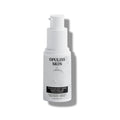
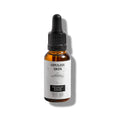
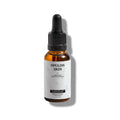
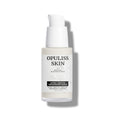
This is where Opuliss goes further than a serum built on Hyaluronic Acid alone. Our Hyaluronic Prebiotic Hydrating Gel pairs multi-weight HA with a prebiotic complex, and our Postbiotic Calm Serum pairs it with a Lactobacillus ferment postbiotic, so you hydrate the surface and support the ecosystem that keeps the barrier comfortable.
In Practice
Who It Is For, and How to Layer It
Hyaluronic Acid suits every skin type, oily and sensitive included. The order matters more than the number of steps.
Cleanse. Start on freshly cleansed skin.
Essence. Press in the Rosa Damascena Hydration Essence to leave the skin damp.
Hydrate. Apply your Hyaluronic gel or serum to damp skin, so it has water to hold.
Seal. Follow with a moisturizer to lock that moisture in.
Morning. Finish your daytime routine with a broad-spectrum sunscreen.
Dry or dehydrated? Dehydrated skin lacks water, which is exactly what Hyaluronic Acid addresses. Dry skin lacks oil, and needs the barrier lipids in a richer cream. Many people are both, which is why we pair HA with barrier care rather than choosing one.
The Edit
The Hyaluronic Collection
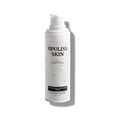
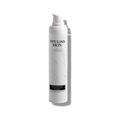
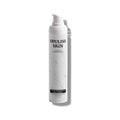
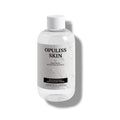
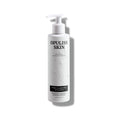
Every formula below is built on multi-weight Hyaluronic Acid, grounded in the live Opuliss Skin line.


Keep Reading
From the Opuliss Journal

References
- Pavicic T, et al. Efficacy of cream-based novel formulations of hyaluronic acid of different molecular weights in anti-wrinkle treatment. J Drugs Dermatol. 2011;10(9):990-1000. PMID 22052267.
- Essendoubi M, et al. Human skin penetration of hyaluronic acid of different molecular weights as probed by Raman spectroscopy. Skin Res Technol. 2016;22(1):55-62. DOI 10.1111/srt.12228.
- De Tollenaere M, et al. High molecular weight hyaluronic acid vectorised with clay provides long-term hydration. Skin Res Technol. 2024;30(4):e13672. DOI 10.1111/srt.13672. (Cited for the baseline finding that native high-weight HA stays at the surface.)
- Farwick M, et al. Fifty-kDa hyaluronic acid upregulates some epidermal genes without changing TNF-alpha expression in reconstituted epidermis. Skin Pharmacol Physiol. 2011;24(4):210-217. DOI 10.1159/000324296.
- Muhammad P, et al. Effectiveness of topical hyaluronic acid of different molecular weights in xerosis cutis treatment in elderly: a double-blind, randomized controlled trial. Arch Dermatol Res. 2024;316(6):329. DOI 10.1007/s00403-024-03003-2.
- Bravo B, et al. Benefits of topical hyaluronic acid for skin quality and signs of skin aging. Dermatol Ther. 2022;35(12):e15903. DOI 10.1111/dth.15903.
- Haykal D, et al. Dermatological health in the light of skin microbiome evolution. J Cosmet Dermatol. 2024;23(12):3836-3846. DOI 10.1111/jocd.16557.
- Cosmetic Ingredient Review. Safety Assessment of Hyaluronates as Used in Cosmetics. Final Report, 2023. Safety status only.