Opuliss Skin
Understanding SPF
Why daily sun protection is the most evidence-backed step in skin longevity.
A note on what this guide is. Opuliss does not formulate or sell sunscreen. This is an educational guide. When we say apply SPF, we mean a broad-spectrum sunscreen of your choice, applied as the final step over your Opuliss ritual.
The evidence
Sunlight has real benefits. Chronic exposure is the single largest driver of how skin visibly ages.
Two randomized controlled trials, the strongest form of evidence, show what daily broad-spectrum protection actually does over years, not marketing claims.
In a 4.5 year randomized trial of 903 adults, those who applied broad-spectrum sunscreen daily showed 24 percent less visible skin aging than those who used it at their discretion.
Hughes et al., Annals of Internal Medicine, 2013In a randomized trial of 1,621 adults, those who used sunscreen daily developed about half as many new melanomas over ten years, 11 versus 22, with a statistically significant reduction in invasive melanoma.
Green et al., Journal of Clinical Oncology, 2011
The spectrum
How UVB, UVA, and visible light reach your skin.
Most guides lump the rays together. They behave differently, and that is the whole reason the SPF number tells only part of the story.
The burning ray
Roughly 290 to 320 nm, reaches the epidermis
Causes sunburn and direct DNA damage in the skin's surface layers. This is the ray the SPF number is measured against.
The aging ray
Roughly 320 to 400 nm, reaches the dermis
Drives collagen breakdown, fine lines, and pigmentation. Present year round, at consistent levels through the day, and it passes through window glass.
The contributors
400 nm and beyond
Add to free-radical load and can contribute to pigmentation. Read relative to your own skin, not against anyone else's standard.

Decoded
What the SPF number actually measures.
SPF measures protection from UVB, the sunburn ray, specifically. The label term broad spectrum is what tells you UVA is covered too (US Food and Drug Administration). By definition a sunscreen admits one part in SPF of burning rays, so the filtered share rises steeply and then flattens.
No sunscreen blocks 100 percent, and the gains above 50 are small. The FDA floor for meaningful protection is broad-spectrum SPF 15 or higher; dermatology consensus leans toward SPF 30 or higher for daily defense. The percentages above are derived from the FDA definition of SPF, not a product test.
Application
The part almost everyone gets wrong.
SPF is certified in the lab at 2 mg per square centimeter. In real life people apply only about 0.39 to 1.0 mg per square centimeter, which sharply reduces the protection they actually receive (Petersen and Wulf, Photodermatology Photoimmunology and Photomedicine, 2014).

The two-finger rule: about a quarter teaspoon for the face and neck.
Two-finger rule
About a quarter teaspoon for the face and neck, roughly two full lines squeezed along your index and middle fingers.
Every 2 hours
Reapply at least every two hours outdoors, and after swimming, sweating, or towel drying (FDA).
Shade and cloth
Pair sunscreen with shade during peak hours, about 10am to 2pm, and protective clothing. Sunscreen is one layer, not the only one.
Where Opuliss fits
Layer SPF as the final step over your morning ritual.
Your Opuliss products support skin health. They are not sunscreen and do not provide sun protection. Sunscreen goes on last, over everything.
Cleanse
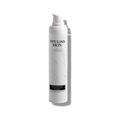
Calendula Cleansing Foam, a gentle morning wash to start on clean skin.
Treat
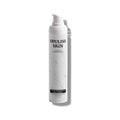
Marine Ferment Glow Serum or Postbiotic Calm Serum for antioxidant and barrier support.
Supports skin health. Not a substitute for sunscreen.
Moisturize
A day moisturizer to seal in hydration before your final step.
Sun protection
Your broad-spectrum sunscreen of choice, SPF 30 or higher, applied last and reapplied through the day.
Opuliss does not make this step. Choose any broad-spectrum sunscreen you trust.
Recover at night
Ceramide Barrier Night Cream with Postbiotic Calm Serum to support the barrier after a day of exposure.
Questions
Sun protection, answered.
Does SPF go over or under moisturizer?
Over. Sunscreen is the final step of your morning routine, applied after your moisturizer so it forms the outermost layer on the skin.
Is SPF 50 much better than SPF 30?
Only marginally. SPF 30 filters about 97 percent of UVB and SPF 50 about 98 percent. How evenly you apply it and how often you reapply matter far more than the number on the bottle.
Do I need SPF indoors or in winter?
UVA is present year round and passes through window glass, so daytime exposure near windows or while driving still reaches your skin. Daily broad-spectrum protection is the habit that pays off over years.
Does Opuliss make a sunscreen?
No. Opuliss makes skincare designed to support skin health. For sun protection, use a broad-spectrum sunscreen of your choice as the final step over your Opuliss ritual.
References
Hughes MCB, Williams GM, Baker P, Green AC. Sunscreen and prevention of skin aging: a randomized trial. Annals of Internal Medicine, 2013;158(11):781 to 790.
Green AC, Williams GM, Logan V, Strutton GM. Reduced melanoma after regular sunscreen use: randomized trial follow-up. Journal of Clinical Oncology, 2011;29(3):257 to 263.
Petersen B, Wulf HC. Application of sunscreen, theory and reality. Photodermatology Photoimmunology and Photomedicine, 2014;30(2 to 3):96 to 101.
US Food and Drug Administration, consumer guidance on sunscreen use and labeling.