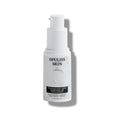
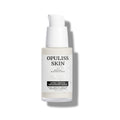
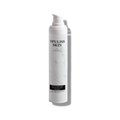
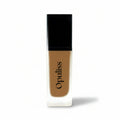
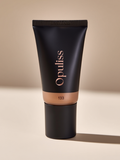
Beachy BB Cream
- Pearly $100.00
- Wheat $100.00
- Vanilla $100.00
- Terra Cotta $100.00
- Buttercream $100.00
- Tan $100.00
- Beachy $100.00
- Sienna Love $100.00
- Birch $100.00
Complimentary shipping on orders of $100 or more. Read the returns policy before you buy.
Need help? Contact us
The formula
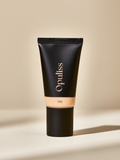
A tinted water-in-silicone BB cream that evens tone with light, buildable coverage and a natural, radiant finish. Soft polymer spheres blur the look of pores and uneven texture,1 while a lightweight silicone and emollient base lets the tint melt into skin rather than sit on top. It is formulated with the humectants glycerin and sodium hyaluronate for a fresh, comfortable feel.2
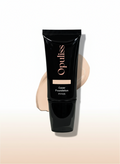
Beachy is a medium shade with warm, golden undertones, made for medium skin.
Finish: natural, radiant · Coverage: light to medium, buildable
Net 1 fl oz (30 mL). Paraben-free. Cruelty-free. Made in North America.
1 Describes the formula's optics, not a clinical measurement.
2 Glycerin and sodium hyaluronate are humectants that hold water at the skin's surface. Stated at the ingredient level.
The science
3 skin parameters improved
Sodium Hyaluronate at 0.5% concentration confirmed to deliver significant improvements in skin hydration, elasticity, and firmness across all measured parameters in a published clinical study, supporting its inclusion as an active conditioning agent in this all-in-one BB cream formula.1
Randomized double-blind trial
Glycerin confirmed to measurably reduce transepidermal water loss and improve corneometric hydration levels in a controlled clinical study, validating its role as an active humectant in this daily-wear BB cream formula.2
2 peer-reviewed studies
Tocopheryl Acetate backed by published research confirming both conversion to bioavailable free tocopherol at the skin surface and measurable antioxidant activity in the stratum corneum of leave-on cosmetic applications at concentrations below 1%.3,4
339 subjects tested
Sorbitan Sesquioleate classified as a nonsensitizer across four human repeat insult patch tests totaling 339 subjects at cosmetic use concentrations, with no irritation observed in maximization testing.5
1Zanchetta B et al. Biomolecules, 2025. DOI: 10.3390/biom15121656
2Budianti W et al. Scientific Reports, 2024. DOI: 10.1038/s41598-024-72010-0
3Beijersbergen van Henegouwen GMJ et al. Journal of Photochemistry and Photobiology B, 1995. DOI: 10.1016/1011-1344(95)90251-1
4Thiele JJ et al. Current Problems in Dermatology, 2001. DOI: 10.1159/000060651
5Fiume MZ et al. International Journal of Toxicology, 2019. DOI: 10.1177/1091581819871877
In this formula
-
Texture and Blur
Aluminum Hydroxide
Aluminum Hydroxide is an inorganic compound. It appears in 30 products in our range.
-
Silicone and Slip
Cetyl PEG/PPG-10/1 Dimethicone
It stabilises water-in-silicone emulsions, so the formula does not split in the bottle. It appears in 30 products in our range.
-
Suspension and Rheology
Magnesium Sulfate
Magnesium Sulfate is an electrolyte used to fine-tune emulsion viscosity. It appears in 30 products in our range.
-
Suspension and Rheology
Polyglyceryl-4 Isostearate
It is an emulsifier. It lets the oil and water phases stay in one stable mixture. It appears in 30 products in our range.
-
Emollient and Oil
Dicaprylyl Carbonate
Dicaprylyl Carbonate is a light, fast-spreading emollient ester, giving a dry, velvety skin feel and helping disperse the pigment load. It appears in 35 products in our range.
The shade range


Complete the look
-
 Silicone Matte PrimerSmooth a pore blurring base under Beachy so it lays down flawless and lasts.$85.00
-
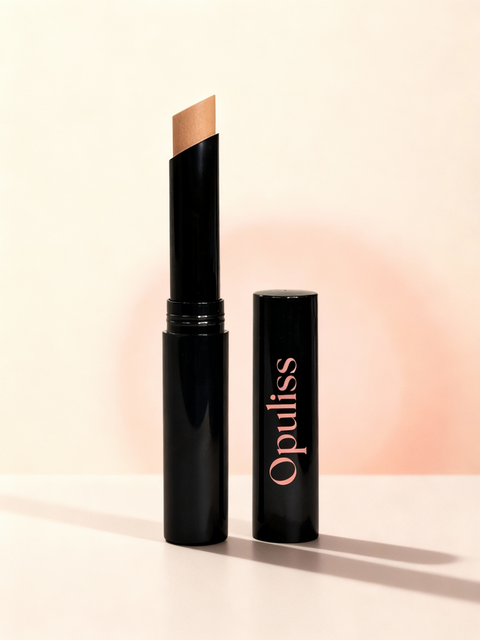 Beige Concealer StickCover blemishes and shadows with a light concealer, then tap it into the base.$70.00
-
 Finishing PowderA dusting of fine powder locks the base so it wears from morning to night.$100.00