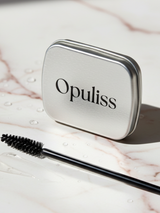
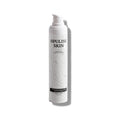
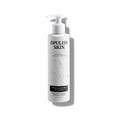
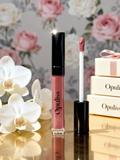
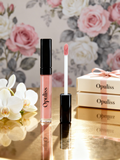
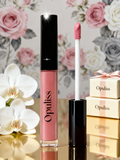
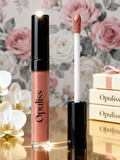
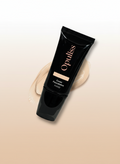
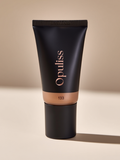
Clear Brow Soap
$41.00
Complimentary shipping on orders of $100 or more. Read the returns policy before you buy.
Need help? Contact us
The formula
A clear brow-styling soap that lifts, shapes and sets the brows into a full, feathered, laminated look with a strong, flexible hold. A saponified base of coconut and palm oils grips each hair and holds brushed-up brows in shape through the day, for a soft, groomed finish. The tint-free bar suits every brow color and layers cleanly with brow pencil or powder.
To use, sweep a damp spoolie across the bar, then brush the brows up and out into shape.
Hold: strong, flexible · Clear, tint-free
Paraben-free. Cruelty-free. Made in North America.
The science
Only oil to reduce hair protein loss
Coconut Oil confirmed as the sole oil among three tested to significantly reduce protein loss from both undamaged and damaged hair, attributed to its low molecular weight lauric acid structure penetrating the hair shaft and binding directly to hair proteins.1
51% reduction in eczema severity scores
Oat Protein at 1% concentration delivered a 51% reduction in mean Eczema Area Severity Index scores over 14 days in a randomized clinical trial of 61 subjects, with simultaneous improvements in skin pH, barrier function, and hydration confirmed from baseline.2
339 subjects tested
Sorbitan Oleate evaluated as a nonsensitizer across four human repeat insult patch tests totaling 339 subjects at 1.75% to 2.0% concentration, with no irritation observed in maximization testing at cosmetic use range.3
Randomized double-blind trial
Glycerin confirmed to measurably reduce transepidermal water loss and improve corneometric hydration levels in a controlled clinical study, supporting its role as an active humectant in leave-on brow styling formulas.4
1Rele AS and Mohile RB. Journal of Cosmetic Science, 2003. PMID: 12715094
2Capone K et al. Journal of Drugs in Dermatology, 2020. PMID: 32484623
3Fiume MM et al. International Journal of Toxicology, 2019. DOI: 10.1177/1091581819871877
4Budianti W et al. Scientific Reports, 2024. DOI: 10.1038/s41598-024-72010-0
In this formula
-
Suspension and Rheology
Sorbitan Oleate
Sorbitan Oleate is part of the emulsifier system. It appears in 22 products in our range.
-
Humectant and Conditioning
Propylene Glycol
It works as a solvent and humectant, carrying other ingredients and holding moisture in the formula. It appears in 46 products in our range.