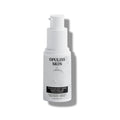
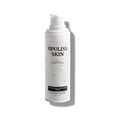
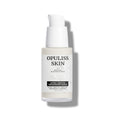
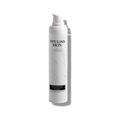
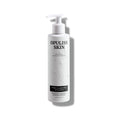
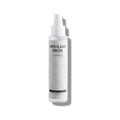
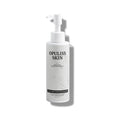
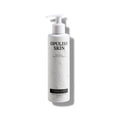
COLOR PRESERVE SHAMPOO
A gentle 400 ml daily shampoo for colour-treated hair, built on a sulfate-light botanical system. Hydrolyzed Wheat Protein, a film-former and skin-conditioning agent, conditions the cuticle and acts as a mild humectant, while Aloe Barbadensis Leaf Juice comforts a sensitive scalp and Brassicyl Isoleucinate Esylate smooths during the rinse, leaving hair soft, conditioned, and comforted.
Backed by published research · references belowHow subscriptions work
- Your ritual, uninterrupted. Each refill arrives before the last one runs out, at 20% off with complimentary shipping, every time.
- We email you ten days before each refill ships, and you are only billed on the day it ships.
- Pause, skip a delivery, or cancel whenever you wish. No minimum commitment.
Subscription pricing carries its own saving and does not combine with other offers or codes.
Formulated for Sensitive Skin.
- Aloe Barbadensis Leaf Juice, at INCI position 1, a skin-conditioning botanical that supplies the aqueous base and comforts sensitive scalp.
- Hydrolyzed Wheat Protein, a skin- and hair-conditioning agent reviewed for cosmetic use by the Cosmetic Ingredient Review Expert Panel1.
- Brassicyl Isoleucinate Esylate, a plant-derived cationic conditioning agent from rapeseed oil that deposits on the cuticle during the rinse window to support smoothing and detangling.
Hero mechanism: Hydrolyzed Wheat Protein, a hair-conditioning and skin-conditioning agent, functions as a film-former and mild humectant. Full mechanism and citations under Details and references.
The Opuliss Skin Color Preserve Shampoo is a 400 ml / 13.53 fl oz gentle cleansing shampoo built on a three-active botanical stack, with Aloe Barbadensis Leaf Juice as the aqueous base, Hydrolyzed Wheat Protein for cuticle conditioning, and Brassicyl Isoleucinate Esylate, a rapeseed-derived conditioning agent. The sulfate-light surfactant blend cleanses without the aggressive defatting that can strip semi-permanent hair colour. The formula is 98% natural origin, 7% organic origin, and vegan eligible.
Aloe Barbadensis Leaf Juice, Hydrolyzed Wheat Protein, Brassicyl Isoleucinate Esylate.
Active ingredients: Aloe Barbadensis Leaf Juice, a skin-conditioning botanical base; Hydrolyzed Wheat Protein, a film-former and skin-conditioning agent; Brassicyl Isoleucinate Esylate, a plant-derived cationic conditioning agent. Carried in a sulfate-light surfactant blend.
Aloe Barbadensis (Aloe) Leaf Juice, Sodium Coco-Sulfate, Coco-Glucoside, Cocamidopropyl Betaine, Betaine, Sodium Chloride, Aqua, Glyceryl Oleate, Parfum, Lactic Acid, Citric Acid, Benzyl Alcohol, Brassica Alcohol, Hydrolyzed Wheat Protein, Sodium Benzoate, Brassicyl Isoleucinate Esylate, Potassium Sorbate, Limonene, Citrus Aurantium Bergamia Peel Oil, Citrus Aurantium Peel Oil, Citrus Limon Peel Oil, Linalyl Acetate, Citronellol, Pinene, Linalool
The ingredient list printed on your product’s packaging is always definitive; where it differs from this page, the packaging prevails.
Apply to wet hair and massage gently to lather. Rinse thoroughly. Follow with a conditioner appropriate to your hair type. Suitable for daily use across chemically treated and colour-treated hair.
98% natural origin, 7% organic origin, vegan eligible. EU 26-allergen disclosure above the 0.01% rinse-off labelling threshold: Parfum, Limonene, Linalyl Acetate, Citronellol, Pinene, Linalool, plus the listed Bergamot, Bitter Orange, and Lemon citrus peel oil constituents. Wheat protein allergen advisory: this product contains Hydrolyzed Wheat Protein. Customers with a known wheat or gluten allergy, including a history of contact urticaria, anaphylaxis, or wheat-dependent exercise-induced anaphylaxis, should consult a healthcare provider before regular use and patch test on the inner forearm with 24-hour observation. Patch test recommended for first use. Avoid contact with eyes. Rinse with water if any product enters the eye.
- Burnett CL, Bergfeld WF, Belsito DV, et al. Safety Assessment of Hydrolyzed Wheat Protein and Hydrolyzed Wheat Gluten as Used in Cosmetics. International Journal of Toxicology. 2018. DOI 10.1177/1091581818776013. PubMed PMID 29761728.
How to cite this product page: Opuliss. Color Preserve Shampoo. Opuliss Skin product page. 2026. https://opuliss.com/products/colour-care-shampoo-peachy-grapefruit-zest
The Science
 Scalp comfort zone
Aloe Vera leaf juice is studied in cosmetics for its humectant, soothing properties, helping this colour-care shampoo cleanse gently while keeping the scalp calm and comfortable.
Source: Dal'Belo SE, et al. Skin Research and Technology, 2006 (PMID 17026654).
INSIDE THE SCIENCE
From precision-fermented actives to biomimetic complexes, discover what makes it Opuliss.

ALOE VERA
Soothes and hydrates, calming the look of stressed or sensitive skin.
Source: Fajriani NH, et al. Dermatology Reports, 2026 (PMID 42340432).

WHEAT PROTEIN
Film-forming protein that smooths and conditions the look and feel of skin and hair.
Source: CIR Expert Panel safety assessment.

RAPESEED CONDITIONER
A plant-derived conditioning complex that smooths and softens hair.
Source: EU CosIng listed function.
HOW TO USE

Apply to wet hair and massage gently to lather.
Rinse thoroughly.

Follow with a conditioner appropriate to your hair type. Suitable for daily use across chemically treated and colour-treated hair.
THE TEXTURE

The Opuliss difference
SCIENCE, MADE VISIBLE
Opuliss begins where the research ends. Every active is named, every claim is traceable, and nothing is left to promise alone.
Morning to night
A RITUAL, CONSIDERED
Each formula stands on its own and belongs to the whole. Layered with intention, morning and night, the routine becomes unmistakably yours.
A twenty four hour rhythm
THE SKIN KEEPS TIME
Skin is not the same at midnight as it is at nine in the morning. Across a single day its temperature, its acidity and the moisture it loses to the air each move on a rhythm of their own. Morning and night are not two routines. They are one, kept in time.
Yosipovitch G et al. Journal of Investigative Dermatology, 1998 (PMID 9424081). Sixteen volunteers sampled every two hours across a twenty four hour span.