The After-Shower Window: A Body Routine for Deeper Skin
Ashiness after a shower is a dry, dull surface layer that shows more on deeper skin. What a shower does to that layer, what the studies measured on bathing, cleansers and moisturising, and the order four Opuliss body products go on.
Why does my skin look ashy after a shower, and what goes on first? Washing rinses out some of the skin's own water-binding material, and the surface then dries within minutes. That dry, dull surface reads as a grey cast on deeper skin. A water-based layer goes on first, onto damp skin, then a cream or oil.
This page covers the short stretch after the water goes off: what a shower does to the skin's surface, what the studies measured, and where four Opuliss body products fit.
Why a shower can leave deeper skin looking ashy
Ashiness is the everyday name for a whitish, dull cast over brown and Black skin, most often on the lower legs, forearms and elbows. It sits on the outermost layer, dried out and dulled, which is the part a shower acts on. That is why this page is about water and the surface, and never about changing colour. The aim is skin that looks like itself, hydrated and even.
What a shower does to the surface of the skin
Three things happen at once, and each has been measured.
The water takes something with it. The outer layer holds water partly through small molecules known as natural moisturising factor. In healthy volunteers, a ten-minute soak cut the rate at which skin took up moisture for five hours. A natural moisturising factor formula applied afterwards raised that rate again, so the authors put the drop down to those molecules being washed out.3
The surface water leaves fast. After forearm soaks of three to twenty minutes, hydration readings peaked straight after soaking and fell quickly within five minutes. Soak length made no significant difference, although water loss tended to rise with longer soaks.4
The cleanser adds to it. A review of cleanser science from a manufacturer's research team links harsher surfactants, which bind to the proteins and lipids of the outer layer, to the tight, dry feeling after washing. Milder surfactants interact less with skin proteins.5
Water temperature may add a fourth. In a ten-day face-washing study run in part by a cosmetics brand on its own cleansing balm, daily warm water raised the skin's water loss reading, while cool water made no significant difference.6 That study measured the face, not the body, and it compared cool against warm, so hot water was never tested at all.
What goes on first, and why that order
Skin keeps its water in two ways. Water-binding compounds inside the outer layer hold it, and lipids in and on that layer slow its escape. A narrative review, written in part by a manufacturer's formulation team, says body products for dry skin copy that pairing: humectants such as glycerin to raise hydration, and occlusive ingredients to support the barrier.7 That gives a working order.
- Wash with a mild cleanser, and cooler rather than warm on the evidence above. A longer soak added nothing in the soaking study.
- Pat the skin with a towel so it stays slightly damp.
- Put the water-based layer on first: the humectant serum, onto damp skin, which is what its own directions ask for.
- Finish with an oil where you want more slip and glow, onto damp skin too. The cream is the exception: its own directions ask for clean, dry skin, so it goes on once the towel has done its work.
A water-based product spreads easily over damp skin and puts water-binding ingredients back onto a surface the shower has partly rinsed. A lipid layer on top then sits over it. No study we found compared one layering order with another, so read the order as reasoning from how each layer works, not as a measured result.
And the rule that moisturiser must go on within three minutes? In healthy young adults, the same moisturiser applied straight after washing or half an hour later performed the same, and both raised hydration and lowered water loss against bare skin.8 The step matters more than the stopwatch. Damp skin is simply the easier moment.
What the evidence shows and does not
What it shows: ash tracks with a dry, less reflective outer layer.2 Moisturising after washing beats leaving skin bare, and a half-hour delay made no difference in healthy skin.8
The one study we found that was built around ash on deeper skin enrolled women with type IV to VI skin and visible ash. Over three weeks, a mild moisturising body wash improved water loss readings and graded dryness, participants reported less ash at every site, and a mild syndet bar did about as well. A manufacturer's research team ran it, on marketed products, not ours.1
What it does not show: whether deeper skin loses water faster in the first place. An older review counted six of eight studies finding higher water loss through Black skin than white skin.9 A later review of baseline measurements found the results too contradictory for any conclusion.10 Among the human studies here, only the two on ash were run on deeper skin by design, and the others do not report participants' skin tone in their abstracts. The only source here on hydroxyethyl urea is a safety assessment,11 and we found no published human study that isolates it on skin hydration, so results for plain urea do not carry over.
The Opuliss products for the after-shower routine
Four Opuliss Skin body products map onto that order. All four declare Parfum, and the three leave-on products also list fragrance allergens, so patch test each on the inner forearm for 24 hours first.
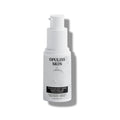
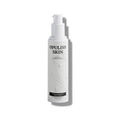
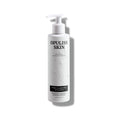
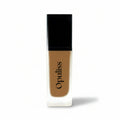
THE GENTLE BODY CLEANSER is the first step: a 390 ml body wash whose surfactants are coco-sulfate, coco-glucoside and cocamidopropyl betaine, with Acacia Senegal Gum as a film-former, plum fruit extract and linden flower extract. It is 98% natural origin and vegan eligible. The ash study tested an isethionate wash and a syndet bar, a different surfactant class from this one, so it supports choosing a mild cleanser, not this bottle.
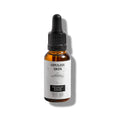
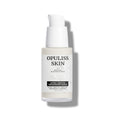
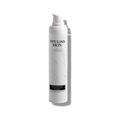
HYDRATING BODY SERUM SANDALWOOD is the water-based layer: a 270 ml serum on a humectant base of glycerin, pentylene glycol, betaine and sodium PCA, with sodium hyaluronate, jojoba and sunflower seed oils. Its directions put it onto damp skin after the shower. It is 99% natural origin and vegan eligible.
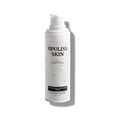
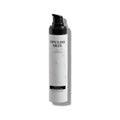
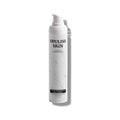
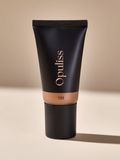
UREA RENEWAL BODY CREAM puts both layers in one step, and its own directions ask for clean, dry skin rather than damp: 5% hydroxyethyl urea, 2% panthenol, sodium hyaluronate and sodium PCA over organic sunflower seed oil and glycerin. Read the name carefully. The active is hydroxyethyl urea, a different molecule from the urea in most body-cream advice. The Expert Panel for Cosmetic Ingredient Safety reports that it functions as a humectant and skin-conditioning agent, and found it safe in the practices of use and concentration described in that assessment, when formulated to be non-irritating.11 Panthenol, the provitamin B5 here, raised hydration and lowered water loss against its base in a week-long double-blind study of its dexpanthenol form.12 Sunflower seed oil applied alone for four weeks kept the outer layer intact and raised hydration, while olive oil weakened it.13 Those studies used their own formulas, not this cream. It is vegan eligible.
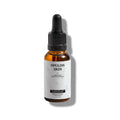
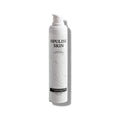
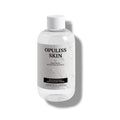
THE RADIANCE BODY OIL is the lipid layer on top: a 145 ml dry-finish blend of sunflower, sweet almond, jojoba, argan, rosehip, raspberry seed and pumpkin seed oils, with tocopherol. It is 99% natural origin, 86% organic origin and vegan eligible. Its directions give three to five drops, onto fingertips or straight onto damp skin after the shower. The sunflower study describes one oil in this blend, not the blend.
The short routine is the cleanser, then the cream once the skin is dry. The fuller one is the cleanser, then the serum onto damp skin, then the oil. Whether a glow reads as healthy or greasy on deeper skin is its own question, and the greasy or matte default looks at who set that line.
Frequently Asked Questions
Do hot showers make skin look ashy? +
We found no study that measured heat against ash directly, and the one temperature study on this page never tested hot water. It compared cool water against warm on the face over ten days: warm raised the skin's water loss reading, while cool made no significant difference. Cooler is the direction that evidence points, on the face. The body was not measured, and a cosmetics brand ran the study in part, on its own cleansing balm.
Do I have to moisturise within three minutes of a shower? +
The evidence is weaker than the rule. In healthy young adults, moisturiser applied straight after washing and half an hour later gave the same result, and both beat bare skin. Apply it while skin is damp when you can, and do not skip it when you cannot.
Is hydroxyethyl urea the same as urea? +
No. It is a different molecule with its own safety assessment, which reports that it functions as a humectant and skin-conditioning agent. Studies of plain urea do not transfer to it, and we found no published human study that isolates it on skin hydration.
Does a body routine change the colour of skin? +
No, and it is not meant to. Ash is a dull, dry surface layer, and the aim here is skin that looks hydrated and even in its own tone. Nothing on this page, and nothing in these four products, is about changing the colour of skin.
References
- Feng L, Hawkins S. Reduction of "Ashiness" in Skin of Color with a Lipid-rich Moisturizing Body Wash. J Clin Aesthet Dermatol. 2011, 4(3):41-44. PubMed PMID 21464886 (Feng 2011).
- Uhoda E, Piérard-Franchimont C, Petit L, Piérard G. Skin weathering and ashiness in black Africans. Eur J Dermatol. 2003, 13(6):574-578. PubMed PMID 14721778 (Uhoda 2003).
- Visscher MO, Tolia GT, Wickett RR, Hoath SB. Effect of soaking and natural moisturizing factor on stratum corneum water-handling properties. J Cosmet Sci. 2003, 54(3):289-300. PubMed PMID 12858228 (Visscher 2003).
- Nitiyarom R, Withitanawanit T, Wisuthsarewong W. Capacitance and transepidermal water loss after soaking in water for different durations: A pilot study. Skin Res Technol. 2022, 28(1):98-103. DOI 10.1111/srt.13097. PubMed PMID 34455630 (Nitiyarom 2022).
- Ananthapadmanabhan KP, Moore DJ, Subramanyan K, et al. Cleansing without compromise: the impact of cleansers on the skin barrier and the technology of mild cleansing. Dermatol Ther. 2004, 17 Suppl 1:16-25. DOI 10.1111/j.1396-0296.2004.04s1002.x. PubMed PMID 14728695 (Ananthapadmanabhan 2004).
- Long S, Fenn K, Harvey K, et al. Cool versus warm water for facial cleansing: A randomized controlled clinical study of skin barrier, skin physiology, cleansing efficacy and water consumption. Int J Cosmet Sci. 2026, online ahead of print. DOI 10.1111/ics.70120. PubMed PMID 42722630 (Long 2026).
- Fluhr JW, Muguet V, Christen-Zaech S. Restoring Skin Hydration and Barrier Function: Mechanistic Insights Into Basic Emollients for Xerosis Cutis. Int J Dermatol. 2025, 64 Suppl 1:5-12. DOI 10.1111/ijd.17790. PubMed PMID 40231699 (Fluhr 2025).
- Nguyen KH, Pham LD, Nguyen TTT, et al. Moisturizing effectiveness of immediate compared with delayed moisturization. J Cosmet Dermatol. 2022, 21(10):5134-5140. DOI 10.1111/jocd.15003. PubMed PMID 35435321 (Nguyen 2022).
- Wesley NO, Maibach HI. Racial (ethnic) differences in skin properties: the objective data. Am J Clin Dermatol. 2003, 4(12):843-860. DOI 10.2165/00128071-200304120-00004. PubMed PMID 14640777 (Wesley 2003).
- Peer RP, Burli A, Maibach HI. Did human evolution in skin of color enhance the TEWL barrier? Arch Dermatol Res. 2022, 314(2):121-132. DOI 10.1007/s00403-021-02197-z. PubMed PMID 33635415 (Peer 2022).
- Akinsulie A, Bergfeld WF, Belsito DV, et al. Safety Assessment of Hydroxyethyl Urea as Used in Cosmetics. Int J Toxicol. 2024, 43(3 Suppl):128S-134S. DOI 10.1177/10915818241237791. PubMed PMID 38465394 (Akinsulie 2024).
- Gehring W, Gloor M. Effect of topically applied dexpanthenol on epidermal barrier function and stratum corneum hydration. Results of a human in vivo study. Arzneimittelforschung. 2000, 50(7):659-663. DOI 10.1055/s-0031-1300268. PubMed PMID 10965426 (Gehring 2000).
- Danby SG, AlEnezi T, Sultan A, et al. Effect of olive and sunflower seed oil on the adult skin barrier: implications for neonatal skin care. Pediatr Dermatol. 2013, 30(1):42-50. DOI 10.1111/j.1525-1470.2012.01865.x. PubMed PMID 22995032 (Danby 2013).