Still Ashy After Lotion? The Layer Each Body Zone Needs
Lotion alone often leaves an ashy cast because water leaves dry surface cells faster than a light lotion can hold it. This guide explains the humectant, emollient and occlusive layers, maps them to shins, knees, elbows, hands and heels, and names the Opuliss body products that supply each one.
What should I put on after lotion if my skin still looks ashy? A sealing layer, not more lotion. Dry surface cells scatter light,1 and on deeper skin that is what reads as a grey cast. A humectant gives them water and an oil or butter on top slows it leaving.2 Which layer depends on the zone.
Lotion is the first step, not the whole routine. This guide sets out the three layers, the one each body zone needs, and the Opuliss body products that supply them.
Why the ash comes back after lotion
In a laboratory study, humectants including urea derivatives and sugar alcohols reduced the light scattered by cells lifted from the skin's outer layer with tape, and at low concentrations they drew water into those cells.1 A review of structural differences in skin of colour lists dry skin and scaliness among the concerns those differences help explain,3 and the barrier chemistry underneath it is set out in our ceramides and barrier article.
Most lotions are light emulsions of water, a humectant and a little oil. They add water, but on a dry day it can leave again before the cells have kept it, because a lotion made mostly of humectant leaves the sealing job undone.2
The job is not the same everywhere either. A full-body mapping study measured water loss and surface hydration at 16 sites and found they fell into distinct groups on some measures, which the authors linked to occlusion, sun exposure, circulation and fat distribution.4
None of this is about changing skin tone. The aim is skin that looks moisturised and even in its own colour.
Humectant, emollient, occlusive: the three layers
Every moisturiser is built from three kinds of ingredient in different proportions, and the proportions decide what it can do.2
- Humectants bind water in the outer layer. On a label you will see glycerin, sodium PCA, sodium hyaluronate, panthenol and hydroxyethyl urea.
- Emollients are the oils, butters and other lipids that soften the surface. Their mild sealing effect adds to hydration as well.2
- Occlusives form a film on the surface that slows water leaving to the air.2
Cold weather is one of the outside triggers a recent review names for dry skin. The basic moisturisers it describes pair humectants that raise the skin's water-holding capacity with occlusive ingredients that slow loss.5
The order follows from what each layer does. A humectant can only hold water that is there, so it goes on first, onto damp skin or straight after the shower. The urea cream below is the exception, because its own directions ask for clean, dry skin. A seal goes on last, because over dry skin it has little to hold in.
The layer each body zone needs
Use this as a starting map. It is built from what each layer does and what the studies measured, not from a trial of body zones.
- Shins and lower legs. A large area, so spread matters more than richness. A humectant cream on clean, dry skin, then a few drops of body oil smoothed over it wherever the ash returns by midday.
- Knees and elbows. Humectant cream first, worked in until it disappears, then a butter-rich cream over the top.
- Hands. Washed many times a day. Hot water raised water loss from the skin in healthy volunteers more than cold water did.6 Harsh cleansing agents also damage the skin's own proteins and lipids and leave it tight and dry after washing.7 Wash in lukewarm water and put a little cream back on after every wash.
- Heels. The most layers. Humectant cream first, then a butter cream or a few drops of oil over it at night, when nothing rubs it off.
The setting changes the map. In a heated room in winter, six hours was enough to raise water loss from the forearm in healthy women.8 On those days, add the sealing layer everywhere, not only on the rough zones. After a hot shower, get the first layer on while skin is still damp. In humid heat, try the humectant layer alone and add the seal only where the ash comes back.
What the evidence shows and does not
What it shows. For the ingredients in the products below, three studies are worth knowing. In a placebo-controlled study, seven days of dexpanthenol, a form of panthenol, raised surface hydration and lowered water loss against the same base without it.9 Sunflower seed oil applied to the forearm for four weeks kept the outer layer intact and improved hydration, while olive oil in the same study reduced that integrity.10 A review of plant oils found that oils with more linoleic acid than oleic acid show more promise for the skin barrier, and that oleic-rich oils may work against it.11
What it does not show. No study we found assigns a layer to a body zone, on deeper skin or any other, so the map above is reasoning from the mechanism, not a measured result. The light-scattering work used cells in a dish and did not test hydroxyethyl urea by name. Hydroxyethyl urea has a published safety assessment that lists it as a humectant and skin conditioning agent, and finds it safe as used when formulated to be non-irritating.12 It is a different molecule from the plain urea in most online advice, so results from plain urea studies are not carried over to it here.
None of the five human studies on this page says, in its published summary, that it enrolled people with deeper skin. None tested an Opuliss formula either. That gap is worth knowing before reading any body care claim, ours included.
The Opuliss products for each layer
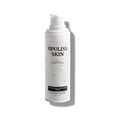
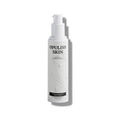
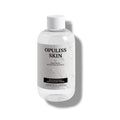
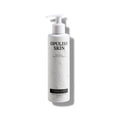
Cleanse. THE GENTLE BODY CLEANSER is a 390 ml body wash built on acacia senegal gum, a film-former, with plum fruit and linden flower extracts. Its page describes a mild surfactant base, which matters because harsh cleansing agents are one source of after-wash dryness.7 It is 98 percent natural origin and vegan eligible.
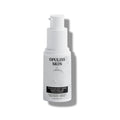
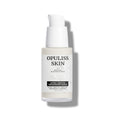
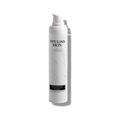
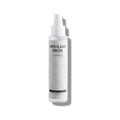
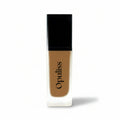
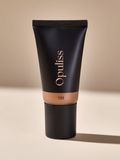
The humectant layer. UREA RENEWAL BODY CREAM is a 280 ml body cream with 5 percent hydroxyethyl urea and 2 percent panthenol, alongside sodium hyaluronate, glycerin and sodium PCA. The base is organic sunflower seed oil, the oil that kept the outer layer intact in the forearm study above.10 Its directions ask for clean, dry skin, name elbows, knees, lower legs and heels, and suggest applying it straight after an evening shower. It is vegan eligible.
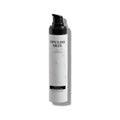
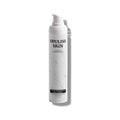
The butter layer. BOTANICAL PLUM BODY CREAM is a 145 ml body cream on an aloe leaf juice base. Its lipids in label order are sunflower seed oil second, olive fruit oil eighth, then shea butter and cocoa seed butter, with plum fruit extract alongside. The olive is named here because the study above used it neat on that twice-daily schedule, which is not the same as an oil sitting eighth in an emulsion. It is 99 percent natural origin, 20 percent organic origin and vegan eligible. Use it as the top layer on knees, elbows and heels.
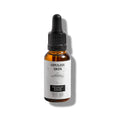
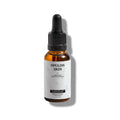
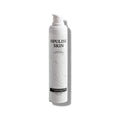
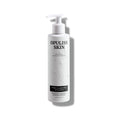
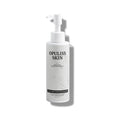
The oil seal. THE RADIANCE BODY OIL is a 145 ml dry-finish body oil. In label order it opens with sunflower seed oil, then sweet almond, jojoba and argan, with rosehip and raspberry seed further down, though its page names those two among the actives. Sunflower and argan are two of the six oils the plant oil review covers, and it names cold pressing, which the page states for the rosehip, as the preferred way to extract an oil.11 Its measure is the ratio of linoleic to oleic acid, which the page does not give. It is 99 percent natural origin, 86 percent organic origin and vegan eligible. Over the urea cream it becomes the seal. Used on its own, its directions put three to five drops onto fingertips or straight onto damp skin after the shower.
All four declare Parfum on their pages, so patch test before first use, as each page advises. Three of them specify the inner forearm for 24 hours.
Frequently Asked Questions
Does body oil go on before or after lotion? +
After. Put the water-binding layer on first, then the oil over it. An oil works as a seal, so it does the most for skin that already holds water, either damp from the shower or freshly moisturised.
Do hot showers make skin look ashy? +
They can add to it. In healthy volunteers, hot water raised the water lost through the skin more than cold water did.6 Lukewarm water, and a humectant layer on while skin is still damp, leave less to make up afterwards.
Is hydroxyethyl urea the same as urea? +
No. It is urea with a hydroxyethyl group attached, which makes it a different molecule. Its published safety assessment lists it as a humectant and skin conditioning agent.12 Results from studies of plain urea do not automatically apply to it.
Will moisturising change my skin tone? +
No, and it is not meant to. Dry surface cells scatter light, and hydrating them reduces that scattering.1 On deeper skin, that scattered light is what reads as a grey cast. Moisturised skin shows its own colour more evenly. Nothing on this page is about making skin a different shade.
Can I use a body cream on my hands? +
Yes. The urea cream's page lists it for daily full-body use. Keep a little by the sink and put it back on after each wash, since some of the skin's own lipids are lost with every wash.7
References
- Lee SH, Jun SH, Yeom J, Park SG, Lee CK, Kang NG. Optical clearing agent reduces scattering of light by the stratum corneum and modulates the physical properties of coenocytes via hydration. Skin Res Technol. 2018, 24(3):371-378. DOI 10.1111/srt.12439. PubMed PMID 29377414 (Lee 2018).
- Rawlings AV, Canestrari DA, Dobkowski B. Moisturizer technology versus clinical performance. Dermatol Ther. 2004, 17 Suppl 1:49-56. DOI 10.1111/j.1396-0296.2004.04s1006.x. PubMed PMID 14728699 (Rawlings 2004).
- Iwuala C, Taylor SC. Structural and functional differences in skin of colour. Clin Exp Dermatol. 2022, 47(2):247-250. DOI 10.1111/ced.14892. PubMed PMID 34388277 (Iwuala 2022).
- Kleesz P, Darlenski R, Fluhr JW. Full-body skin mapping for six biophysical parameters: baseline values at 16 anatomical sites in 125 human subjects. Skin Pharmacol Physiol. 2012, 25(1):25-33. DOI 10.1159/000330721. PubMed PMID 21912200 (Kleesz 2012).
- Fluhr JW, Muguet V, Christen-Zaech S. Restoring Skin Hydration and Barrier Function: Mechanistic Insights Into Basic Emollients for Xerosis Cutis. Int J Dermatol. 2025, 64 Suppl 1:5-12. DOI 10.1111/ijd.17790. PubMed PMID 40231699 (Fluhr 2025).
- Herrero-Fernandez M, Montero-Vilchez T, Diaz-Calvillo P, et al. Impact of Water Exposure and Temperature Changes on Skin Barrier Function. J Clin Med. 2022, 11(2):298. DOI 10.3390/jcm11020298. PubMed PMID 35053992 (Herrero-Fernandez 2022).
- Ananthapadmanabhan KP, Moore DJ, Subramanyan K, et al. Cleansing without compromise: the impact of cleansers on the skin barrier and the technology of mild cleansing. Dermatol Ther. 2004, 17 Suppl 1:16-25. DOI 10.1111/j.1396-0296.2004.04s1002.x. PubMed PMID 14728695 (Ananthapadmanabhan 2004).
- Park EH, Jo DJ, Jeon HW, Na SJ. Effects of winter indoor environment on the skin: Unveiling skin condition changes in Korea. Skin Res Technol. 2023, 29(6):e13397. DOI 10.1111/srt.13397. PubMed PMID 37357654 (Park 2023).
- Gehring W, Gloor M. Effect of topically applied dexpanthenol on epidermal barrier function and stratum corneum hydration. Results of a human in vivo study. Arzneimittelforschung. 2000, 50(7):659-663. DOI 10.1055/s-0031-1300268. PubMed PMID 10965426 (Gehring 2000).
- Danby SG, AlEnezi T, Sultan A, et al. Effect of olive and sunflower seed oil on the adult skin barrier: implications for neonatal skin care. Pediatr Dermatol. 2013, 30(1):42-50. DOI 10.1111/j.1525-1470.2012.01865.x. PubMed PMID 22995032 (Danby 2013).
- Vaughn AR, Clark AK, Sivamani RK, Shi VY. Natural Oils for Skin-Barrier Repair: Ancient Compounds Now Backed by Modern Science. Am J Clin Dermatol. 2018, 19(1):103-117. DOI 10.1007/s40257-017-0301-1. PubMed PMID 28707186 (Vaughn 2018).
- Akinsulie A, Bergfeld WF, Belsito DV, et al. Safety Assessment of Hydroxyethyl Urea as Used in Cosmetics. Int J Toxicol. 2024, 43(3 Suppl):128S-134S. DOI 10.1177/10915818241237791. PubMed PMID 38465394 (Akinsulie 2024).