Kojic Acid or Alpha-Arbutin for Dark Spots on Brown Skin
We found no trial comparing kojic acid with alpha-arbutin on brown skin. What each ingredient is, what the studies on deeper skin measured and at what strength, the safety limits for face products, and how the three formulas and one set linked here are built.
Kojic acid or alpha-arbutin for dark spots on brown skin? Neither has been shown to beat the other, because we found no trial that tests them side by side on brown skin. They differ in safety limits, in format and in what has been measured. The aim of both is an even-looking tone, never lighter skin.
This page sets out what each one is, what the studies measured and on whom, the strengths allowed in a face product, and how the three formulas and one set linked here are built.
What kojic acid and alpha-arbutin actually are
Kojic acid is an organic acid made by fungi, mainly species of Aspergillus, used in food and agriculture as well as cosmetics.1 On an ingredient list it appears simply as Kojic Acid. The US cosmetic safety review describes it as working as an antioxidant in the formula.2
Alpha-arbutin is a glucoside, which means a molecule with a sugar attached. Its chemical name is 4-hydroxyphenyl alpha-glucopyranoside.3 The Opuliss serum describes the alpha-arbutin it carries as biotech-derived.
Both are studied for the look of dark spots and uneven tone.
What the evidence shows and does not
In a search of PubMed on 22 September 2026, we found no trial that compared kojic acid alone with alpha-arbutin alone, on any skin tone. The studies that do exist mostly tested a mixture, or one ingredient against a different cream, and most were framed around a named skin condition. This page repeats only the cosmetic readings those studies also took.
A split-face study run in Bangkok put alpha-arbutin at 5 percent and kojic acid at 2 percent in one cream, applied to one side of the face for 12 weeks, with a triple combination cream on the other side. Participants rated both sides the same for satisfaction, and redness and stinging were more common on the comparison side.4 That reading belongs to the pair, not to either ingredient.
For alpha-arbutin, the study closest to deeper skin enrolled Indian women of Fitzpatrick types III and IV with facial dark spots. They used alpha-arbutin at 2 percent with a second glucoside, trihydroxybenzoic acid glucoside, at 10 percent, twice a day, plus a daily sunscreen, for 90 days. On cross-polarised photographs, the colour difference between each dark spot and the skin around it narrowed by 8.7 percent. A chromameter reading of skin-tone evenness improved by 19 percent. The routine caused no itching, burning or irritation.5 With no comparison group and no alpha-arbutin-only arm, the reading belongs to the whole routine.
The only study we found that tested arbutin alone was framed around the lack of evidence on Fitzpatrick IV and V skin, and applied 5 percent arbutin to healthy women for six weeks, reading the treated sites against control sites with a skin colour instrument.6 Its summary names neither the form of arbutin nor the skin types of those who took part, and its readings concern the overall colour of healthy skin, not dark spots.
For kojic acid on its own, the nearest study compared a 2 percent kojic acid cream with a different cream in Indian women over 16 weeks, once a night. It was framed around a named skin condition, so the reading repeated here is the cosmetic one: both creams were well tolerated, and no abnormal skin signs were reported.7 Its summary does not give the participants' skin types, and most of its authors worked for the drug company that supplied the study materials.
Neither ingredient has a confirmed study that meets all three tests this page applies: the ingredient tested alone, participants of Fitzpatrick IV to VI named, and a cosmetic reading taken on dark spots or uneven tone. The healthy-skin arbutin study comes closest, and misses on the form of arbutin, the unnamed skin types and the reading. Our article on who was actually in the trials explains why that gap is common.
How the strengths compare
Strength is where many studies sit above the limits safety reviewers set for face products. The US safety review concluded that kojic acid is safe in cosmetics up to 1 percent, the level below which its panel expected neither skin sensitisation nor lighter skin.2 Our article on the kojic acid concentration limit sets out how the European rule reached the same figure for face products.
For alpha-arbutin, the European Commission's Scientific Committee on Consumer Safety judged it safe up to 2 percent in face creams and 0.5 percent in body lotions.8
The Bangkok cream used alpha-arbutin at 5 percent and kojic acid at 2 percent, both above those face limits.4 The Indian kojic acid cream used 2 percent.7 Only the alpha-arbutin routine, at 2 percent, sat at its limit.5 So a face product within the limits carries less than most creams studied, and a study cream's reading does not carry over to a weaker bottle.
Choosing between them on deeper skin
With no head-to-head result, the useful differences are practical.
- A few distinct spots: a product applied only to each spot keeps the active off the skin around it. The Opuliss 1 percent kojic acid formula is made for that, and its page asks for it not to be spread across the face.
- Unevenness across the whole face: a leave-on serum covers the whole area. In a laboratory test of how ingredients react under light, alpha-arbutin and ascorbyl glucoside, the vitamin C form in the duo below, both showed no photoreactivity.9 Kojic acid was not tested, and this is a laboratory result, not a reading on skin.
- Reactive skin: a patch-test series reported reactions to kojic acid at 1 percent, and its authors judged its sensitising potential high.10 The limit marks where that risk becomes rare, not where it disappears. The three Opuliss kojic acid and alpha-arbutin formulas also contain fragrance compounds, so patch test on the inner forearm for 24 hours first, as each product page asks.
- Daylight: every product page here asks for a broad-spectrum SPF 30 or higher daily. Opuliss sells no sunscreen, so that step is your own, and our article on why mineral sunscreen can leave a white cast on deep skin helps with choosing one.
The Opuliss products that use them
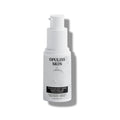
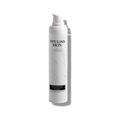
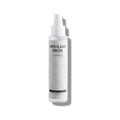
The KOJIC ACID FACE CREAM is a 50 ml face moisturiser its page describes as an evening cream. It is built on kojic acid with sea buckthorn fruit oil, paprika fruit extract and rosemary leaf extract. The page does not state the kojic acid percentage. It is 100 percent natural origin, 8 percent organic origin and vegan eligible, and it contains fragrance.
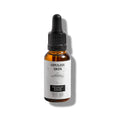
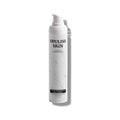
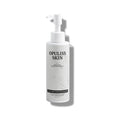
The 1% kojic acid spot care formula holds 1 percent kojic acid, the US review limit, in 15 ml, with the same sea buckthorn, paprika and rosemary. It is applied from a fingertip onto individual dark spots only, morning and evening. Its origin figures match the cream, and it also contains fragrance.
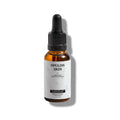
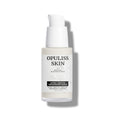
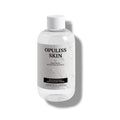
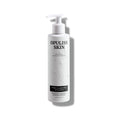
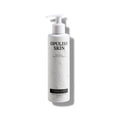
The ALPHA-ARBUTIN BRIGHTENING SERUM is a 30 ml leave-on face serum built around alpha-arbutin, with Bidens pilosa extract, Norwegian kelp extract and multi-weight hyaluronic acid, used as two to three drops morning and evening. Its page does not state the alpha-arbutin percentage. It is 100 percent natural origin, 23 percent organic origin and vegan, and it contains fragrance compounds. Bidens pilosa belongs to the daisy family, so the page advises anyone sensitive to that family to avoid it.
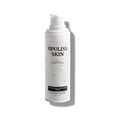
The Dark Spot Routine Duo is a set pairing that serum with the CELLULAR ANTI-AGING ASCORBYL GLUCOSIDE SERUM, a morning serum carrying 2 percent ascorbyl glucoside and 1 percent ferulic acid.
The kojic acid glossary entry and the alpha-arbutin glossary entry list every Opuliss formula carrying each ingredient, including a kojic acid exfoliator this page leaves out because it is a scrub.
Frequently Asked Questions
Will kojic acid or alpha-arbutin make my skin lighter overall? +
That is not the aim of either on this page. The US safety review set its 1 percent limit for kojic acid at the level where it expected neither lighter skin nor sensitisation, though a patch-test series had reported reactions at that strength. A spot product applied only to the spot keeps the active on the mark rather than on the skin around it.
Can I use kojic acid and alpha-arbutin in the same routine? +
The one study that combined them put both in a single cream, and it gave a reading for the pair, not for each. If you use both, add one product at a time, a few weeks apart, so that if your skin reacts you know which one caused it.
Which is gentler on sensitive deeper skin? +
No study has compared them on that question. A patch-test series reported reactions to kojic acid at 1 percent, so its limit marks where the risk becomes rare, not absent. The alpha-arbutin routine studied in Fitzpatrick III and IV skin reported no itching, burning or irritation, but alpha-arbutin shared that routine with another active and a sunscreen.
How long did the studies on this page run? +
The studies on dark spots ran 12 to 16 weeks, and the healthy-skin study ran six. Readings were taken on that timescale, so a week or two of using any product says little either way.
Does Opuliss sell a sunscreen to go with these? +
No. Each product page here asks for a broad-spectrum SPF 30 or higher daily, so that step comes from your own shelf, chosen for a finish that sits well on your skin tone.
References
- Chib S, Jamwal VL, Kumar V, et al. Fungal production of kojic acid and its industrial applications. Appl Microbiol Biotechnol. 2023, 107(7-8):2111-2130. DOI 10.1007/s00253-023-12451-1. PubMed PMID 36912905 (Chib 2023).
- Burnett CL, Bergfeld WF, Belsito DV, et al. Final report of the safety assessment of Kojic acid as used in cosmetics. Int J Toxicol. 2010, 29(6 Suppl):244S-273S. DOI 10.1177/1091581810385956. PubMed PMID 21164073 (Burnett 2010).
- Khan HMS, Tanveer N, Arshad T, et al. Encapsulation of alpha arbutin, a depigmenting agent, in nanosized ethosomes: Invitro and invivo human studies. Heliyon. 2023, 9(9):e19326. DOI 10.1016/j.heliyon.2023.e19326. PubMed PMID 37681127 (Khan 2023).
- Tantanasrigul P, Sripha A, Chongmelaxme B. The Efficacy of Topical Cosmetic Containing Alpha-Arbutin 5% and Kojic Acid 2% Compared With Triple Combination Cream for the Treatment of Melasma: A Split-Face, Evaluator-Blinded Randomized Pilot Study. J Cosmet Dermatol. 2025, 24(1):e16562. DOI 10.1111/jocd.16562. PubMed PMID 39555866 (Tantanasrigul 2025).
- Gabhane M, Patil R, Dharmadhikari S, et al. Efficacy and Safety of a Topical Formulation Containing Trihydroxybenzoic Acid Glucoside and α-Arbutin, Applied Along With a Sunscreen: A Noncomparative, Prospective, Interventional Study in Indian Females With Facial Melasma or Dark Spots. J Cosmet Dermatol. 2025, 24(2):e70017. DOI 10.1111/jocd.70017. PubMed PMID 39943675 (Gabhane 2025).
- Liyanage A, Liyanage G, Sirimanna G, Schürer N. Comparative Study on Depigmenting Agents in Skin of Color. J Clin Aesthet Dermatol. 2022, 15(2):12-17. PubMed PMID 35309879 (Liyanage 2022).
- Patil R, Dhoot D, Balasubramanian A, et al. Comparison of the Effectiveness and Safety of 5% Cysteamine and 2% Kojic Acid Creams in the Treatment of Melasma in Indian Adult Females. Cureus. 2025, 17(3):e81330. DOI 10.7759/cureus.81330. PubMed PMID 40296942 (Patil 2025).
- Sccs, Degen GH. Opinion of the Scientific Committee on Consumer safety (SCCS)--Opinion on the safety of the use of α-arbutin in cosmetic products. Regul Toxicol Pharmacol. 2016, 74:75-76. DOI 10.1016/j.yrtph.2015.11.008. PubMed PMID 26646661 (Sccs 2016).
- Mota S, Rosa GP, Barreto MC, et al. Comparative Studies on the Photoreactivity, Efficacy, and Safety of Depigmenting Agents. Pharmaceuticals (Basel). 2023, 17(1):55. DOI 10.3390/ph17010055. PubMed PMID 38256889 (Mota 2023).
- Nakagawa M, Kawai K, Kawai K. Contact allergy to kojic acid in skin care products. Contact Dermatitis. 1995, 32(1):9-13. DOI 10.1111/j.1600-0536.1995.tb00832.x. PubMed PMID 7720390 (Nakagawa 1995).