Rough, Ashy-Looking Knees and Elbows: Softening, Never Lighter
Ash on knees and elbows is dry surface scale that shows clearly on deeper skin. Why these joints get rough, what researchers measured on ashy skin, and a softening routine built on a mild wash, a humectant cream, a body oil and an occasional scrub. The goal is the skin's own tone, never a lighter one.
How do I soften rough, ashy-looking knees and elbows? Approach it as texture and dryness, not colour. The grey cast is dry surface scale that reflects less light.1 Wash gently, apply a water-binding cream to dry skin, a body oil to damp skin after the shower, and scrub occasionally. The aim is your own tone, never lighter.
Knees and elbows are two of the places dryness shows, and on brown and Black skin a dry surface reads as a grey film. This page explains why those two joints roughen, what researchers measured when they studied ashy skin, and how to soften it. Nothing here is about changing the colour of skin.
Why knees and elbows get rough
The outer layer of skin, the stratum corneum, is not the same thickness everywhere. When researchers counted its cell layers at sites across the body, the arms and legs carried more layers than the face, the palms and soles far more again, and the heel the most of all.2 That study's summary reports the limbs as one group, so it gives no separate count for knees or elbows.
What it found next matters more for dry joints. Water loss through the skin followed the number of layers, while the hydration of the outermost cells did not simply follow it.2 A thicker surface is not a wetter one. Knees and elbows are also the joints we lean on and kneel on, and they fold every time we move, so the skin there takes a lot of daily wear.
Why dryness reads as ash on deeper skin
On deeper skin, dry skin can carry a whitish tint and lose its shine, and that combination is what the word ashy describes.3 It has been measured directly. Researchers assessed ashy skin on the legs of Black African women in winter and compared it with normal-looking skin on their foreheads. The ashy patches gave paler colour readings but not redder ones, and the colour change tracked how dry the surface was on three separate dryness measures.1 The authors concluded that ash is a form of dry skin in which the outer layer reflects less light, and they named cold, dry weather as the obvious influence.1
A second study went further. It enrolled women with Fitzpatrick type IV to VI skin who had visible ash on their lower legs, forearms and elbows, and gave them either a moisturising body wash or a mild cleansing bar for three weeks. The wash improved water loss readings and the graded dryness of the skin, participants reported less ash at every site, and the bar gave similar results.3 The authors linked the drop in ash to support for the skin barrier.3 The practical reading is plain. What you wash with counts, and the elbow is part of the evidence, not an afterthought.
Softening rough knees and elbows, step by step
Wash gently. The cleanser study above is the clearest evidence here that a mild wash is part of the answer.3 Use a mild wash on the joints and rinse well.
Apply the water-binding cream to clean, dry skin. Hydroxyethyl urea is listed in cosmetics as a humectant and a skin conditioning agent, and an expert safety panel assessed it as safe in current use when formulated to be non-irritating.4 Panthenol is the second half of the pairing. In a controlled study, dexpanthenol, the form of panthenol that was tested, improved the hydration of the outer layer and reduced water loss after seven days, compared with the base alone.5 The cream's own instructions ask for a generous layer on clean, dry skin, massaged gently into rough areas until it is absorbed, so work it into the patch rather than skimming over it.
Use the body oil in its own moment, on damp skin after the shower. Plant oils do not all behave the same on skin. When adults applied sunflower seed oil to one forearm and olive oil to the other for four weeks, the sunflower oil kept the outer layer intact and improved hydration, while the olive oil reduced its integrity.6 The oil's own instructions put it on damp skin after the shower, while the cream asks for clean, dry skin, so the two want the skin in different states. Give the oil the damp minutes after you wash, and the cream a dry moment, rather than stacking one on the other. No study on this page tested that order.
Scrub occasionally, and gently. A scrub lifts loose surface scale by friction, and knees and elbows already take plenty of friction. Once or twice a week is the starting point the Opuliss scrub's own instructions give, building up only as the skin stays comfortable. We found no study on PubMed that measured how often deeper skin should be scrubbed, so this page offers no number of its own.
What the evidence shows and does not
What it shows: ash tracks how dry the surface is and reflects less light than normal-looking skin.1 Mild, moisturising cleansing cut the ash participants reported on legs, forearms and elbows in type IV to VI skin.3 Dexpanthenol raised outer-layer hydration against its base,5 and sunflower seed oil kept the outer layer intact while improving hydration.6 The two ash studies enrolled deeper skin, which is rarer than it should be.
What it does not show: any study of hydroxyethyl urea on its own on rough knees or elbows. On PubMed, the only record that examines it by itself is the safety assessment above.4 The well-known results for plain urea were measured on plain urea, a different molecule, and this page does not carry them over. The sunflower oil result was measured on one neat oil applied to an adult forearm, in a study whose stated purpose was newborn skin care. The Opuliss oil is a blend of seven plant oils with a fragrance, and no study on this page tested that blend. The layer-count, panthenol and sunflower oil studies do not report their volunteers' skin tone in their summaries, so their results may have been measured on skin that does not look like yours. That gap is the subject of who was actually in the trials. None of these studies tested an Opuliss product, and the cleanser study was run by researchers at a consumer products company.
Roughness is a texture question. If the skin over the knees or elbows turns darker and velvety over weeks, rather than dry and flaky, show it to a doctor rather than a body cream. And nothing on this page is meant to change skin tone. Softening the surface lets the skin's own colour show clearly, and that is the only colour this page is about.
The Opuliss products for knees and elbows
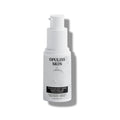
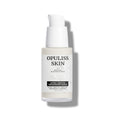
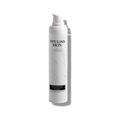
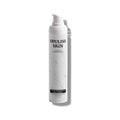
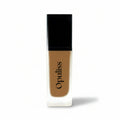
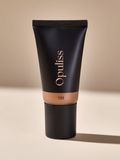
The UREA RENEWAL BODY CREAM is a 280 ml body cream built on 5 percent Hydroxyethyl Urea and 2 percent Panthenol with Sodium Hyaluronate, over a base of organic Sunflower Seed Oil and Glycerin. It also lists Sodium PCA. Its instructions point it at elbows, knees, lower legs and heels, once or twice a day, and suggest applying it straight after an evening shower. It is vegan eligible. The provitamin B5 glossary entry, the Sodium PCA glossary entry and the glycerin glossary entry carry each ingredient's source.
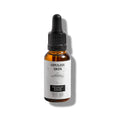
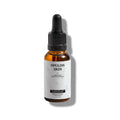
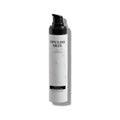
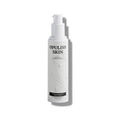
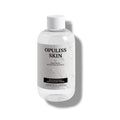
THE RADIANCE BODY OIL is a 145 ml dry-touch body oil of seven plant oils led by Sunflower Seed Oil, with sweet almond, jojoba, argan, rosehip, raspberry seed and pumpkin seed oils. It is 99 percent natural origin, 86 percent organic origin and vegan eligible, and its instructions say to apply it to damp skin after the shower.
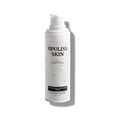
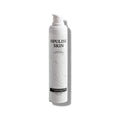
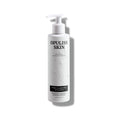
The VOLCANIC SAND EXFOLIATING FACE BODY SCRUB is a 170 ml rinse-off scrub built on Icelandic Volcanic Sand with Kaolin and cloudberry, blueberry, strawberry and raspberry fruit extracts. It is 99 percent natural origin and vegan eligible. Use it on damp skin in gentle circles for 30 to 60 seconds, then rinse. The volcanic sand glossary entry carries its cosmetic listing.
All three list fragrance on their full ingredient lists. Patch test each one on the inner forearm for 24 hours before first use.
Frequently Asked Questions
Will softening my knees and elbows change my skin tone? +
No. The grey cast is a dry surface sitting over your skin, and the routine on this page is about that surface. Nothing here is designed to make skin lighter. The aim is your own colour, seen clearly.
Is hydroxyethyl urea the same as urea? +
No. It is a related molecule, urea carrying a hydroxyethyl group, as its name says. It is listed in cosmetics as a humectant and skin conditioning agent. Studies of plain urea were run on plain urea, so this page does not borrow their results.
How often should I scrub rough knees and elbows? +
Start once or twice a week, which is what the Opuliss scrub's instructions give, and build up only if your skin stays comfortable. The cream does the daily work. The scrub only lifts loose scale.
Are these products free of fragrance? +
No. All three list fragrance on their full ingredient lists. If you prefer to avoid fragrance, read each list before buying and patch test on the inner forearm for 24 hours.
References
- Uhoda E, Piérard-Franchimont C, Petit L, Piérard G. Skin weathering and ashiness in black Africans. Eur J Dermatol. 2003, 13(6):574-578. PubMed PMID 14721778 (Uhoda 2003).
- Ya-Xian Z, Suetake T, Tagami H. Number of cell layers of the stratum corneum in normal skin - relationship to the anatomical location on the body, age, sex and physical parameters. Arch Dermatol Res. 1999, 291(10):555-559. DOI 10.1007/s004030050453. PubMed PMID 10552214 (Ya-Xian 1999).
- Feng L, Hawkins S. Reduction of "Ashiness" in Skin of Color with a Lipid-rich Moisturizing Body Wash. J Clin Aesthet Dermatol. 2011, 4(3):41-44. PubMed PMID 21464886 (Feng 2011).
- Akinsulie A, Bergfeld WF, Belsito DV, et al. Safety Assessment of Hydroxyethyl Urea as Used in Cosmetics. Int J Toxicol. 2024, 43(3 suppl):128S-134S. DOI 10.1177/10915818241237791. PubMed PMID 38465394 (Akinsulie 2024).
- Gehring W, Gloor M. Effect of topically applied dexpanthenol on epidermal barrier function and stratum corneum hydration. Results of a human in vivo study. Arzneimittelforschung. 2000, 50(7):659-663. DOI 10.1055/s-0031-1300268. PubMed PMID 10965426 (Gehring 2000).
- Danby SG, AlEnezi T, Sultan A, et al. Effect of olive and sunflower seed oil on the adult skin barrier: implications for neonatal skin care. Pediatr Dermatol. 2013, 30(1):42-50. DOI 10.1111/j.1525-1470.2012.01865.x. PubMed PMID 22995032 (Danby 2013).