Escin or Caffeine Under the Eye: What Each Was Actually Tested For on the Skin
Escin and caffeine both appear in eye products sold for puffiness. What each was actually tested for on the skin around the eye, why neither has a puffiness study of its own, and which Opuliss formulas carry them.
Escin or caffeine for the look of morning puffiness? Neither has been tested on its own for puffiness in any study we found. Horse chestnut extract, the source of escin, was tested around the eye for the look of fine lines.1 Every eye-area study of caffeine we found pairs it with other actives. Choose by texture and routine.
Why the under-eye can look puffier in the morning

Puffiness is mostly water. A study that measured the same faces early in the morning and again in the late afternoon found the skin thicker in the morning. Its authors put the morning change down to gravity during sleep, as fluid settles into the face while lying down overnight.2
A second study asked women to come in when they felt their face was puffy, and again later the same day once it had settled. At the puffy visit, water content and skin thickness were higher across the whole face, and the study describes the cause as mild or normal fluid retention. Women over 40 also showed a rise in water and thickness in the lower eyelid.3 So morning puffiness is, in large part, water the skin is holding for a while. That is the thing either ingredient would need to be tested against.
What escin actually is

Escin, also spelled aescin, is a group of saponins from the seeds of the horse chestnut tree, Aesculus hippocastanum. Beta-escin is its biologically active component. It is a natural surfactant with strong surface activity, which means it gathers where water meets air or oil.4
A cosmetic review of the tree describes the seed saponins as having a gentle soapy feel. The same review reports that a horse chestnut extract ranked among the strongest scavengers of reactive oxygen in a laboratory screen of plant extracts, and that the extract is rich in flavonoids.5 On an ingredient label it appears as Aesculus Hippocastanum (Horse Chestnut) Seed Extract, sometimes with Escin listed on its own. An extract carries escin alongside the seed's other compounds, so a study of the extract is not a study of escin alone.
Much of the published research on horse chestnut concerns the extract taken by mouth, for a purpose unrelated to the look of skin. That work is real. It is not about the skin around the eye, so nothing on this page leans on it.
What caffeine actually is

Caffeine is the same alkaloid found in coffee and tea. It is a small molecule that crosses the skin's outer barrier readily, so readily that researchers use it as a standard test substance when they study how ingredients move into skin. A review of its cosmetic use also describes strong antioxidant properties.6
How much of it reaches the skin depends on the formula around it. When a laboratory compared caffeine eye creams on a synthetic skin membrane, the creams the team designed released more caffeine than the commercial eye creams tested beside them, and one of them let significantly more pass through.7 That was measured on a membrane, not on a face.
What each was actually tested for around the eye

Escin first. The one study we found that put horse chestnut on the skin around the eye used a gel with 3 percent horse chestnut extract, applied three times a day for nine weeks. Wrinkle scores at the corner of the eye or on the lower eyelid fell against controls, at six weeks and again at nine.1 In the laboratory, the same extract made skin cells called fibroblasts pull on the collagen gel they sat in. What the trial measured was the look of fine lines. It did not measure puffiness, and it tested the whole extract rather than escin alone.
Now caffeine. Every human study around the eye that we found paired it with other actives. In one, a pad carrying 3 percent caffeine and 1 percent vitamin K in an emu oil base went under one eye, with a water-only pad under the other, for four weeks. Wrinkle depth and the look of dark circles both improved on the caffeine side.8 In another, an eye cream combining caffeine with vitamin C, peptides, botanical extracts and more was followed for twelve weeks in an open study, with each person compared against their own starting point. It set out to assess both dark circles and puffiness, and the result its authors spell out is on dark circles.9
What the evidence shows and does not
What it shows: horse chestnut extract lowered wrinkle scores around the eye in one trial.1 Caffeine passes into skin readily and carries antioxidant properties.6 A caffeine pad with vitamin K improved wrinkle depth and the look of dark circles.8 A multi-active eye cream with caffeine improved the look of dark circles.9
What it does not show: a study of escin alone on under-eye puffiness, or a study of caffeine alone on under-eye puffiness. We searched PubMed in September 2026 and found neither. A 2024 review of popular eye cream ingredients took a similar view of the field as a whole. It named caffeine among the ingredients showing promise for the look of wrinkles, and it named the lack of trials run on eye creams and eye-area skin as a notable limitation.10
Nor does a result carry from one formula to another. A reading taken on a caffeine pad with vitamin K says nothing certain about a caffeine gel without it. None of this is a promise about a bottle. If you want the test we hold every ingredient page to, it is set out in how to tell if a luxury skincare brand is actually science-backed.
How to choose between them
Because neither ingredient has a puffiness result of its own, the honest way to choose is by format and by what else the formula does.
If you want something light for the morning that sits under other products, a caffeine water-gel is built for that. If the skin around your eyes also feels dry, both escin creams below are formulated for dry skin and carry hyaluronic acid, a humectant. You can also use both: the gel goes on first and the cream goes over it. No study has tested that pairing, so think of it as a routine choice rather than a combined effect.
However you choose, put a rice-grain amount of cream, or one to two drops of gel, on the ring finger, pat it along the orbital bone from the inner corner outward, and keep it off the eye itself. If you are not sure puffiness is what you are seeing, the Skin Intelligence Finder asks a few plain questions and builds a routine from the answers.
The Opuliss products that use them
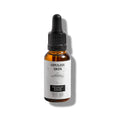
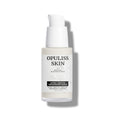
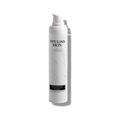
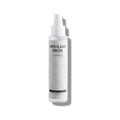
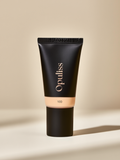
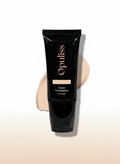
Caffeine is in one Opuliss eye formula. The CAFFEINE DE-PUFF EYE BOOSTER is a 20 ml water-gel of 1 percent caffeine with glycerin and algin, a gel-former drawn from algae. It is 99 percent natural origin and vegan eligible, it is made to layer under an eye cream, and it contains no escin.
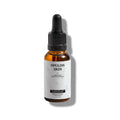
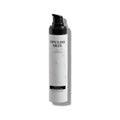
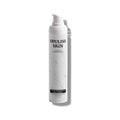
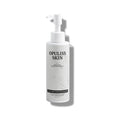
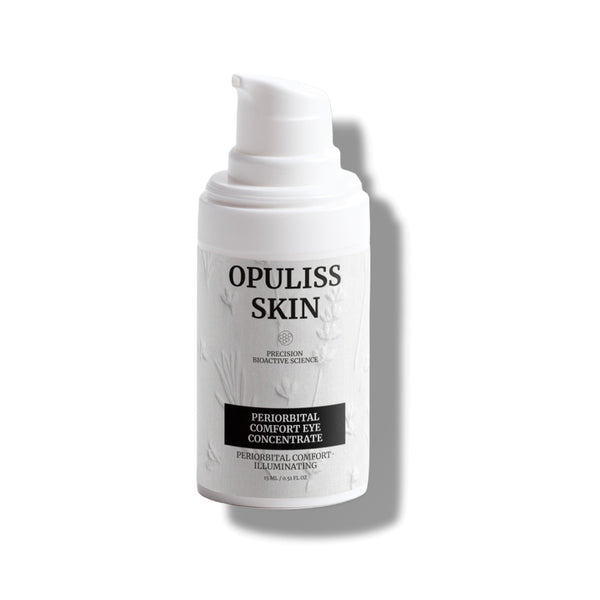
Escin sits in several Opuliss eye formulas, including these two. The PERIORBITAL COMFORT EYE CONCENTRATE is a 15 ml concentrate built on horse chestnut seed extract with escin, grape leaf extract, ginkgo leaf extract, two weights of hyaluronic acid and rice bran oil. It is 100 percent natural origin and vegan eligible.
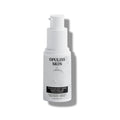
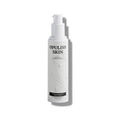
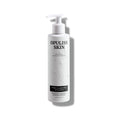
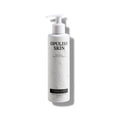
The BARRIER EYE CREAM is a 15 ml cream that pairs horse chestnut seed extract standardised to escin with dipalmitoyl hydroxyproline, a collagen amino acid ester, a natural ceramide complex of glycosphingolipids and glycolipids, black tea leaf extract and hyaluronic acid. It is 100 percent natural origin and vegan eligible.
In both creams escin shares the formula with other actives, so, as in the studies above, any result belongs to the whole formula. Those studies were run on other formulas, not on these three. All three products declare fragrance or naturally occurring fragrance compounds, so patch test on the inner forearm for 24 hours before first use around the eyes.
Frequently Asked Questions
Does caffeine in an eye product reduce puffiness? +
No study we found tested caffeine alone on under-eye puffiness. The eye-area studies paired it with other actives and mostly measured fine lines and dark circles, so any result they report belongs to the whole formula, not to caffeine.
Is escin the same as horse chestnut extract? +
No. Escin is the group of saponins found in horse chestnut seeds. A horse chestnut seed extract carries escin along with the seed's other compounds, such as flavonoids, so a study of the extract is not a study of escin alone.
Can I use escin and caffeine together? +
Yes, as a routine choice. The caffeine water-gel is made to layer under an eye cream, so it can sit beneath either escin cream. No study has tested the pairing, so this is about texture and routine rather than a combined result.
Are these Opuliss eye products fragrance free? +
No. All three declare fragrance or naturally occurring fragrance compounds on their full ingredient lists, so patch test on the inner forearm for 24 hours before the first use around the eyes.
References
- Fujimura T, Tsukahara K, Moriwaki S, et al. A horse chestnut extract, which induces contraction forces in fibroblasts, is a potent anti-aging ingredient. J Cosmet Sci. 2006;57(5):369-376. PubMed PMID 17111071 (Fujimura 2006).
- Tsukahara K, Moriwaki S, Hotta M, et al. A study of diurnal variation in wrinkles on the human face. Arch Dermatol Res. 2004;296(4):169-174. DOI 10.1007/s00403-004-0500-5. PubMed PMID 15322833 (Tsukahara 2004).
- Nkengne A, Robic J, Lua BL. Self-perceived and objective measurements of facial puffiness in Chinese women. Skin Res Technol. 2021;27(3):385-392. DOI 10.1111/srt.12955. PubMed PMID 33089925 (Nkengne 2021).
- Geisler R, Dargel C, Hellweg T. The Biosurfactant β-Aescin: A Review on the Physico-Chemical Properties and Its Interaction with Lipid Model Membranes and Langmuir Monolayers. Molecules. 2019;25(1):117. DOI 10.3390/molecules25010117. PubMed PMID 31892278 (Geisler 2019).
- Wilkinson JA, Brown AM. Horse Chestnut - Aesculus Hippocastanum: Potential Applications in Cosmetic Skin-care Products. Int J Cosmet Sci. 1999;21(6):437-447. DOI 10.1046/j.1467-2494.1999.234192.x. PubMed PMID 18503457 (Wilkinson 1999).
- Herman A, Herman AP. Caffeine's mechanisms of action and its cosmetic use. Skin Pharmacol Physiol. 2013;26(1):8-14. DOI 10.1159/000343174. PubMed PMID 23075568 (Herman 2013).
- Reyes R, Abou-Dahech MS, Nguyen NG, et al. Skin penetration of caffeine from commercial eye creams and eye creams designed and optimized based on Hansen solubility parameters. Int J Pharm. 2023;639:122973. DOI 10.1016/j.ijpharm.2023.122973. PubMed PMID 37084834 (Reyes 2023).
- Ahmadraji F, Shatalebi MA. Evaluation of the clinical efficacy and safety of an eye counter pad containing caffeine and vitamin K in emulsified Emu oil base. Adv Biomed Res. 2015;4:10. DOI 10.4103/2277-9175.148292. PubMed PMID 25625116 (Ahmadraji 2015).
- Rajabi-Estarabadi A, Hartman CL, Iglesia S, et al. Effectiveness and tolerance of multicorrective topical treatment for infraorbital dark circles and puffiness. J Cosmet Dermatol. 2024;23(2):486-495. DOI 10.1111/jocd.16122. PubMed PMID 38112168 (Rajabi-Estarabadi 2024).
- Hamie H, Yassine R, Shoukfeh R, et al. A review of the efficacy of popular eye cream ingredients. Int J Womens Dermatol. 2024;10(2):e156. DOI 10.1097/JW9.0000000000000156. PubMed PMID 38873621 (Hamie 2024).
Shop the article
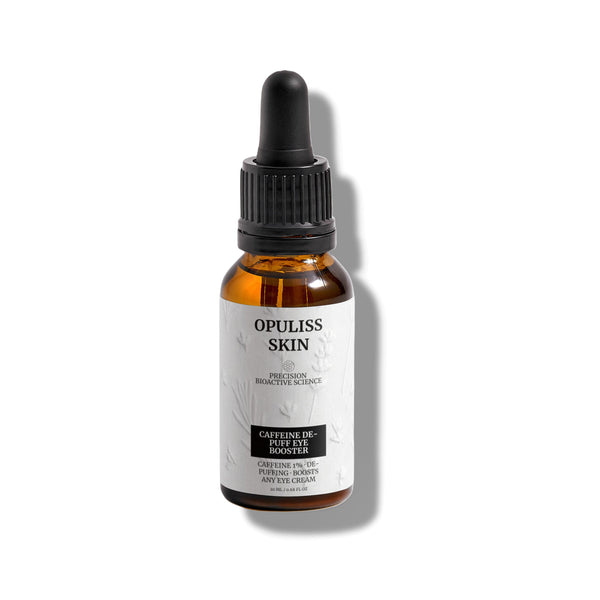

 CAFFEINE DE-PUFF EYE BOOSTERDe-puffs and softens the look of dark circles.$217.00
 PERIORBITAL COMFORT EYE CONCENTRATEHydrates and comforts tired-looking eyes with hyaluronic acid.$290.00
 BARRIER EYE CREAMConditions the eye barrier with ceramides and a collagen amino ester.$290.00