Fragrance-Free or Unscented: How to Read the Fragrance Line on a Luxury Label
No added fragrance means no Parfum was added, not that a formula holds no aroma compounds. What fragrance-free and unscented mean, why linalool and limonene appear on labels, and the Opuliss Skin products whose full ingredient lists name none.
Does no added fragrance mean no fragrance compounds at all? Not necessarily. It means no Parfum was added as an ingredient of its own. Plant oils and extracts can carry aroma compounds of their own, such as linalool and limonene, and in the EU a label must name them once they pass a set level.
The words on the front of a pack and the list on the back answer different questions. This page explains what each fragrance phrase means, where aroma compounds come from when nobody added any, and how to place any product in one of three groups by reading its ingredient list.
What fragrance-free, unscented and no added fragrance mean

Fragrance-free is a marketing phrase, not a regulated standard. A systematic review of the published work on common skincare label terms found that fragrance-free, like hypoallergenic and oil-free, is not regulated by any governing body.1 An overview of US labelling rules found that fragrance-free is often misread by shoppers, and that sensitive skin, another phrase printed on many packs, has no legal definition at all.2
Unscented is a different kind of statement. It describes how a product smells, not what went into it. The US Food and Drug Administration notes that a product labelled unscented may contain just enough fragrance to mask the smell of its other ingredients, without giving it a noticeable scent. An article on hidden fragrance chemicals made the same point: fragrance is used both to add a smell and to cover an unpleasant one, and items labelled unscented or fragrance-free can contain fragrance chemicals under names most shoppers would not recognise.3
No added fragrance is the narrowest and most checkable of the three. It says that no Parfum, the ingredient name for a fragrance blend, was put into the formula. It says nothing about aroma compounds that arrive inside a plant ingredient. On the Opuliss pages linked below, the phrase sits in each product's Details and references section, and three of the four add that no Parfum appears in the ingredient list. The fourth can be checked against its full list, which names none.
Where fragrance compounds come from when none is added

Many aroma molecules are made by plants. A chemical study of the peel oils of many lemon and lime varieties found limonene among the main components of every peel oil type it described, and linalool among the main components of some lemon peel oils.4 An analysis of lavender essential oils found linalool among the two dominant components of every sample, from a cultivated crop and from commercial products alike.5 Our article on what lavender actually does in skincare explains where its scent comes from.
So a formula can contain linalool or limonene with no Parfum in it at all, because a plant oil, extract or flower water brought them in. In a check of the ingredient lists of fragranced products registered through a consumer smartphone app, about 6 percent named at least one regulated fragrance substance while listing no Parfum, Fragrance or Aroma.6 The molecule is the same whichever route it took into the jar.
How to read the fragrance line on a label

From 2005, EU rules required 26 named fragrance substances to be listed individually when present at 10 parts per million or more in a product left on the skin, or 100 parts per million or more in one that is rinsed off.6 The July 2023 EU amendment records 24 still individually labelled, and adds many more at the same levels.7 Products that do not comply could be placed on the EU market only until 31 July 2026. In the US, the Food and Drug Administration allows fragrance ingredients to be listed under the single word Fragrance, so the same molecules can sit inside that one word without being named.
With that in mind, open the full ingredient list rather than a short list of key ingredients, which is a summary and can leave the fragrance line out. Then place the product in one of three groups.
- No added fragrance, nothing named. No Parfum, Fragrance or Aroma, and no linalool, limonene or other named fragrance substance anywhere on the list.
- No Parfum, but compounds named. No Parfum line, yet one or more named fragrance substances appear, often near the end of the list. They can arrive with a plant oil, extract or flower water.
- Parfum declared. Parfum, Fragrance or Aroma appears, and in the EU any regulated substance above the set level is named as well. In the app-based label check above, linalool and limonene were the two named most often, each on close to half of the fragranced products in it.6
Where a product page and the printed pack differ, the pack is the authority. Each Opuliss product page linked here says so beneath its full ingredient list.
What the evidence shows and does not
What it shows: the phrases on a pack are a weak guide to what is inside. When researchers read the ingredient lists of best-selling body moisturisers at three large US online retailers, 45 percent of the products claiming to be fragrance free still listed at least one botanical ingredient or other ingredient related to fragrance.8 The article on hidden fragrance chemicals reported items labelled unscented and fragrance-free that contained fragrance chemicals most shoppers would not recognise.3 And the chemistry is clear that limonene is an ordinary plant compound of citrus peel oils, and linalool of lavender oil.45
What it does not show: none of these studies measured how skin feels after using a fragrance-free product, and none compared the comfort of fragrance-free and fragranced formulas. They are readings of labels and of plant chemistry. The label checks describe the products in their own samples at one point in time, and say nothing about any single brand. Natural origin is not the same as gentle, either. The review of label terms found that a natural ingredients claim does not necessarily mean a product is less irritating for people whose skin has a history of reacting.1
None of this is a promise about a bottle. It is a way of reading one. If you want the checklist we use, it is in how to tell if a luxury skincare brand is actually science-backed.
The Opuliss products with no added fragrance

Four Opuliss Skin products state no added fragrance in their Details and references section. Their full ingredient lists, read on the live product pages on 22 September 2026, name no Parfum, no linalool and no limonene, which places all four in the first group above. Each is 99 or 100 percent natural origin and vegan eligible.
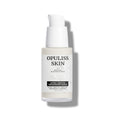
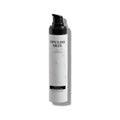
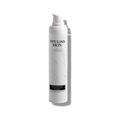
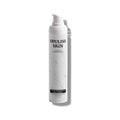
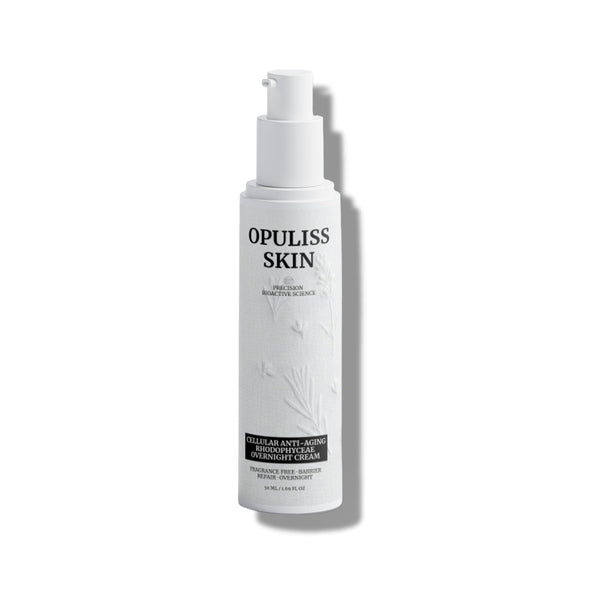
The RHODOPHYCEAE HYDRATION MOISTURISER is a 50 ml daily moisturiser built on hydrolysed red algae extract, wild mango kernel butter and multi-weight hyaluronic acid over an aloe leaf juice base. The RHODOPHYCEAE OVERNIGHT CREAM is a 50 ml overnight moisturiser that pairs the same red algae extract with mango seed butter and multi-weight hyaluronic acid.
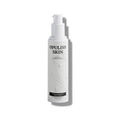
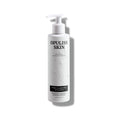
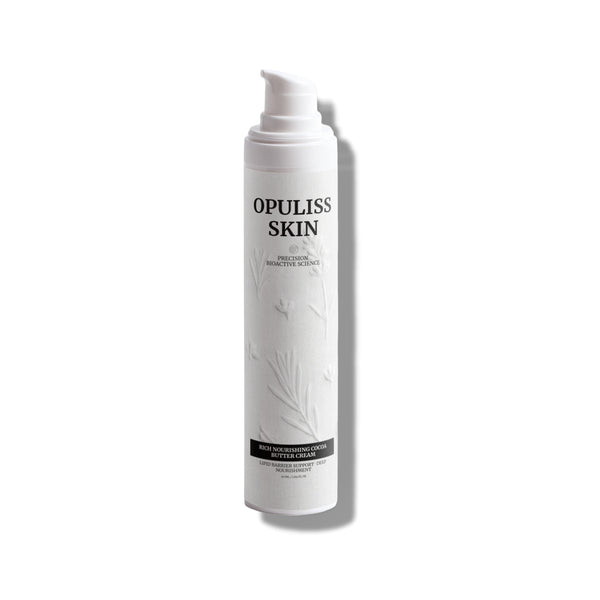
The RICH NOURISHING COCOA BUTTER CREAM is a 50 ml rich cream led by cocoa seed butter, argan kernel oil and cloudberry fruit extract. Its full list also names Vanilla Planifolia (Vanilla) Bean Extract, a plant extract in its own right, and no Parfum.
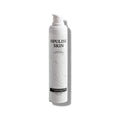
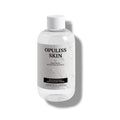
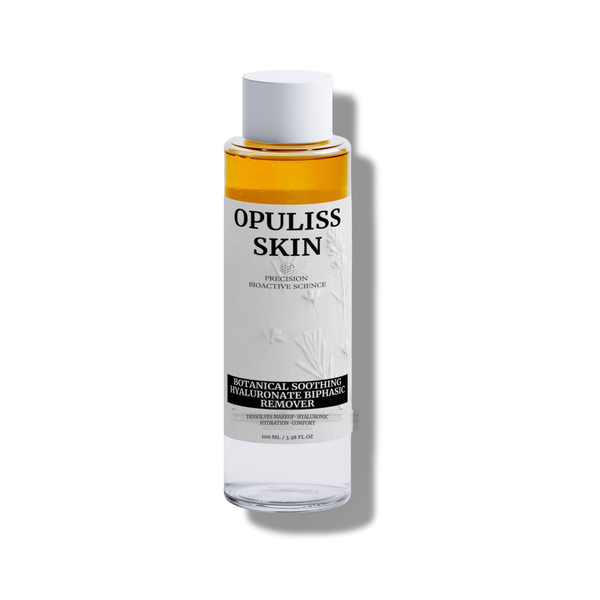
The BOTANICAL SOOTHING HYALURONATE BIPHASIC REMOVER is a 100 ml two-phase make-up remover carrying sodium hyaluronate, vitamin E and raspberry fruit extract. Its page also names the daisy plant family of its camomile extract and asks for a patch test first, a reminder that no added fragrance and no botanicals are two separate statements.
The moisturiser finder places a cream by skin type, and the ingredient library carries entries for the red algae and cocoa butter in these formulas.
Frequently Asked Questions
What is the difference between fragrance-free and unscented? +
Fragrance-free is a claim about what went into a formula, and it is not a regulated term. Unscented is a claim about how a product smells, and the US Food and Drug Administration notes that an unscented product may still contain a little fragrance used to mask the smell of other ingredients. The full ingredient list settles it.
Why do natural skincare products list linalool and limonene? +
Because plants make them. Limonene is a main component of lemon and lime peel oils, and linalool is found in lavender oil and in some lemon peel oils. In the EU they must be named on the label once they pass a set level, whether or not Parfum was added.
Can a product with no added fragrance still have a scent? +
Yes. Plant butters, oils, extracts and flower waters carry their own smell, so a formula made from them can smell faintly of its ingredients. No added fragrance is a statement about Parfum, not a promise that a product has no smell at all.
What does formulated for sensitive skin mean on a label? +
It is not a legal term, and an overview of US labelling rules lists sensitive skin among the phrases with no legal definition. On an Opuliss page it names the skin type a formula is intended for. The full ingredient list and the Details and references section show what is inside.
How should I try a new product if my skin feels sensitive? +
Patch test it on the inner forearm for 24 hours before the first full use. That is the advice on each Opuliss product page linked above, and it applies to a fragrance-free formula as much as to any other.
References
- Boozalis E, Patel S. Clinical utility of marketing terms used for over-the-counter dermatologic products. J Dermatolog Treat. 2018;29(8):841-845. DOI 10.1080/09546634.2018.1467540. PubMed PMID 29671667 (Boozalis 2018).
- Tantry E, Perez-Sanchez A, Fu S, Potula S, Katta R. Labeling Laws for Personal Care Products: Potential Pitfalls for The Consumer. Skin Therapy Lett. 2021;26(5):1-6. PubMed PMID 34524780 (Tantry 2021).
- Scheinman PL. Exposing covert fragrance chemicals. Am J Contact Dermat. 2001;12(4):225-228. DOI 10.1053/ajcd.2001.28697. PubMed PMID 11753900 (Scheinman 2001).
- Lota ML, de Rocca Serra D, Tomi F, Jacquemond C, Casanova J. Volatile components of peel and leaf oils of lemon and lime species. J Agric Food Chem. 2002;50(4):796-805. DOI 10.1021/jf010924l. PubMed PMID 11829647 (Lota 2002).
- Todorova V, Ivanov K, Georgieva Y, Karcheva-Bahchevanska D, Ivanova S. Comparison between the Chemical Composition of Essential Oil from Commercial Products and Biocultivated Lavandula angustifolia Mill. Int J Anal Chem. 2023;2023:1997157. DOI 10.1155/2023/1997157. PubMed PMID 36684478 (Todorova 2023).
- Bennike NH, Oturai NB, Müller S, et al. Fragrance contact allergens in 5588 cosmetic products identified through a novel smartphone application. J Eur Acad Dermatol Venereol. 2018;32(1):79-85. DOI 10.1111/jdv.14513. PubMed PMID 28796916 (Bennike 2018).
- Lee H, Pack EC, Koo YJ, et al. Probabilistic risk assessment of emerging EU-regulated fragrance allergens in household and personal care products. Environ Int. 2025;200:109530. DOI 10.1016/j.envint.2025.109530. PubMed PMID 40398361 (Lee 2025).
- Xu S, Kwa M, Lohman ME, et al. Consumer Preferences, Product Characteristics, and Potentially Allergenic Ingredients in Best-selling Moisturizers. JAMA Dermatol. 2017;153(11):1099-1105. DOI 10.1001/jamadermatol.2017.3046. PubMed PMID 28877310 (Xu 2017).
Shop the article
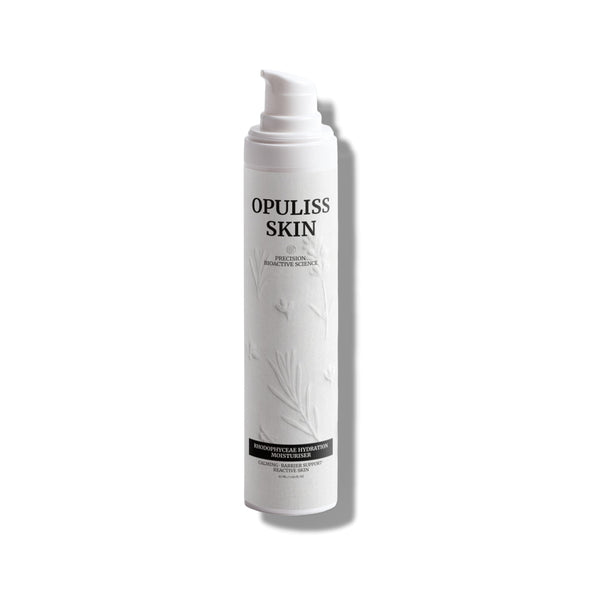
 RHODOPHYCEAE HYDRATION MOISTURISERCalms and hydrates reactive skin with red algae.$281.00
 RHODOPHYCEAE OVERNIGHT CREAMStrengthens the barrier overnight, fragrance-free.$281.00
 RICH NOURISHING COCOA BUTTER CREAMDeeply nourishes dry skin with cocoa butter.$281.00
 BOTANICAL SOOTHING HYALURONATE BIPHASIC REMOVERDissolves makeup and hydrates with hyaluronic acid.$60.00