Is Ginkgo Biloba Extract Good for Skin? What the Topical Studies Show
Ginkgo biloba leaf extract is an antioxidant botanical with small topical studies on elasticity, barrier readings and the look of fine lines. What they found, what they did not, and why the supplement literature does not carry over to a cream.
Is ginkgo biloba extract good for skin? Used on the skin, yes, within limits worth knowing. The leaf extract is an antioxidant botanical, and small topical studies report better elasticity, barrier readings and a smoother look to fine lines. Almost everything else written about ginkgo concerns swallowing it, and none of that carries over to a cream.
Ginkgo is one of the most studied plants in the world, which is exactly the problem. The famous studies are about capsules. This page is about the leaf extract in a gel, and it cites only the work that was done on skin.
What ginkgo biloba leaf extract actually is

Ginkgo biloba is the maidenhair tree, a species older than most of the forests it grows in. On an ingredient label the cosmetic ingredient is Ginkgo Biloba Leaf Extract. Standardised leaf extracts carry two families of molecules: flavonol glycosides, which include quercetin and kaempferol, and terpene lactones. The flavonoids are the antioxidant fraction, and they are the reason ginkgo sits in a skincare formula at all.
The Cosmetic Ingredient Review panel published its safety assessment of ginkgo-derived ingredients in 2024 and concluded that the leaf extract is safe as used in cosmetics, with a note that formulators should keep ginkgolic acid, a known skin sensitiser found in the raw plant, at a low level.1 The same report found the data insufficient for several other ginkgo-derived ingredients, which is one reason a page like this names the exact ingredient rather than the plant.
How it works

Ginkgo's flavonoids scavenge free radicals, the unstable molecules that ultraviolet light and pollution generate in skin. In an animal model, a standardised ginkgo leaf extract applied to the skin before ultraviolet B exposure over three months reduced coarse wrinkle formation, lowered the activity of the enzymes that break down collagen after UV, and reduced the oxidative stress and irritation signals that UV switches on.2 That is the mechanism study, and it explains the direction of everything below.
In people, a formulation carrying ginkgo leaf extract together with green tea extract was applied to forearm skin for fifteen to thirty days. Elasticity and barrier function readings improved, and the two extracts did more together than either did alone.3 A separate pilot study applied a ginkgo leaf cream to volunteers for two weeks and recorded a smoother, tauter look with fewer visible fine lines.4 And in a placebo-controlled trial, a cream combining ginkgo with pomegranate, fig and mulberry extracts was applied for fifty-six days. Wrinkle depth fell by about 11 percent and wrinkle area by about 30 percent against placebo.5
Read together, the topical work points the same way: a botanical antioxidant that supports elasticity, barrier readings and the look of fine lines when it is applied to skin. Each study is small, and each measured a formula rather than ginkgo on its own, which the next section spells out.
What the evidence shows and does not

What it shows: a consistent direction across one animal mechanism study and three small human studies, all of them topical, on elasticity, barrier function and fine lines.
What it does not show: there is no placebo-controlled trial of ginkgo leaf extract alone on wrinkles in people. Every human trial above either paired ginkgo with other extracts or ran for two weeks without a placebo, so the readings belong to those formulas and those durations. There is no published evidence for topical ginkgo on dark spots or uneven pigmentation, and no human trial on redness. This page will not claim any of those.
The bigger caution is about the literature you are most likely to have met. The largest body of ginkgo research by far is oral: capsules studied for reasons that have nothing to do with skin. That evidence is about a different route into a different organ, and it says nothing about a leaf extract in a gel. When a skincare page quotes ginkgo research without saying whether it was topical, assume it was not.
Our standard for every ingredient page is the one in how to tell if a luxury skincare brand is actually science-backed: can you open the citation, and was it done on skin.
The Opuliss products that use it

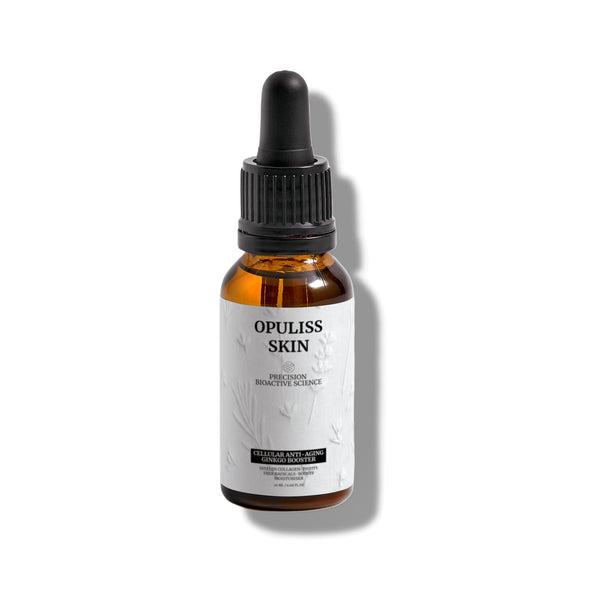
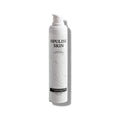
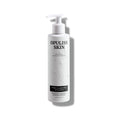
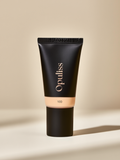
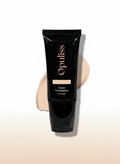
The CELLULAR ANTI-AGING GINKGO BOOSTER is a water-gel antioxidant booster in a 20 ml size, and the CELLULAR ANTI-AGING GINKGO BOOSTER 30 ml is the same formula in the larger size. It is built on four polyphenol botanicals: green tea leaf extract, grape seed extract, ginkgo biloba leaf extract and oak bark extract, carried in a glycerin and carrageenan gel. The pairing with green tea is deliberate, because that is the combination the forearm study measured. The formula is 99 percent natural origin and vegan eligible.
A booster is a layering step, not a moisturiser. It goes on after cleansing and before the cream, morning or night. The ginkgo glossary entry carries the ingredient's regulatory listing, and the skin intelligence finder places the booster in a routine by concern.
Frequently Asked Questions
Is ginkgo biloba an antioxidant for skin? +
Yes. The leaf extract's flavonoids scavenge free radicals, and a topical animal study showed reduced oxidative stress and less collagen breakdown after ultraviolet exposure. That is the best supported thing about it.
Does the ginkgo supplement research apply to skincare? +
No. The oral research is about a different route and different organs. Only the topical studies count for a gel or a cream, and those are the ones cited on this page.
Is ginkgo leaf extract safe to put on skin? +
The Cosmetic Ingredient Review panel assessed it as safe as used in cosmetics in 2024, provided ginkgolic acid is kept low. As with any botanical, patch test on the inner forearm for 24 hours before the first full use.
Will ginkgo brighten dark spots? +
There is no published evidence for topical ginkgo on dark spots, so no. Its measured readings are elasticity, barrier function and the look of fine lines.
References
- Burnett CL, Bergfeld WF, Belsito DV, et al. Safety Assessment of Ginkgo biloba-Derived Ingredients as Used in Cosmetics. Int J Toxicol. 2024;43(1_suppl):64S-81S. DOI 10.1177/10915818231210792. PubMed PMID 37930133 (Burnett 2024).
- Chen CC, Chiang AN, Liu HN, et al. EGb-761 prevents ultraviolet B-induced photoaging via inactivation of mitogen-activated protein kinases and proinflammatory cytokine expression. J Dermatol Sci. 2014;75(1):55-62. DOI 10.1016/j.jdermsci.2014.04.001. PubMed PMID 24802711 (Chen 2014).
- Campos PM, Gianeti MD, Kanashiro A, et al. Synergistic effects of green tea and ginkgo biloba extracts on the improvement of skin barrier function and elasticity. J Drugs Dermatol. 2014;13(9):1092-1097. PubMed PMID 25226010 (Campos 2014).
- Abdellatif AAH, Mohammed HA, Al-Khalaf AM, et al. Ginkgo biloba leaves extract's cosmeceutical evaluation: a preliminary assessments on human volunteers towards achieving improved skin condition and rejuvenation. Drug Dev Ind Pharm. 2023;49(3):1-12. DOI 10.1080/03639045.2023.2204374. PubMed PMID 37074796 (Abdellatif 2023).
- Ghimeray AK, Jung US, Lee HY, et al. In vitro antioxidant, collagenase inhibition, and in vivo anti-wrinkle effects of combined formulation containing Punica granatum, Ginkgo biloba, Ficus carica, and Morus alba fruits extract. Clin Cosmet Investig Dermatol. 2015;8:389-396. DOI 10.2147/CCID.S80906. PubMed PMID 26203268 (Ghimeray 2015).