Heat Styling and the Hair Surface: What Dryers and Irons Measurably Do

Heat wears the hair surface first. A hair dryer study found more surface damage as temperature rose, and flat iron heating tests found keratin began to break down at around 200 degrees C. What that means for distance, temperature and routine, and the Opuliss Skin hair products for each step.
How does heat styling affect the hair surface? It wears the outer surface first. In a hair dryer study, the surface showed more damage as the drying temperature rose, while the inner cortex was untouched. Distance, movement and temperature are the three things that decide how much wear a styling habit adds.
Heat is part of most routines, and the choice is rarely between heat and no heat. This page sets out what studies measured when hair was blow dried and flat ironed, what that means in practice, and where a leave-in mist and a weekly mask fit.
What a hair dryer measurably does
A study washed and dried hair samples 30 times under different conditions: left to dry at room temperature, or blow dried from 15, 10 and 5 cm, at about 47, 61 and 95 degrees C. The hair surface became more damaged as the temperature rose. The inner cortex showed no damage in any group, which the authors read as the surface acting as a barrier for the fibre beneath it.1
Two findings in the same study cut against the obvious reading. The hair left to dry naturally showed damage of its own, in the material that binds the hair's cells together, and it was the only group that did. And drying at room temperature and at 95 degrees C both appeared to shift hair colour lighter after only 10 rounds.1 The authors concluded that a dryer held 15 cm away and kept moving caused less damage than letting hair dry naturally.1
What a flat iron measurably does
Flat irons press much hotter plates directly onto the hair. In heating tests on untreated hair, the hair gave off water between about 25 and 170 degrees C, began to release gases from the breakdown of its protein from about 200 degrees C, and its keratin denatured at 237 degrees C. Microscope images showed heat damage to the outer cuticle, and the amount of protein the hair lost differed between the two hair types tested.2 The authors' conclusion was simple: controlling the temperature is what matters.2
Why the surface matters
The outermost layer of a hair carries fatty acids, some of them chemically bound to it. A study that removed those fatty acids and examined the hair at the scale of billionths of a metre found that their removal caused profound changes in how a test liquid spread across the surface.3 So the surface is not trim. It governs how the hair meets whatever is put on it.
Where keratin fits
Hydrolysed keratin is keratin protein broken into smaller pieces, and the size of those pieces decides where they go. A laboratory study treated chemically relaxed, very curly hair with wool keratin pieces of three sizes. The smallest and middle sizes travelled deep into the hair, while the largest settled on the surface and possibly just into its outer layers. The middle and largest sizes made the fibres stiffer and less likely to break under tension, at both low and high humidity.4
That result belongs to those peptide sizes, on that hair, after a chemical relaxing process. It is not a test of any finished mist, and a label that says Hydrolyzed Keratin does not say which sizes are in it.
A routine that keeps heat in proportion
- Towel dry gently first. The less water left in the hair, the shorter the time under heat.
- Hold the dryer back and keep it moving. In the dryer study, 15 cm with continuous motion was the gentlest heated setting tested.
- Keep irons at the lowest setting that works. In the heating tests, protein breakdown began at around 200 degrees C.
- Mist the lengths before styling. A leave-in goes on the mid-lengths and ends, where the surface is oldest.
- Condition every wash, and use a mask weekly. Rinse-out conditioning keeps the surface slippery between styling sessions.
What the evidence shows and does not
What it shows: blow drying wears the hair surface more as the temperature rises, drying naturally carries damage of its own, hair heated to around 200 degrees C begins to break down, and larger keratin pieces settle on the hair surface in the laboratory.124
What it does not show: these were laboratory studies on hair samples, not trials of a routine on people's heads, and none tested the Opuliss products named below. No study we found has tested a leave-in mist as a shield against a hot tool, so we do not describe ours as one. None of this is a promise about a bottle. It is a way of choosing one.
The Opuliss products for styled hair
All three are Opuliss Skin products. Each page lists the full ingredients and advises a patch test before first use.
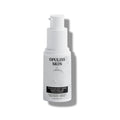
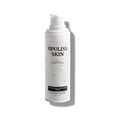
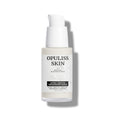
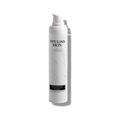
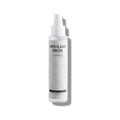
The KERATIN SHIELD HAIR MIST is a 100 ml leave-in mist built on hydrolysed keratin from sheep wool, a red algae extract and a radish root ferment filtrate. It is 99 percent natural origin and, because of the wool keratin, not vegan eligible. Its page directs it to damp or dry hair, from 15 to 20 cm, on the mid-lengths and ends.
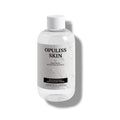
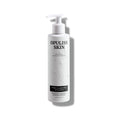
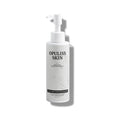
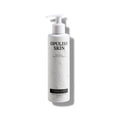
The DEEP RECONSTRUCT HAIR MASK is a 170 ml weekly rinse-off mask led by chanterelle extract, Sodium PCA and a rapeseed-derived conditioning agent, in a base of coconut, avocado, evening primrose and sweet almond oils. It is 98 percent natural origin and vegan eligible, and goes on from mid-lengths to ends for 10 to 20 minutes after shampooing. The HIGH GLOSS CONDITIONER is a 370 ml rinse-out conditioner for every wash in between.
Our article on what coconut oil really does for skin and hair covers one of the oils in the mask, and the ingredient library carries entries for the others.
Frequently Asked Questions
Is it better to let hair air dry than to blow dry it? +
Not always. In a hair dryer study, naturally dried hair showed damage of its own that the heated groups did not, and a dryer held 15 cm away and kept moving caused less damage overall than natural drying.
What temperature is too hot for a flat iron? +
In heating tests, hair began to release gases from the breakdown of its protein from about 200 degrees C, and its keratin denatured at 237 degrees C. The lowest setting that styles your hair is the one to use.
Does a keratin mist protect hair from heat? +
We have not found a study that tests a leave-in mist against a hot tool, so we do not claim that. What laboratory work shows is that larger keratin pieces settle on the hair surface. Distance and temperature remain the parts of heat styling you control.
Is the keratin in hair products vegan? +
It depends on the source, which the label name does not show. The keratin pieces in the laboratory study came from wool, and the keratin in the Opuliss mist comes from sheep wool, so that product is not vegan eligible. Its page says so.
References
- Lee Y, Kim YD, Hyun HJ, et al. Hair shaft damage from heat and drying time of hair dryer. Ann Dermatol. 2011, 23(4):455-62. DOI 10.5021/ad.2011.23.4.455. PubMed PMID 22148012 (Lee 2011).
- Lima CRRC, Couto RAA, Freire TB, et al. Heat-damaged evaluation of virgin hair. J Cosmet Dermatol. 2019, 18(6):1885-1892. DOI 10.1111/jocd.12892. PubMed PMID 30861299 (Lima 2019).
- Dupres V, Langevin D, Guenoun P, et al. Wetting and electrical properties of the human hair surface: delipidation observed at the nanoscale. J Colloid Interface Sci. 2007, 306(1):34-40. PubMed PMID 17109878 (Dupres 2007).
- Malinauskyte E, Shrestha R, Cornwell PA, et al. Penetration of different molecular weight hydrolysed keratins into hair fibres and their effects on the physical properties of textured hair. Int J Cosmet Sci. 2021, 43(1):26-37. DOI 10.1111/ics.12663. PubMed PMID 32946595 (Malinauskyte 2021).