What Conditioner Actually Does After Shampoo: Friction and the Hair Surface

Conditioner coats the hair surface with a slippery layer that lowers the friction between hairs, which is what makes hair easier to comb and softer to the touch. What shampoo removes, why damaged hair feels rough, and the Opuliss Skin shampoos and conditioners for each step.
What does conditioner actually do after shampoo? It coats the hair surface with a slippery layer. That layer lowers the friction between hairs, which is what makes hair easier to comb and softer to the touch. It matters most on hair whose own water-repelling surface has been worn away by colour processing.
Shampoo and conditioner do two different jobs, and most routines blur them. This page explains what a shampoo removes, why hair turns rough and tangled, what laboratory studies measured when a conditioner was applied, and which Opuliss Skin products fit each step.
What shampoo is for
Shampoo cleans two things at once: the scalp, which is skin, and the hair. For the scalp, the same rules apply as for any cleanser. Cleansers built on alkaline soap cause more irritation and dryness than those built on synthetic detergents, because the synthetic kind is less inclined to disturb skin proteins.1 A review of cleanser science adds that harsh surfactants can damage skin proteins and lipids, and that a very alkaline wash can make the outer layer of skin swell, so a cleanser nearer the skin's own mildly acidic pH may be less damaging.2
So the practical aim for a shampoo is to clean the scalp without stripping it, and to leave the lengths for the conditioner. Lather at the roots. The rinse carries enough through the lengths to clean them.
Why hair turns rough and tangled
An untreated hair has a thin, oily, water-repelling layer on its outer surface. A laboratory study put hair through an oxidative process of the kind used to lift hair colour, and found that it removed that layer in places, or across large areas. The hair then wetted more easily with water, lost gloss and softness, and showed more friction when touched and when slid against itself, which the authors identified as the main cause of the strawy feel of hair after that process.3
Water makes friction worse. A study that measured friction on single hairs with a fine probe found that chemically treated hairs could be told apart from untreated ones by their friction, and that every kind of hair tested showed more friction in water than in dry air.4 That is one reason wet hair tangles, and why combing is kinder once conditioner is in.
What conditioner puts back
In the same study, suitable conditioner emulsions partly or fully restored the water-repelling surface and made the hair slide again, and the change showed up in measurements of the work needed to comb it wet and dry. Conditioners made without silicones did about as well as a conventional silicone conditioner.3 In the single hair study, conditioner was found spread along the whole outer surface of the hair.4
A third study measured friction across whole hair swatches with a probe shaped to mimic a fingertip. Conditioned hair behaved differently from natural hair as the probe began to move, and friction depended both on the coating and on how well the hairs lay in line with each other.5 So how hair feels under the hand is partly its surface and partly its arrangement.
On an ingredient list, the conditioning agents in the rinse-out conditioners below are Behentrimonium Chloride and Distearoylethyl Dimonium Chloride, both listed as cationic, meaning positively charged, conditioning agents. They are rinsed off, and the layer they leave is what the hand feels.
How to use the two together
- Shampoo at the scalp. Massage it into wet hair at the roots and let the rinse run through the lengths.
- Condition the lengths. Work conditioner through the mid-lengths and ends, where the surface is oldest and most worn, rather than onto the scalp.
- Detangle while the conditioner is in. Hair measured more friction wet than dry, so wet hair is best combed with conditioner on it.
- Rinse, then leave it. The layer that stays behind after rinsing is the part doing the work.
Our guide to luxury scalp care covers the scalp oil and scrub steps that sit either side of the wash, and what textured hair care learned the hard way looks at how hair care came to take the hair surface seriously.
What the evidence shows and does not
What it shows: an oxidative colour process strips the hair's outer water-repelling layer and raises friction, wet hair has more friction than dry hair, and a conditioner can restore a slippery surface in laboratory measurements of combing and friction.345 Synthetic detergents are gentler on skin, including the scalp, than alkaline soaps.1
What it does not show: the friction studies were run on hair samples in a laboratory, on particular formulas that are not the Opuliss ones, and they measured the hair surface, not how long an effect lasts through a week of washing. The cleanser findings come from reviews of skin, which the scalp is, rather than from shampoo trials. None of this is a promise about a bottle. It is a way of reading one.
The Opuliss products for washing and conditioning
All four are Opuliss Skin products. Each page lists the full ingredients and advises a patch test before first use.
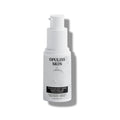
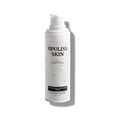
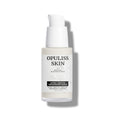
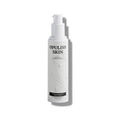
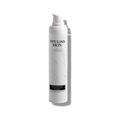
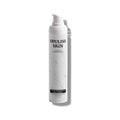
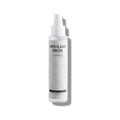
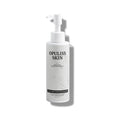
The DEEP HYDRATION SHAMPOO is a 290 ml shampoo on an aloe leaf juice base, with Sodium PCA, honey and trehalose, and the amino acid surfactant Disodium Cocoyl Glutamate alongside Sodium Coco-Sulfate. It is 99 percent natural origin. The HIGH GLOSS SHAMPOO is a 400 ml shampoo on an aloe leaf juice base with Sodium Coco-Sulfate, Coco-Glucoside and Cocamidopropyl Betaine, plus hydrolysed wheat protein. It is vegan eligible, and its page carries a wheat protein advisory.
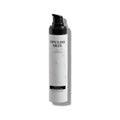
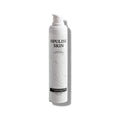
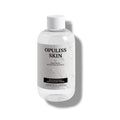
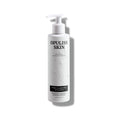
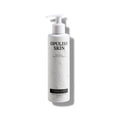
The HIGH GLOSS CONDITIONER is a 370 ml rinse-out conditioner that pairs Behentrimonium Chloride with Distearoylethyl Dimonium Chloride, with avocado oil, panthenol and Tocopherol. The MOISTURE REPAIR CONDITIONER is a 370 ml rinse-out conditioner led by Distearoylethyl Dimonium Chloride, with panthenol and hydrolysed wheat protein. Both are vegan eligible.
The ingredient library carries entries for the conditioning agents and humectants named here.
Frequently Asked Questions
Should conditioner go on the scalp? +
Usually not. Conditioner does its work on the hair surface, and the oldest, most worn surface is on the mid-lengths and ends. The scalp is skin, and the shampoo is the product meant for it.
Why does over-processed hair feel like straw? +
In a laboratory study, an oxidative process of the kind used to lift hair colour removed the hair's thin water-repelling surface layer and raised the friction of the hair, which the authors named as the main cause of the strawy feel. A conditioner restored a slippery surface in the same study.
Is a silicone-free conditioner less effective? +
Not necessarily. In that study, conditioners made without silicones restored the hair surface about as well as a conventional silicone conditioner did.
When is the best time to comb hair? +
While the conditioner is in. Hair showed more friction wet than dry in the single hair study, so wet combing without conditioner is the hardest on the hair surface.
References
- Draelos ZD. The science behind skin care: Cleansers. J Cosmet Dermatol. 2018, 17(1):8-14. DOI 10.1111/jocd.12469. PubMed PMID 29231284 (Draelos 2018).
- Ananthapadmanabhan KP, Moore DJ, Subramanyan K, et al. Cleansing without compromise: the impact of cleansers on the skin barrier and the technology of mild cleansing. Dermatol Ther. 2004, 17 Suppl 1:16-25. PubMed PMID 14728695 (Ananthapadmanabhan 2004).
- Liu Z, Graf K, Hub J, et al. Effects of Cosmetic Emulsions on the Surface Properties of Mongolian Hair. ACS Omega. 2022, 7(13):10910-10920. DOI 10.1021/acsomega.1c06526. PubMed PMID 35415322 (Liu 2022).
- Nikogeorgos N, Fletcher IW, Boardman C, et al. Nanotribological characterization of human head hair by friction force microscopy in dry atmosphere and aqueous environment. Biointerphases. 2010, 5(2):60-8. DOI 10.1116/1.3432462. PubMed PMID 20831350 (Nikogeorgos 2010).
- Galliano A, Fougere M, Wolfram L, et al. Tribology of an assembly of hairs: Influence of multiscale surface chemistry and structure on sensorial tactile properties. Skin Res Technol. 2021, 27(4):607-617. DOI 10.1111/srt.12993. PubMed PMID 33404155 (Galliano 2021).