Why Luxury Skincare Has Not Claimed Escin, Its Most Rigorously Studied Botanical
Cochrane has pooled 17 randomized controlled trials on a single botanical. It has also been studied in cells, in animals, and in a large topical trial. It appears in roughly 0.2 percent of cosmetic products on market. No luxury skincare brand has built a story around it. The compound is escin.
This article looks at why. The pharmacology is solid. The narrative gap is wide. For anyone reading skincare claims, it is a case study in how luxury positioning lags published evidence.
What is escin?

Escin is a group of plant compounds extracted from horse chestnut seeds. The principal active form is beta-escin. It has been studied in pharmacology for over forty years. INCI label name on cosmetic products: Escin, or the long form Aesculus Hippocastanum Seed Extract. The full chemical class is in appendix A1.
It is not a novel cosmetic active. The novelty is the absence of a luxury brand willing to put it at the center of a product narrative.
What does the Cochrane evidence show?
The strongest evidence on escin comes from a 2012 Cochrane systematic review of 17 trials (Pittler and Ernst, 2012, DOI 10.1002/14651858.CD003230.pub4). The trials gave adults with aching, swollen legs horse chestnut seed extract by mouth, against a placebo, and measured leg discomfort and leg volume.
In one of those trials, leg discomfort fell 42.4 mm more than with placebo on a 100 mm scale. Across six trials with 502 people, leg volume fell by an average of 32.1 mL more than with placebo. The review concluded that the evidence suggests the extract is effective and safe over the short term, for that use, and asked for larger trials to confirm it.
The honest caveat. This evidence is oral, not topical. The measures were leg discomfort and leg volume, not facial skin.
The Cochrane review shows a measurable effect on the legs when the extract is taken by mouth. It does not transfer directly to facial application. Any brand using escin in skincare should preserve that calibration.
How does escin work?
Studies in cells and animals describe six ways escin acts. All are peer-reviewed, and most were measured in the lab rather than on human skin. Plain-language summary below, with full molecular detail in the Technical appendix.
- Quiets irritation signals in cells. In lab studies, escin raised the level of a receptor cells use to switch off irritation signals (appendix A2).
- Lowers irritation messengers in animal skin. In an animal study, escin gel lowered chemical messengers linked to redness and swelling (A5).
- Supports a barrier protein. In a mouse study, escin kept up filaggrin, a protein that helps hold the outer skin layer together (A7).
- Steadies small vessel walls. In lab studies, it limited fluid leaking through the walls of small blood vessels (A3).
- Protects hyaluronic acid. Blocks the enzyme that breaks it down in connective tissue (A4).
- Outperforms vitamin E. Ranked among the highest plant antioxidants in lab assays across 65 botanicals tested (A6).
Why has the category not claimed escin?
The established luxury skincare houses tend to build identity around a single proprietary or strongly nameable hero. The hero earns prominence from one of three sources. A proprietary complex with a coined name. A regenerative-medicine research origin. A dermatologist credentialing transferred to a single botanical.
Escin offers none of these framing assets cleanly. Its strongest evidence is on leg discomfort and swelling when taken by mouth, not on facial skin. Its topical research comes from sports injuries and animal studies.
It is not proprietary. It does not carry a single celebrity researcher's name.
What does the topical evidence look like?

The most cited topical trial is Wetzel and colleagues 2002 (DOI 10.1136/bjsm.36.3.183). It was a Phase III trial of 158 patients with acute sports injuries. The active was a combination gel: 1 to 2 percent escin plus diethylammonium salicylate plus heparin. Both concentrations beat placebo. The safety verdict was excellent.
The caveat. The gel was a combination, so escin alone cannot be isolated as the responsible active. The application site was limb injuries, not the periorbital area.
Animal model evidence is more direct. Several mouse and rat studies report that escin applied to the skin lowered irritation messengers and kept a barrier protein up (appendices A5, A7, A3). What is missing: a trial of escin alone on human facial or eye-area skin. A targeted PubMed search returned zero such trials as of May 2026.
The lab mechanism is well described. The finished-product facial trial is the open question.
What does this mean?
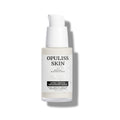
Opuliss Skin positions escin as a hero active on its cellular anti-aging eye-area formulations. The concentration sits at the 1 to 2 percent range used in the Wetzel trial. The evidence calibration matches what the field has published. The remaining gap, a finished-product trial on facial skin, is the same one the entire category shares.
Frequently Asked Questions
Is escin proven to work on facial skin? +
The lab mechanism is well described, but the finished-product facial trial is the open question. A trial of escin alone on human facial or eye-area skin is missing, and a targeted PubMed search returned zero such trials as of May 2026.
Why has no luxury brand claimed escin? +
Escin offers none of the framing assets luxury houses tend to build around. It is not proprietary, it does not carry a single celebrity researcher's name, and its strongest evidence is on leg discomfort and swelling when taken by mouth, not on facial skin.
Is escin safe? +
In the Cochrane review, side effects of horse chestnut seed extract taken by mouth were usually mild and infrequent. In the Wetzel topical trial of 158 people, the gel's safety and tolerability were rated excellent.
Sources
-
Pittler MH, Ernst E. Horse chestnut seed extract for chronic venous insufficiency. Cochrane Database Syst Rev. 2012;11(11):CD003230. DOI: 10.1002/14651858.CD003230.pub4.
-
Wetzel D, Menke W, Dieter R, Smasal V, Giannetti BM, Bulitta M. Escin combination gel for the topical treatment of acute impact injuries: a randomised, double blind, placebo controlled, multicentre study. Br J Sports Med. 2002;36(3):183-188. DOI: 10.1136/bjsm.36.3.183.
-
Wang Y, et al. Beta-escin upregulates glucocorticoid receptor expression. Exp Ther Med. 2013. DOI: 10.3892/etm.2013.1128.
-
Gallelli L. Escin: a review of its anti-edematous, anti-inflammatory, and venotonic properties. Drug Des Devel Ther. 2019;13:3425-3437. DOI: 10.2147/DDDT.S207720.
-
Gallelli G, Gallelli L, et al. The pharmacological response to escin: emerging mechanisms. Drug Des Devel Ther. 2021;15:3501-3510. DOI: 10.2147/DDDT.S297501.
-
Park J, et al. Anti-inflammatory and barrier-protective effects of escin in a mouse atopic dermatitis model. J Microbiol Biotechnol. 2025. DOI: 10.4014/jmb.2410.10025.
-
Zhao H, et al. External application of escin gel attenuates cutaneous inflammation in animal models. Chin J Nat Med. 2018. DOI: 10.1016/S1875-5364(18)30036-0.
-
Frick S. Topical treatment with horse chestnut seed extract: hyaluronidase inhibition data. Angiology. 2000. DOI: 10.1177/000331970005100303.
-
Wang Y, et al. Anti-inflammatory effect of beta-escin in mice exceeds dexamethasone duration. Pharmacol Rep. 2009. DOI: 10.1016/s1734-1140(09)70122-7.
-
Guillaume M, Padioleau F. Veinotonic effect, vascular protection, anti-inflammatory and free radical scavenging properties of horse chestnut extract. Arzneimittelforschung. 1994. PMID 8135874.
-
Wilkinson JA, Brown AMG. Horse Chestnut, Aesculus hippocastanum: potential applications in cosmetic skin care products. Int J Cosmet Sci. 1999;21(6):437-447. PMID 18503457.
-
Yan L, Zhang Y, Li Y, et al. Efficacy and mechanism of escin in improving the tissue microenvironment of blood vessel walls via anti-inflammatory and anticoagulant effects. Open Life Sci. 2025;20(1):20251167. DOI 10.1515/biol-2025-1167. PMID 41245382. PMC12619636.
-
Jeong S, et al. Optimal topical escin concentration in a rat tail lymphedema model. Int J Low Extrem Wounds. 2023. DOI: 10.1177/15347346231195944.
-
Sirtori CR. Aescin: pharmacology, pharmacokinetics, and therapeutic profile. Pharmacol Res. 2001;44(3):183-193. PMID 11529685.
-
Geisler R, Dargel C, Hellweg T. The Biosurfactant β-Aescin: A Review on the Physico-Chemical Properties and Its Interaction with Lipid Model Membranes and Langmuir Monolayers. Molecules. 2019, 25(1):117. PMID 31892278.
Citation validity verified against PubMed and Cochrane Library on 2026-05-15.
Technical appendix

A1. Chemical class
Escin is a mixture of oleanane-type pentacyclic triterpenoid saponins extracted from the seeds of Aesculus hippocastanum. Beta-escin is the principal bioactive isomer (Sirtori, 2001, PMID 11529685). Molecular weight approximately 1,131 g/mol. Soluble in water and ethanol. pH stability range 4.5 to 7.0. Plasma protein binding greater than 90 percent.
A2. Glucocorticoid receptor upregulation and NF-kB suppression
Escin upregulates glucocorticoid receptor expression and suppresses NF-kB signaling. Wang and colleagues (2013, DOI 10.3892/etm.2013.1128) established the pathway in vitro. Gallelli (2021, DOI 10.2147/DDDT.S297501) confirmed it in a mechanism review. Wang and colleagues (2009, DOI 10.1016/s1734-1140(09)70122-7) reported that, in mice, the effect of escin on irritation lasted longer than that of the comparison compound in the same study.
A3. Vascular permeability and PECAM-1 protection
Escin prevents hypoxia-induced disruption of PECAM-1 distribution in capillary walls, limiting fluid build-up in the surrounding tissue (Gallelli, 2019, DOI 10.2147/DDDT.S207720; Yan, 2025, PMC12619636).
A4. Hyaluronidase inhibition

Frick (2000, DOI 10.1177/000331970005100303) demonstrated that escin inhibits the enzyme responsible for endogenous hyaluronic acid degradation in connective tissue. For a skincare formulation pairing escin with hyaluronic acid, this is a direct mechanistic synergy.
A5. Cytokine suppression
Zhao and colleagues (2018, DOI 10.1016/S1875-5364(18)30036-0) showed that external escin gel suppresses cutaneous prostaglandin E2, tumor necrosis factor alpha, and interleukin 1 beta in rats and mice whose skin was made to swell on purpose for the study.
A6. Antioxidant ranking
Guillaume and Padioleau (1994, PMID 8135874) tested a horse chestnut extract standardized to 70 percent escin against 65 plant extracts in lipid peroxidation assays. The extract ranked among the highest active-oxygen scavengers, above vitamin E.
A7. Barrier protein in a mouse study
Park and colleagues (2025, DOI 10.4014/jmb.2410.10025) reported that escin kept up filaggrin, a protein that helps hold the outer skin layer together, in mice whose skin was irritated with house dust mite extract for the study. It also lowered several irritation messengers: thymic stromal lymphopoietin, interleukin 4, interleukin 13, interleukin 1 beta, and tumor necrosis factor alpha.
Welcome to The World of Opuliss
The Science of Skincare
Want More Skincare Science?
Join the Opuliss Beauty global community for expert insights, ingredient deep dives, and exclusive offers delivered straight to your inbox.
By subscribing, you'll be tagged as a newsletter subscriber and join our community of skincare enthusiasts.
Shop the article

 BARRIER EYE CREAMConditions the eye barrier with ceramides and a collagen amino ester.$290.00
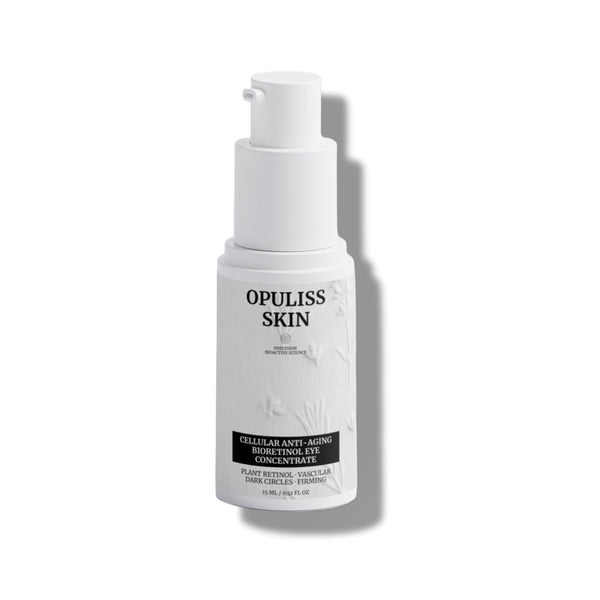
 CELLULAR ANTI-AGING BIORETINOL EYE SERUMBuilt on Bidens Pilosa, a plant alternative to retinol, for the eyes.$162.00
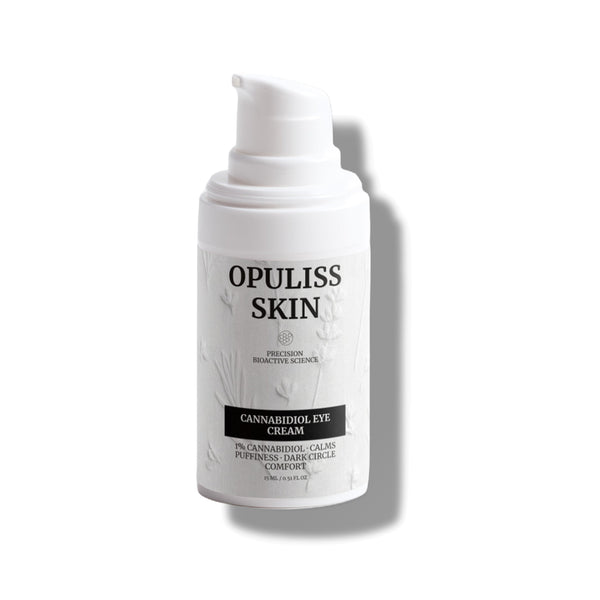
 CANNABIDIOL EYE CREAMSoothes puffiness and the look of dark circles with cannabidiol.$290.00
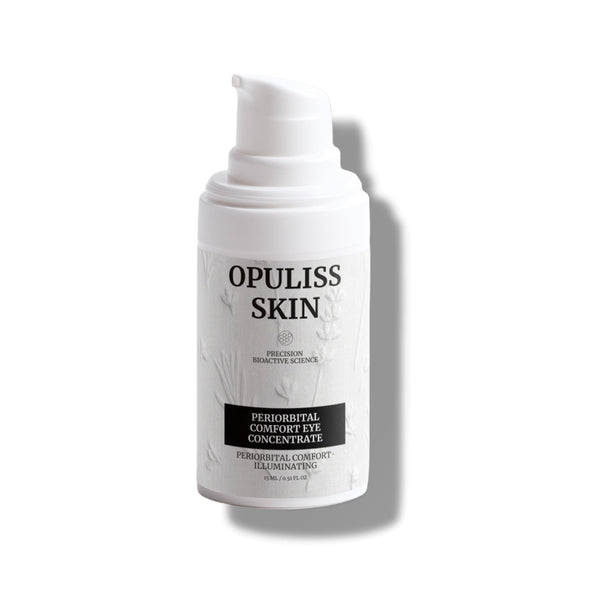
 PERIORBITAL COMFORT EYE CONCENTRATEHydrates and comforts tired-looking eyes with hyaluronic acid.$290.00