A Men's Hair, Scalp and Beard Routine: What Each Step Is For

A men's routine needs three things: a wash mild enough for hair, scalp and body, care for the beard and the skin beneath it, and a face product matched to how much oil the skin makes. What studies measured about men's skin, and the Opuliss Skin products for each step.
What does a men's hair, scalp and beard routine need? Three things: a wash mild enough for hair, scalp and body, something to keep the beard and the skin beneath it comfortable, and a face product matched to how much oil the skin makes. On average, men's skin makes more of it than women's.1
Most men's routines are built from habit rather than from what skin and hair actually do. This page sets out what studies have measured about men's skin, what a mild wash is, why the skin under a beard deserves its own attention, and which Opuliss Skin products fit each step.
How men's skin differs, measured
The clearest comparison comes from a study that measured water loss, surface hydration, oil output and surface pH on the forehead, cheek, neck, forearm and back of the hand in healthy men and women aged 20 to 74. Men's skin produced more sebum at every age, and their output held steady as they got older, while women's fell over the years. Men's skin surface pH sat below 5 across every site and age group, where women's was mostly above it.1
The same study found that men's skin lost less water than women's until about the age of 50, and that their surface hydration began to fall from about 40.1 So the practical picture is oilier skin that can still turn drier with age, which is why one product rarely suits every man, or every decade.
Shaving adds a local difference. In pilot studies on healthy men in China, the skin of the shaved area ran warmer, held less water and showed a weaker barrier reading than the rest of the face.2 The beard area is not simply more of the same face.
One wash for hair, scalp and body: what mild means
A two-in-one wash is a sensible shortcut, because the scalp is skin and the same cleanser meets it, the hair and the body in one step. What matters is how harsh that cleanser is. Skin cleansers are built either on alkaline soaps or on synthetic detergents, and the synthetic kind causes less irritation and dryness because it is less inclined to disturb skin proteins.3
A review of cleanser science adds two points. Harsh surfactants can damage skin proteins and lipids, which is what the tight, dry feeling after washing is. And a very alkaline wash can make the outer layer swell, so a cleanser nearer the skin's own mildly acidic pH may be less damaging.4 The same review notes that conditioning ingredients added to a cleanser can soften those effects.4
For the scalp in particular, our guide to luxury scalp care covers the oil and scrub steps that sit either side of the wash.
The beard and the skin beneath it
A beard oil does two jobs at once. It coats the hair so it feels softer and sits more neatly, and it reaches the skin underneath, which the shaving studies suggest can run drier than the surrounding face.2
Hemp seed oil is a common base for this. An analysis of hemp seed oils from eight regions found that more than 90 percent of their fatty acids were unsaturated, that the polyunsaturated share was mostly linoleic and alpha-linolenic acid in a ratio close to three to one, and that the oils carried a form of vitamin E called gamma-tocopherol.5 That describes the oil itself. No study we could find has tested a beard oil on beards, so the case for one rests on what the oil is made of rather than on a trial.
Matching the face product to how much oil skin makes
Because oil output varies so much between men, the face product is the step to choose most carefully. Skin that turns shiny by midday usually sits better with a light gel that has no oil phase. Skin that feels tight after shaving or washing usually wants a cream with some emollient in it. Our article on what to look for in an oil-free face gel for men covers the gel side in more depth.
A simple order works for most men. Wash in the shower. Apply the face product to damp, clean skin afterwards. Work a few drops of oil through the beard and onto the skin beneath it last, so the oil does not sit under the face product.
What the evidence shows and does not
What it shows: on average, men's skin makes more sebum than women's and keeps making it with age, the shaved area of the face measured drier and with a weaker barrier reading than the rest of the face in the studies above, and synthetic detergents are gentler on skin than alkaline soaps.123
What it does not show: none of these studies tested the Opuliss products named below. The sex comparison describes averages across groups, so any one man can sit anywhere in the range. The shaving findings come from pilot studies in one population. And the hemp seed oil figures describe the oil's make-up, not what it does to a beard.5 None of this is a promise about a bottle. It is a way of choosing one.
The Opuliss products for a men's routine
All four are Opuliss Skin products. Each page lists the full ingredients and advises a patch test before first use.
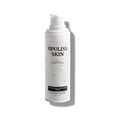
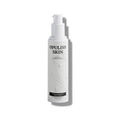
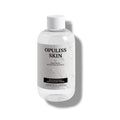
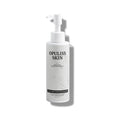
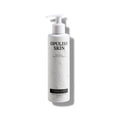
THE ROSE CONDITIONING WASH FOR MEN is a 490 ml hair and body wash on a cleansing base of Sodium Coco-Sulfate, Coco-Glucoside and Cocamidopropyl Betaine, with rose flower water and a rapeseed-derived conditioning complex. It is 98 percent natural origin and vegan eligible, and its page carries an advisory because it contains hydrolysed wheat protein.
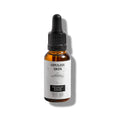
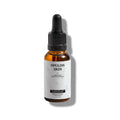
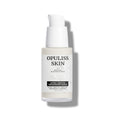
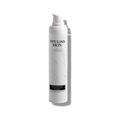
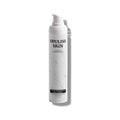
The CANNABIDIOL BEARD OIL is a 20 ml dry-touch oil for the beard and the skin beneath it, pairing 1 percent Cannabidiol with a hemp seed oil base, Tocopherol and light emollient esters. It is 100 percent natural origin and vegan eligible, and its page suggests a 24 hour patch test on beard-area skin first.
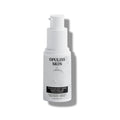
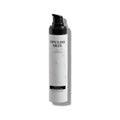
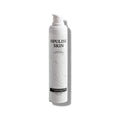
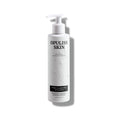
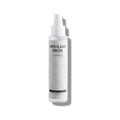
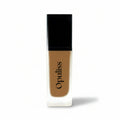
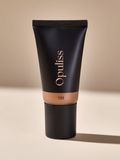
The ZINC PCA BALANCING GEL FOR MEN is a 50 ml gel with no oil phase, led by Zinc PCA with multi-weight hyaluronic acid and a prebiotic sugar complex on an aloe leaf juice base. The DUAL-HA HYDRATION CREAM FOR MEN is a 50 ml cream built on multi-weight hyaluronic acid with raspberry seed oil and jojoba seed oil, for skin that feels tight rather than shiny.
The ingredient library carries an entry for each of the main ingredients named here.
Frequently Asked Questions
Is a two-in-one hair and body wash enough for men? +
For many men, yes. The scalp is skin, so one mild wash can serve hair, scalp and body. What matters is that the wash is built on milder synthetic detergents rather than an alkaline soap, and that it includes conditioning ingredients.
Do men need a different face product from women? +
Not because of sex as such. On average men's skin makes more sebum, so more men suit a light gel. But the range between individuals is wide, and the right product depends on how shiny or tight your own skin feels.
Where does beard oil go, on the hair or the skin? +
Both. Work a few drops through the beard and down to the skin beneath it. The skin under a beard is the part most easily forgotten, and the shaving studies found the shaved area of the face can run drier than the rest.
In what order should a men's routine go? +
Wash first, then the face gel or cream on damp skin, then beard oil last. Putting the oil on last keeps it from sitting under the face product.
References
- Luebberding S, Krueger N, Kerscher M. Skin physiology in men and women: in vivo evaluation of 300 people including TEWL, SC hydration, sebum content and skin surface pH. Int J Cosmet Sci. 2013, 35(5):477-83. DOI 10.1111/ics.12068. PubMed PMID 23713991 (Luebberding 2013).
- Wu Y, Konduru R, Deng D. Skin characteristics of Chinese men and their beard removal habits. Br J Dermatol. 2012, 166 Suppl 1:17-21. DOI 10.1111/j.1365-2133.2011.10785.x. PubMed PMID 22385031 (Wu 2012).
- Draelos ZD. The science behind skin care: Cleansers. J Cosmet Dermatol. 2018, 17(1):8-14. DOI 10.1111/jocd.12469. PubMed PMID 29231284 (Draelos 2018).
- Ananthapadmanabhan KP, Moore DJ, Subramanyan K, et al. Cleansing without compromise: the impact of cleansers on the skin barrier and the technology of mild cleansing. Dermatol Ther. 2004, 17 Suppl 1:16-25. PubMed PMID 14728695 (Ananthapadmanabhan 2004).
- Chen T, He J, Zhang J, et al. Analytical characterization of Hempseed (seed of Cannabis sativa L.) oil from eight regions in China. J Diet Suppl. 2010, 7(2):117-29. DOI 10.3109/19390211003781669. PubMed PMID 22435611 (Chen 2010).