Why Under-Eye Shadows Look Darker on Brown Skin, and When Concealer Is the Honest Answer
On deeper skin the measured gap in lightness between the under-eye and the cheek is wider. What the published record does and does not measure on skin of type IV and deeper, what a cream can reach, and when a concealer is the honest answer.
Why do under-eye shadows look darker on brown skin, and what can skincare change? What was measured is contrast: the gap in lightness between the under-eye and the cheek is wider at higher Fitzpatrick skin types.1 No study we read explains why. Skincare can reach texture and dryness. For colour that stays, concealer is the honest answer.
Opuliss Skin, the skincare line of the online beauty house Opuliss, sells two eye formulas that sit in this conversation. This page says what each was studied for, and what nobody has studied at all, extending an earlier page on who was actually in the trials.
What the measurement on deeper skin actually found

One clinic study put a number on this. It took a colour reading of the under-eye and another of the cheek on the same face, and worked with the difference in lightness between the two rather than rating the under-eye alone. That difference was wider at higher Fitzpatrick skin types, and so was the grade a clinician gave by eye.1 So the finding is about contrast rather than absolute darkness: on deeper skin the under-eye reads darker against its own surrounding skin.
What it does not offer is a reason. It reports what travels with a wider gap, a family history among them, and stops there. Nothing else we read proposes a mechanism for the tone difference, and this page will not invent one.
Four causes that look the same in the mirror

A systematic review of the published work sorts under-eye darkness into four causes: pigment sitting in the skin, vessels showing through skin thin enough to reveal them, the shape of the socket casting a shadow, and mixtures of those.4 More than one of the first three can sit on the same face, which is why the mirror is no use here.
A separate study in an Indian clinic recorded which form was commonest and what it travelled with. The constitutional kind, present from early life, led the count at 51.5 percent. Lower eyelids were involved in 72.5 percent, and lamp examination placed the pigment in the deeper layer of the skin in 60.5 percent. Short sleep, frequent eye rubbing, uncorrected short sight and a family history were all recorded alongside it.2
The habit half of that list is the part a routine can touch. Rubbing an eye is something you can stop. A deeper layer of pigment is not something a cream reaches.
What we counted in the published record on deeper skin
On 22 September 2026 we searched PubMed for the under-eye darkness terms paired with the word Fitzpatrick. Sixteen records came back. We read each one.
Every study in that set that both enrolled skin at type IV or deeper and measured an appearance outcome was a procedure rather than a product: two laser series, a deep chemical peel series gathered across three decades, and a course of carbon dioxide injections. Two more used the word Fitzpatrick for a wrinkle grading scale rather than for skin type, a different scale wearing the same name, so we set them aside. One is a systematic review devoted to exactly this question in Fitzpatrick skin types IV to VI.3
Widening the search to the whole topical literature on under-eye darkness returned no study restricted to deeper skin. The recent product studies we read either enrolled only Fitzpatrick types I to III, or reported a range of skin types without naming it, or recorded no skin type at all. This is the same gap the site has measured before, in a different aisle, and it is described further in the formulation gap.
What the evidence shows and does not
What it shows: a systematic review of the published options found fillers and fat grafting best suited where volume loss is the cause, surgery where loose skin is, topical creams and chemical peels where pigment is, and lasers mildly to moderately useful for the pigment and vessel kinds. Its own conclusion cautions that high-quality evidence is scarce and the recommendations should be read selectively.4
What it does not show: any published human trial of escin on its own, or any study of escin measured against under-eye colour. We searched PubMed for escin, aescin and horse chestnut against every eye-area term we could think of and found neither. The one study we found that put horse chestnut on the skin around the eye used a gel with 3 percent horse chestnut extract, applied three times a day for nine weeks, and what fell against controls was the wrinkle score at the corner of the eye and on the lower eyelid.5 That is a real trial on a face. It measured lines rather than colour, and it tested the whole extract rather than escin alone, so it says nothing about under-eye tone.
It also shows nothing about the two formulas below, because neither has been through a trial of its own. That is true of most of the category.
The Opuliss products that sit here, and what each was studied for

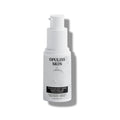
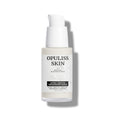
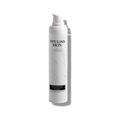
The BARRIER EYE CREAM is a 15 ml periorbital cream at $290, built on a collagen amino acid ester, escin within horse chestnut seed extract, a natural ceramide complex of glycosphingolipids and glycolipids, black tea leaf extract and multi-weight hyaluronic acid. It is 100 percent natural origin, 18 percent organic origin and vegan eligible. Its work is conditioning and comfort on thin, dry skin, and it is not a colour formula.
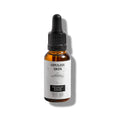
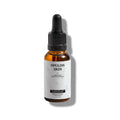
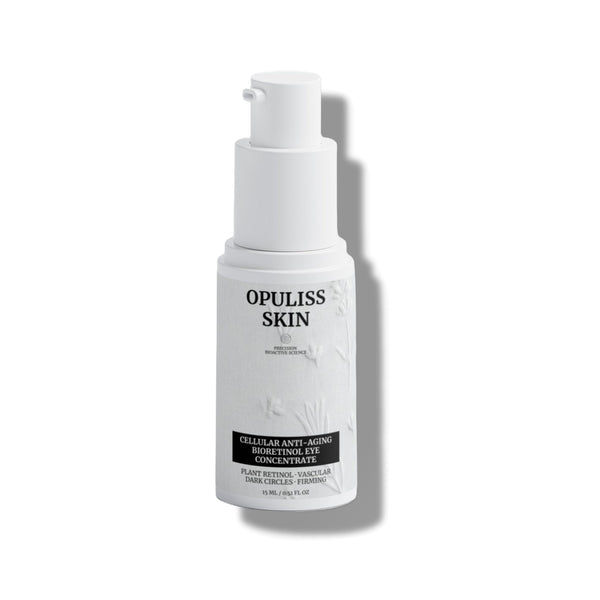
The CELLULAR ANTI-AGING BIORETINOL EYE SERUM is a 15 ml serum at $162, built on Bidens pilosa extract, the same collagen amino acid ester, a marine ferment, escin and borage seed oil, at 100 percent natural origin and 22 percent organic origin. Its published anchor is a human trial in which a combination of andrographolide and Bidens pilosa extract improved wrinkles in various areas, along with skin elasticity and hydration, without irritating side effects.6 Read that carefully. The reading belongs to the combination rather than to Bidens alone, and it is about lines and firmness, not colour. The escin it also carries rests on the wrinkle study above, which says the same thing: lines, not tone.
Both formulas declare Parfum and their naturally occurring fragrance allergens on the label, so patch test on the inner forearm for 24 hours before using either near the eye. The horse chestnut glossary entry and the escin explainer carry the ingredient detail, and the skin intelligence finder places an eye formula in a routine.
When concealer is the honest answer
If the colour is constitutional, sits in the deeper layer and has been there since childhood, no cream on this site will change it. A concealer will, immediately, for as long as you wear it. When the colour sits that deep, covering it is the answer that matches the cause.
The study behind the contrast finding above also reported that using a concealer went with higher stated dissatisfaction, which reads as the people most bothered being the ones already doing something about it.1 A narrative review of cosmetic camouflage gathered quality-of-life studies in people covering visible differences in skin colour and texture, and reads that body of work as pointing to a positive effect.7 Covering something well is a real outcome, measured as such.
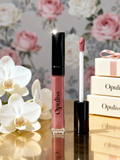
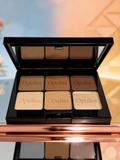
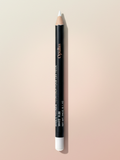
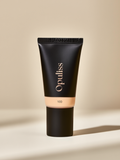
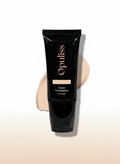
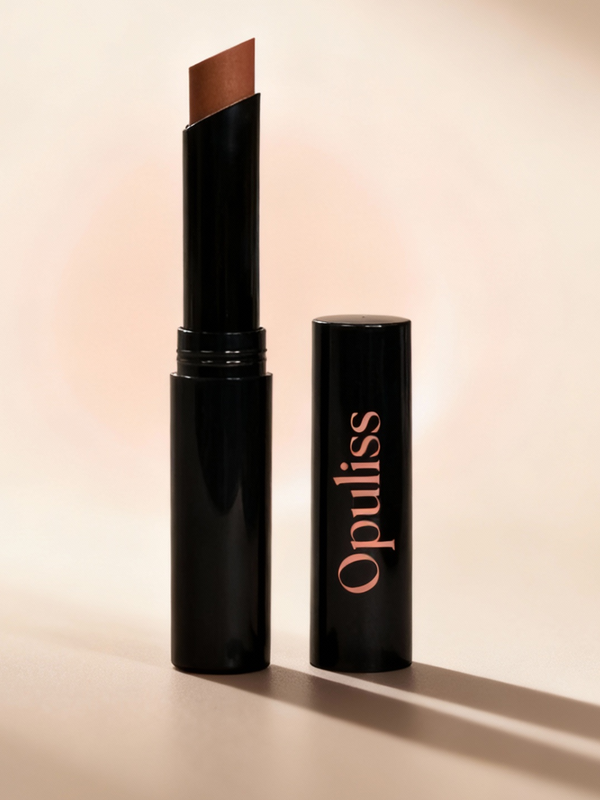
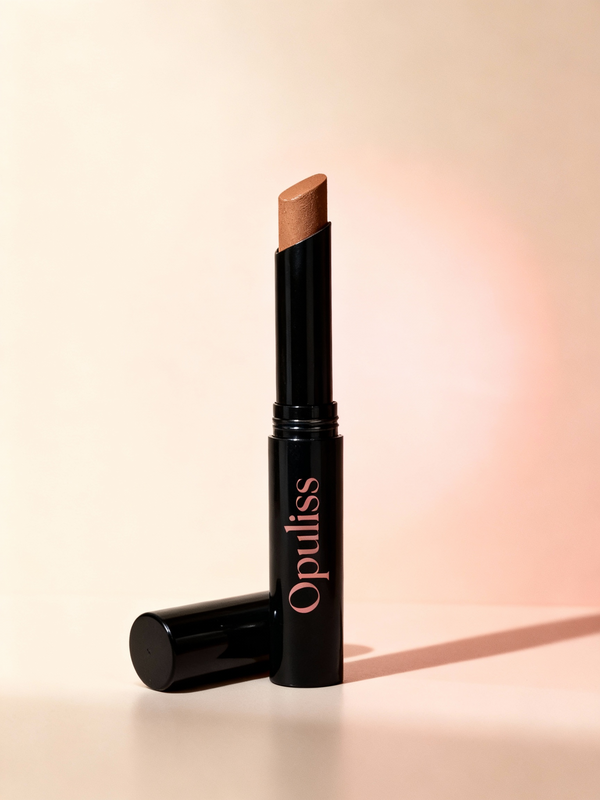
Opuliss Beauty, the colour cosmetics line of the same house, carries concealers, among them Creme Concealer Stick Choco and Creme Concealer Stick Oak. Neither has been photographed on deep skin under one fixed light, so this page names them without picking a depth or an undertone for you. That choice belongs on the makeup side of the site. For the puffiness question rather than the colour one, the caffeine page covers what that ingredient was tested for.
Frequently Asked Questions
Can an eye cream change under-eye colour on brown skin? +
No published trial supports that for either Opuliss eye formula, and we will not imply one. The one eye-area study behind horse chestnut measured the look of fine lines, not tone. Where the colour sits in the deeper layer, a cream is the wrong tool. Where dryness and rough texture are adding to the look, a conditioning eye formula is reasonable.
Is under-eye darkness just a lack of sleep? +
Short sleep was one of several habits recorded alongside under-eye darkness in a clinic study, together with frequent eye rubbing and uncorrected short sight. A family history was recorded too, in most of that group. The study reports those as separate counts and never says how often they met in one person, so sleep is part of the picture rather than the whole of it.
Why does the shadow look worse in some light than others? +
Because part of it is genuinely a shadow, cast by the hollow between the lower lid and the cheek, and a shadow follows whatever is lighting you. Overhead light deepens it and light from in front flattens it. Colour held in the skin does not move that way, which is why one face reads fine in one room and tired in the next.
Are these eye formulas suitable if I react to fragrance? +
Both declare Parfum and their naturally occurring fragrance allergens on the ingredient list, so neither is fragrance free. Patch test on the inner forearm for 24 hours first. The serum also carries a botanical from the daisy family, which matters if you react to ragweed, chamomile or marigold.
References
- Lim HGY, Fischer AH, Sung S, Kang S, Chien AL. Periocular Dark Circles: Correlates of Severity. Ann Dermatol. 2021;33(5):393-401. DOI 10.5021/ad.2021.33.5.393. PubMed PMID 34616119 (Lim 2021).
- Sheth PB, Shah HA, Dave JN. Periorbital hyperpigmentation: a study of its prevalence, common causative factors and its association with personal habits and other disorders. Indian J Dermatol. 2014;59(2):151-157. DOI 10.4103/0019-5154.127675. PubMed PMID 24700933 (Sheth 2014).
- Park M, Akuffo-Addo E, Mar K, Zhu CK, Mukovozov I. Treatments for periorbital hyperpigmentation in Fitzpatrick skin types IV-VI: a systematic review. Arch Dermatol Res. 2024;316(8):552. DOI 10.1007/s00403-024-03278-5. PubMed PMID 39172264 (Park 2024).
- Michelle L, Pouldar Foulad D, Ekelem C, Saedi N, Mesinkovska NA. Treatments of Periorbital Hyperpigmentation: A Systematic Review. Dermatol Surg. 2021;47(1):70-74. DOI 10.1097/DSS.0000000000002484. PubMed PMID 32740208 (Michelle 2021).
- Fujimura T, Tsukahara K, Moriwaki S, et al. A horse chestnut extract, which induces contraction forces in fibroblasts, is a potent anti-aging ingredient. J Cosmet Sci. 2006;57(5):369-376. PubMed PMID 17111071 (Fujimura 2006).
- Ye S, Lee S, Kang S, Jun SH, Kang NG. Improvement of Skin Condition Through RXR Alpha-Activating Materials. Biomolecules. 2025;15(2):296. DOI 10.3390/biom15020296. PubMed PMID 40001599 (Ye 2025).
- Arora A, Bhalla M. Role of cosmetic camouflage in improving quality of life in dermatological disorders: A narrative review. Indian J Dermatol Venereol Leprol. 2025;91(2):196-203. DOI 10.25259/IJDVL_1117_2023. PubMed PMID 39152815 (Arora 2025).
Shop the article

 BARRIER EYE CREAMConditions the eye barrier with ceramides and a collagen amino ester.$290.00
 CELLULAR ANTI-AGING BIORETINOL EYE SERUMBuilt on Bidens Pilosa, a plant alternative to retinol, for the eyes.$162.00
 Choco Concealer Stick$70.00
 Oak Concealer Stick$70.00