Glycolic or Lactic Acid on Deeper Skin: A Strength Ladder
Glycolic and lactic acid on brown and Black skin: what the studies that enrolled deeper skin measured, why irritation and sun sensitivity are the two things to watch, and a three step ladder from a rinse-off cleanser to a 10 percent leave-on concentrate.
Is glycolic acid safe on Black skin, and how often should I use it? The one clinic record set on Fitzpatrick IV to VI skin reports irritation most, and that protocol paired glycolic acid with a second acid. Glycolic acid also raises sun sensitivity. So start low, once a week in the evening, and wear sunscreen every morning.
How glycolic and lactic acid differ
Both are alpha hydroxy acids, water soluble acids that loosen the bonds between dull surface cells so they shed more readily. A review of the family names swelling, burning and itching as the reactions to watch, and concludes that whether an alpha hydroxy acid is a friend or a foe to skin depends on its concentration.1
Glycolic acid is the smaller molecule, which the Opuliss toner's own page gives as the reason it asks Fitzpatrick IV to VI skin to begin once a week. Lactic acid is larger, with a second reading. Lotions with lactic acid raised ceramide levels in the skin's outer layer, and that skin then lost less water after a detergent challenge.2 The effect belonged to the L and mixed forms of lactic acid, not the D form, and labels, ours included, do not say which form they carry. Whether ceramides matter more on deeper skin is still open, as our article on ceramides and the skin barrier across ethnicities explains.
What home strengths have been shown to do
None of these three studies reports a skin type in its summary. A daily 5 percent glycolic acid cream improved general skin texture and discolouration over three months against a plain cream, though its effect on wrinkles did not reach statistical significance.3 Creams with 8 percent glycolic acid or 8 percent lactic acid each improved the overall look of sun-worn facial skin more often than the base cream over 22 weeks, and the authors described both as well tolerated.4 Lactic acid at 5 and 12 percent both improved smoothness and the look of lines, but only the 12 percent changed the dermis, the deeper layer of the skin.5
What the studies on deeper skin measured
Research that names Fitzpatrick IV to VI is thinner, and most of it is about in-clinic peels far stronger than any home product. A 2026 review of peels on these skin types found seven qualifying studies out of 473. It described superficial glycolic and salicylic acid peels as having good safety profiles, recorded one report of chemical burns from improper use, and named small groups and short follow up as the limits.6
In South African clinic records, where most people had type V skin, high-strength glycolic acid peels given in sequence with trichloroacetic acid peels most often brought irritation and cracking, and some people saw temporary darkening.7
Two trials in India, whose summaries give no skin types, compared peels on the look of under-eye darkness. A 20 percent glycolic acid peel gave the larger visible change and the most side effects, with a 15 percent lactic acid peel second on both counts.8 The second trial found the same order for side effects and named them as redness and itching.9
At home strength, an emulsion with 10 percent glycolic acid, 2 percent phytic acid and a soothing complex, used for 12 weeks by women with Fitzpatrick II to VI skin, improved the look of texture and how even the tone looked, and was well tolerated. That reading belongs to the whole formula, not to glycolic acid alone.10
For lactic acid, a sting test put 10 percent lactic acid on one cheek and water on the other. People with types IV to VI called their skin sensitive less often than those with types I to III, and fewer of them stung, though that second gap fell short of statistical significance. The authors concluded that sensitivity occurs across all skin types.11 Deeper skin is not immune to stinging, and 10 percent is the concentrate's strength.
Why sunscreen matters more once you use an acid
A gel with 10 percent glycolic acid, used for three weeks, made skin tan more readily under ultraviolet light in Asian and white volunteers, even where no irritation showed, and it did nothing to a tan that was already there.12 In white volunteers, four weeks of 10 percent glycolic acid lowered the ultraviolet dose needed to redden the skin, and that extra sensitivity was gone a week after stopping.13 So sunscreen belongs to every morning of an acid routine, and the week after.
Opuliss does not make a sunscreen, so that step is yours to choose. Our articles on why mineral sunscreen still leaves a white cast on deep skin and what SPF actually measures help with the choice.
The strength ladder, step by step
Climb a rung only when the one below feels comfortable. The top rung is optional.
Rung one, rinse-off lactic acid. A cleanser gives the acid seconds, not hours: two pumps on damp skin, 30 to 60 seconds, then rinse. Its page allows morning and evening use.
Rung two, 3.5 percent glycolic acid. The first leave-on step. The toner's directions for Fitzpatrick IV to VI skin are once a week, in the evening, on a cotton pad, building slowly. Add a second evening only when the first leaves no stinging or redness the next day.
Rung three, 10 percent lactic acid at pH 4.0 to 4.2. Two to three drops on clean skin in the evening, beginning once a week and working up to two or three evenings a week as tolerated.
The toner's page asks you not to combine it with a higher-strength acid, a strong retinoid or a BHA until your skin is used to it, so the two leave-on rungs take separate evenings. Step down at the first sign of irritation, the commonest reaction in those clinic records.7 Patch test each product on the inner forearm for 24 hours before first use, as all three pages advise.
What the evidence shows and does not
What it shows: at 5 to 12 percent, glycolic and lactic acid have measured readings on texture, smoothness and the look of uneven tone.3 4 5 Irritation was the commonest reaction in the one deeper skin record set, under a protocol that paired high-strength glycolic acid with trichloroacetic acid,7 while the review of peels on these skin types found good safety profiles for the superficial ones.6 Whether an acid helps or harms depends on its concentration.1 Glycolic acid raised sensitivity to ultraviolet light while in use, measured in Asian and white volunteers.12 13
What it does not show: the PubMed search behind this page found no study that tested glycolic acid on its own, at a home strength, on Fitzpatrick IV to VI skin, on a cosmetic reading. Its deeper skin evidence is in-clinic peels and one combination formula. Lactic acid has one clean reading, the sting test. No photosensitivity study in this set enrolled Fitzpatrick IV to VI skin, so that reading comes from other skin types, and the sunscreen step stands on the safety assessment's own condition. No study tested an Opuliss product. Our article on who was actually in the trials shows how wide this gap is.
The Opuliss products on the ladder
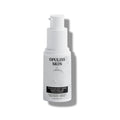
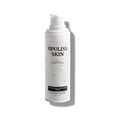
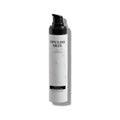
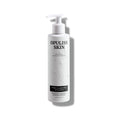
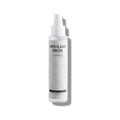
The LACTIC ACID PURIFYING CLEANSER is a 140 ml wash-off cleanser with lactic acid, kaolin clay and sodium PCA, alongside mate leaf and Iceland moss extracts. Its page does not state a lactic acid percentage. It is 98 percent natural origin and vegan eligible. Its ingredient list includes a fragrance, with linalool and linalyl acetate declared.
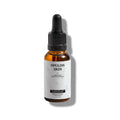
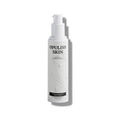
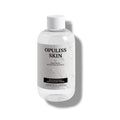
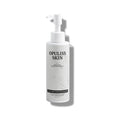
The MILD GLYCOLIC EXFOLIATING TONER is a 250 ml leave-on toner with 3.5 percent glycolic acid, certified organic cranberry and lingonberry fruit extracts, glycerin and sodium PCA. It is vegan eligible.
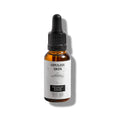
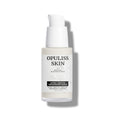
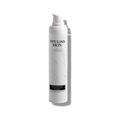
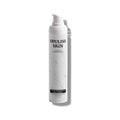
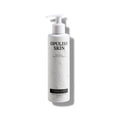
The CELLULAR ANTI-AGING RESURFACING CONCENTRATE is a 30 ml leave-on serum with 10 percent lactic acid at pH 4.0 to 4.2, sodium hyaluronate, and organic white tea and sage leaf extracts. It is COSMOS Natural eligible and vegan eligible.
The glycolic acid and lactic acid glossary entries carry each ingredient's source study. Our article on AHA strengths sets out the limits the safety assessment puts on home products, and the Skin Intelligence Finder builds a full routine from live Opuliss products.
Frequently Asked Questions
Is lactic acid gentler than glycolic acid on deeper skin? +
In two trials of in-clinic peels in India, a 15 percent lactic acid peel caused fewer side effects than a 20 percent glycolic acid peel, and also gave less visible change. Neither acid is gentle at high strength, and a sting test found sensitivity across every skin type.
How often should I use glycolic acid on Black skin? +
Start once a week, in the evening, with a low-strength leave-on product such as a 3.5 percent toner, and add a second evening only when the first leaves no stinging or redness. Wear sunscreen every morning, and for a week after you stop.
Can I use the glycolic toner and the lactic concentrate together? +
Not on the same evening at first. The toner's page asks you not to combine it with a higher-strength acid until your skin is used to it, so the two leave-on steps take separate evenings.
Does glycolic acid make skin tan more easily? +
In one study, three weeks of a 10 percent glycolic acid gel made skin tan more readily under ultraviolet light, in Asian and white volunteers alike, even where no irritation could be seen. Daily sunscreen is the step that answers it.
References
- Tang SC, Yang JH. Dual Effects of Alpha-Hydroxy Acids on the Skin. Molecules. 2018, 23(4):863. DOI 10.3390/molecules23040863. PubMed PMID 29642579 (Tang 2018).
- Rawlings AV, Davies A, Carlomusto M, et al. Effect of lactic acid isomers on keratinocyte ceramide synthesis, stratum corneum lipid levels and stratum corneum barrier function. Arch Dermatol Res. 1996, 288(7):383-390. DOI 10.1007/BF02507107. PubMed PMID 8818186 (Rawlings 1996).
- Thibault PK, Wlodarczyk J, Wenck A. A double-blind randomized clinical trial on the effectiveness of a daily glycolic acid 5% formulation in the treatment of photoaging. Dermatol Surg. 1998, 24(5):573-577. DOI 10.1111/j.1524-4725.1998.tb04209.x. PubMed PMID 9598014 (Thibault 1998).
- Stiller MJ, Bartolone J, Stern R, et al. Topical 8% glycolic acid and 8% L-lactic acid creams for the treatment of photodamaged skin. A double-blind vehicle-controlled clinical trial. Arch Dermatol. 1996, 132(6):631-636. PubMed PMID 8651713 (Stiller 1996).
- Smith WP. Epidermal and dermal effects of topical lactic acid. J Am Acad Dermatol. 1996, 35(3 Pt 1):388-391. DOI 10.1016/s0190-9622(96)90602-7. PubMed PMID 8784274 (Smith 1996).
- Garelick E, Pohani P, Aswani A, et al. Chemical Peels in Skin of Color: A Scoping Review of Safety, Efficacy, and Practice Patterns. Cureus. 2026, 18(5):e108851. DOI 10.7759/cureus.108851. PubMed PMID 42306365 (Garelick 2026).
- Maruma F, Dlova N, Mofokeng TRP, Ngwenya E. The effects and safety of sequential high concentration glycolic acid and trichloroacetic acid chemical peels in skin photo-type IV-VI, a retrospective cross-sectional monocentric review. Int J Womens Dermatol. 2025, 11(3):e209. DOI 10.1097/JW9.0000000000000209. PubMed PMID 40620441 (Maruma 2025).
- Dayal S, Sahu P, Jain VK, Khetri S. Clinical efficacy and safety of 20% glycolic peel, 15% lactic peel, and topical 20% vitamin C in constitutional type of periorbital melanosis: a comparative study. J Cosmet Dermatol. 2016, 15(4):367-373. DOI 10.1111/jocd.12255. PubMed PMID 27380862 (Dayal 2016).
- Dayal S, Sangal B, Sahu P. Ferulic acid 12% peel: An innovative peel for constitutional type of periorbital melanosis-Comparing clinical efficacy and safety with 20% glycolic peel and 15% lactic peel. J Cosmet Dermatol. 2020, 19(9):2342-2348. DOI 10.1111/jocd.13292. PubMed PMID 31944519 (Dayal 2020).
- Houshmand EB. Effect of glycolic acid, phytic acid, soothing complex containing Emulsion on Hyperpigmentation and skin luminosity: A clinical evaluation. J Cosmet Dermatol. 2021, 20(3):776-780. DOI 10.1111/jocd.13950. PubMed PMID 33458927 (Houshmand 2021).
- Dubin CE, Kimmel GW, Hashim PW, Nia JK, Zeichner JA. Objective Evaluation of Skin Sensitivity Across Fitzpatrick Skin Types. J Drugs Dermatol. 2020, 19(7):699-701. DOI 10.36849/JDD.2020.5880. PubMed PMID 32726552 (Dubin 2020).
- Tsai TF, Bowman PH, Jee SH, Maibach HI. Effects of glycolic acid on light-induced skin pigmentation in Asian and caucasian subjects. J Am Acad Dermatol. 2000, 43(2 Pt 1):238-243. DOI 10.1067/mjd.2000.104894. PubMed PMID 10906645 (Tsai 2000).
- Kaidbey K, Sutherland B, Bennett P, et al. Topical glycolic acid enhances photodamage by ultraviolet light. Photodermatol Photoimmunol Photomed. 2003, 19(1):21-27. DOI 10.1034/j.1600-0781.2003.00013.x. PubMed PMID 12713551 (Kaidbey 2003).