Can a Moisturiser Weaken the Skin Barrier? What the Long-Term Studies Found

Yes, it can. In a seven week trial, simple creams and a lipid-free gel raised healthy skin's water loss, while a cream with 5 percent urea lowered it. Why composition decides the outcome, how humectants and occlusives differ, and how to read a moisturiser's list.
Can a moisturiser weaken the skin barrier? Yes, it can. In a seven week trial on healthy forearms, simple creams and a lipid-free gel raised the skin's water loss and its reaction to an irritant, while an ordinary cream with 5 percent urea had the opposite effect. What decided the outcome was the composition, not the word moisturiser.
A moisturiser is usually treated as a safe default, something that can only help. The trials say otherwise, and they also say what to look for instead. This page sets out what the long-term studies found, why occlusion alone does not explain it, and how to read a moisturiser's ingredient list with that in mind.
What the long-term trial found
The clearest test randomised healthy volunteers to apply one of five preparations to one forearm for seven weeks: three simplified creams built from only a few ingredients, a gel with no lipids in it, or an ordinary cream containing 5 percent urea. The lipids in the simplified creams were either hydrocarbons or a vegetable oil, and one of them also contained 5 percent urea.1
After seven weeks, both forearms were exposed to an irritant, sodium lauryl sulphate, under a patch. The three simplified creams and the lipid-free gel had increased the skin's water loss and made it react more to the irritant. The standard cream, with 5 percent urea, had the opposite effect. One simplified cream also lowered the skin's hydration reading. None of the preparations irritated the skin on its own.1
The authors' conclusion was direct. Moisturisers change the barrier function of normal skin, and whether they strengthen or weaken it is decided by what is in them.1 Notice that urea alone did not decide it either, since one of the simplified creams that weakened the barrier also contained 5 percent urea.
Why occlusion is not the whole story
A natural guess is that a cream works by sealing the skin, so a heavier seal must be better. A second trial from the same group tested that directly. Covering the skin with a silicone membrane for 23 hours a day for three weeks improved barrier function, while wearing it for 8 hours a day made no significant difference. The authors concluded that the differences between creams cannot be explained by occlusion alone.2
Petrolatum, the classic occlusive, behaves differently from a seal as well. A study that tracked it inside the skin found it did not form an impermeable film on the surface. It spread through the spaces between the cells of the outer layer, and after the barrier was deliberately disrupted, skin treated with it recovered faster than untreated skin.3
Humectant, emollient, occlusive: what each does
An overview of moisturisers groups them by how they work, into occlusives, humectants, emollients and a fourth group it calls protein rejuvenators, and notes that products on the shelf often combine components of each. It also notes that moisturisers can have unwanted effects, irritation among them.4
- Humectants hold water in the outer layer. Glycerin, Sodium Hyaluronate and Sodium PCA are common ones. A review of glycerol describes it improving the water content of the outer layer, the barrier and the skin's mechanical properties.6
- Occlusives slow water leaving the skin. In a crossover trial on dry skin, the petrolatum component of a cream was what lowered water loss, while the glycerol component was what raised hydration.5
- Emollients are the oils, butters and esters that make skin feel smooth.
Our article on why the skin barrier becomes damaged covers what the barrier is, and hyaluronic acid in dry air covers how a humectant behaves when the air is dry.
How to read a moisturiser's list with this in mind
No label can tell you in advance how a formula will behave over seven weeks on your skin. What the list can show is balance. A formula that names a humectant near the top and real lipids, such as butters, plant oils or ceramides, in its first several ingredients is built to do both jobs. A light gel built mostly from water, humectants and thickeners is doing the humectant job only, which is why we pair a gel with a cream rather than using it instead of one.
The other lesson from the trials is patience. The long-term trial measured its barrier changes after seven weeks, so a product is fairer to judge over weeks than on how it feels in the first minute.
What the evidence shows and does not
What it shows: moisturisers can strengthen or weaken the barrier of normal skin over weeks of use, the outcome depends on the whole composition, occlusion alone does not explain the difference, and petrolatum spreads into the outer layer rather than sitting on it as a film.123
What it does not show: the long-term trial tested five specific experimental preparations on forearms, and its findings describe those preparations, not every cream or gel of the same type. It did not identify which ingredients caused the weakening, and the authors said those still needed to be found. None of these studies tested the Opuliss products named below. None of this is a promise about a bottle. It is a way of reading one.
The Opuliss products built to balance both jobs
All three are Opuliss Skin products. Each page lists the full ingredients and advises a patch test before first use.
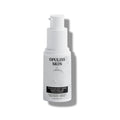
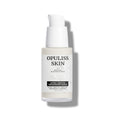
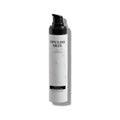
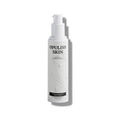
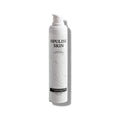
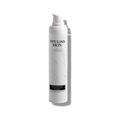
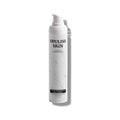
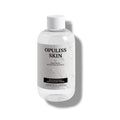
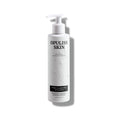
The RHODOPHYCEAE HYDRATION MOISTURISER is a 50 ml daily moisturiser built on hydrolysed red algae extract, wild mango kernel butter and multi-weight hyaluronic acid, over an aloe leaf juice base with a jojoba seed oil layer. It has no added fragrance, and is 100 percent natural origin and vegan eligible.
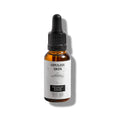
The CERAMIDE BARRIER NIGHT CREAM is a 50 ml overnight moisturiser built on a natural ceramide complex with Sodium Hyaluronate and Tocopherol, in a base of cocoa butter, jojoba seed oil and sunflower seed oil. It is 99 percent natural origin and vegan eligible.
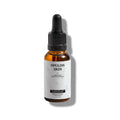
The HYALURONIC PREBIOTIC HYDRATING GEL is a 30 ml light gel built on multi-weight hyaluronic acid and a prebiotic sugar complex on an aloe leaf juice base. It is the humectant step, so use it under a cream. It is 99 percent natural origin and vegan eligible.
The ingredient library carries entries for the humectants and butters named here.
Frequently Asked Questions
Can using a moisturiser every day make skin drier? +
Some can. In a seven week trial on healthy skin, simplified creams and a lipid-free gel raised the skin's water loss and its reaction to an irritant, while an ordinary cream lowered them. The composition decided which way it went.
Is a heavier, more occlusive cream always better for the barrier? +
Not necessarily. A trial found the differences between creams could not be explained by occlusion alone, and petrolatum itself spreads through the outer layer rather than sitting on top as a seal.
What is the difference between a humectant and an occlusive? +
A humectant draws and holds water in the outer layer of skin. An occlusive slows water leaving it. In one trial, the glycerol in a cream raised hydration while the petrolatum lowered water loss, so the two did different jobs.
How long before I know whether a moisturiser suits my skin? +
Weeks rather than minutes. The barrier changes in the long-term trial were measured after seven weeks, so how skin feels in the first minute says little about how it will fare over a month.
References
- Buraczewska I, Berne B, Lindberg M, et al. Changes in skin barrier function following long-term treatment with moisturizers, a randomized controlled trial. Br J Dermatol. 2007, 156(3):492-8. PubMed PMID 17300239 (Buraczewska 2007).
- Buraczewska I, Broström U, Lodén M. Artificial reduction in transepidermal water loss improves skin barrier function. Br J Dermatol. 2007, 157(1):82-6. PubMed PMID 17553058 (Buraczewska 2007).
- Ghadially R, Halkier-Sorensen L, Elias PM. Effects of petrolatum on stratum corneum structure and function. J Am Acad Dermatol. 1992, 26(3 Pt 2):387-96. PubMed PMID 1564142 (Ghadially 1992).
- Lynde CW. Moisturizers: what they are and how they work. Skin Therapy Lett. 2001, 6(13):3-5. PubMed PMID 11813097 (Lynde 2001).
- Vaillant L, Georgescou G, Rivollier C, et al. Combined effects of glycerol and petrolatum in an emollient cream: A randomized, double-blind, crossover study in healthy volunteers with dry skin. J Cosmet Dermatol. 2020, 19(6):1399-1403. DOI 10.1111/jocd.13163. PubMed PMID 31532576 (Vaillant 2020).
- Fluhr JW, Darlenski R, Surber C. Glycerol and the skin: holistic approach to its origin and functions. Br J Dermatol. 2008, 159(1):23-34. DOI 10.1111/j.1365-2133.2008.08643.x. PubMed PMID 18510666 (Fluhr 2008).