Hyaluronic Acid in Dry Air: What the Evidence Does and Does Not Show
Hyaluronic acid is often said to dry skin out in dry air. The human trials we found measured hydration rising instead, including one in a room at 30 percent humidity. What dry air does to skin, where the worry comes from, how molecular weight changes the picture, and the order that suits dry air.
Does hyaluronic acid work in a dry climate, or does it dry skin out? On the evidence, it hydrates. In a room at 30 percent humidity, a fluid carrying hyaluronic acid, glycerin and a Centella asiatica extract raised skin hydration for a full day.1 No human trial we found measured drier skin after it. Humectant first, then cream.
What does dry air do to skin?

Dry air works on skin within hours.2 In one study, healthy skin on the forearm and the cheek was kept in low humidity for three or six hours. The water content of the outer layer fell at both sites, and replicas of the skin surface showed a rougher texture.2 The authors linked that rougher pattern to the fine lines that come with a lack of water in the outer layer.2
The same study found something less expected. The rate of water leaving the skin fell as well.2 A review of humidity research reports the same mixed picture. In human studies, low humidity came with a lower rate of water loss, changes in the water content of the outer layer, lower elasticity and a rougher surface. Some evidence even suggests barrier function can improve in low humidity, and the review calls the literature inconclusive.3
So dry air lowers the water held in the outer layer of bare skin. Does hyaluronic acid make that better or worse?
How does hyaluronic acid hold water?

Hyaluronic acid is a long sugar chain that skin makes itself. In skincare it is a humectant, an ingredient that attracts and holds water. On a label it usually appears as Sodium Hyaluronate, its salt form, or as Hydrolyzed Hyaluronic Acid, the same molecule cut into shorter chains.
A 2023 review of how moisturisers work describes three classes. Occlusives cover the surface of the outer layer, humectants draw water from the dermis into the epidermis, and emollients settle into the outer layer itself.4 Hyaluronic acid and glycerin are humectants. Plant butters and oils are emollients. A rich cream built on them also sits on the surface, which is the covering step, and that last mapping is reasoning rather than a line from the review's abstract.
Hyaluronic acid also comes in different molecular weights, and weight decides where it goes. In a laboratory study that imaged skin samples with Raman spectroscopy, low weight forms passed through the stratum corneum, the outermost layer, while high weight forms did not get into it.5 So a high weight form stays on the surface, and a low weight form moves into the outer layer. The abstract makes no claim about the dermis, the layer beneath.
Where does the drying out idea come from?

It comes from the humectant half of that description. If a humectant draws water up from deeper skin, and the air above holds very little, the water might keep going, out into the room. Opuliss has stated it that way itself, on an earlier hyaluronic acid page, with no study behind it. This page is the sourced answer. We found no study on people that measured it happening with hyaluronic acid.
The nearest result comes from a laboratory. Living human skin samples had one of three kinds of hyaluronic acid applied daily for nine days. A high weight form lowered the rate of water loss by 15.6 percent, and a crosslinked form lowered it by 27.8 percent. The low weight form raised it by 55.5 percent.6
That is the one reading we found where hyaluronic acid raised water loss. It was a laboratory reading, not a face in dry air, and it concerns the low weight form, not hyaluronic acid as a whole.
What the evidence shows and does not

What it shows: three trials on people measured hyaluronic acid formulas raising skin hydration, and none measured them lowering it.
The closest to dry air is the opening trial. A fluid carrying 1 percent hyaluronic acid, 5 percent glycerin and a Centella asiatica extract was applied once to the forearm, in a room held at 23 degrees and 30 percent relative humidity. Hydration rose 59 percent above baseline after one hour, 48 percent after eight hours and 29 percent after 24 hours. At 24 hours the rate of water loss was lower than on untreated skin.1
In a second trial, creams carrying 0.1 percent hyaluronic acid in five molecular weights were applied twice daily around one eye for 60 days, with a plain cream around the other. Every weight raised hydration and elasticity readings against the plain cream, and the two lightest forms also measured shallower fine lines on skin replicas.7
In a third, older adults aged 60 to 80 with dry skin on the legs used three lotions on three sites for four weeks: low weight hyaluronic acid, high weight hyaluronic acid, and the same lotion without it. The low weight lotion gave the highest hydration reading, and the rate of water loss did not differ between the three.8 The rise in water loss seen in the laboratory samples did not appear on people here.
What it does not show. Only the first trial was run in controlled dry air, and it tested hyaluronic acid with glycerin and a Centella asiatica extract, for one day, with funding from the fluid's maker. The other two abstracts do not report the humidity of the room. We found no study that tested the same hyaluronic acid on people, with and without a cream on top, in dry air. So sealing it in is reasoning, not a measured result.
None of this is a promise about a bottle.
What order suits dry air?
The review's abstract describes what each class does and states no order.4 A humectant brings water into the outer layer, and an occlusive layer covers the surface above it,4 so the order is reasoning from that, not a finding. Opuliss already sets the steps out on the Opuliss hyaluronic routine: essence, gel or serum, then cream. What that page does not say is that neither the damp skin step nor the cream on top has been measured in dry air.
The Opuliss products for each step

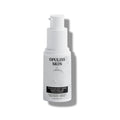
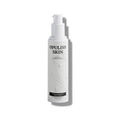
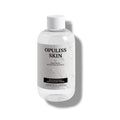
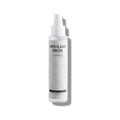
The ROSA DAMASCENA HYDRATION ESSENCE is the water step. It is a 200 ml essence on steam-distilled rose flower water, carrying three humectants: Glycerin, Sodium PCA and Sodium Hyaluronate. The formula is 99 percent natural origin, 7 percent organic origin and vegan, with no added parfum listed.
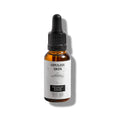
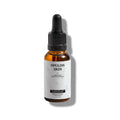
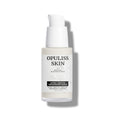
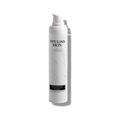
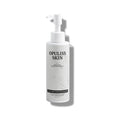
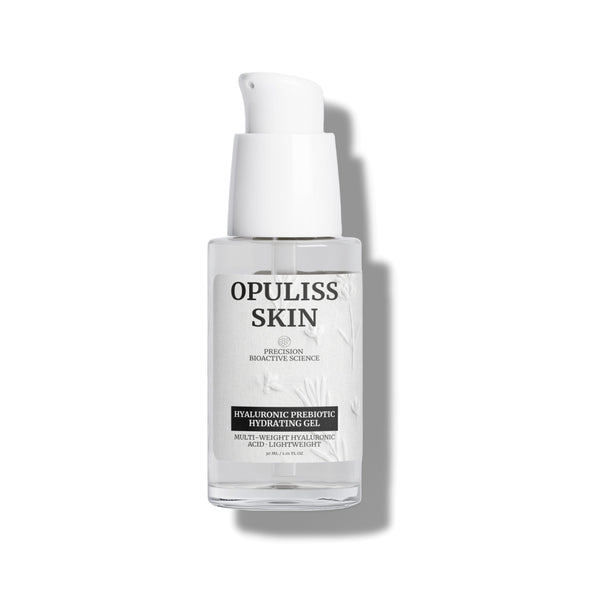
The HYALURONIC PREBIOTIC HYDRATING GEL is the hyaluronic acid step. It is a 30 ml aqueous gel on an aloe leaf juice base, built on multi-weight hyaluronic acid: Sodium Hyaluronate and Hydrolyzed Hyaluronic Acid. A prebiotic sugar complex and white tea leaf extract sit alongside. It is 99 percent natural origin, 11 percent organic origin and vegan eligible, and its full ingredient list includes fragrance.
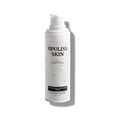
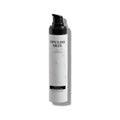
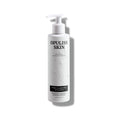
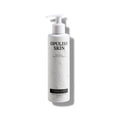
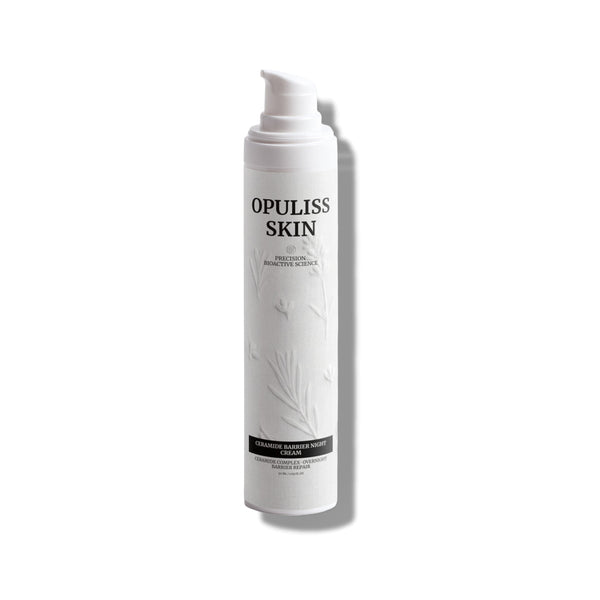
For the covering step there are two creams. The CERAMIDE BARRIER NIGHT CREAM is a 50 ml evening cream that pairs a natural ceramide complex of glycosphingolipids and glycolipids with Sodium Hyaluronate, in a base of organic cocoa butter, jojoba seed oil and sunflower seed oil. It is 99 percent natural origin, 27 percent organic origin and vegan eligible, and its full ingredient list includes parfum, linalool and limonene.
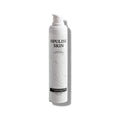
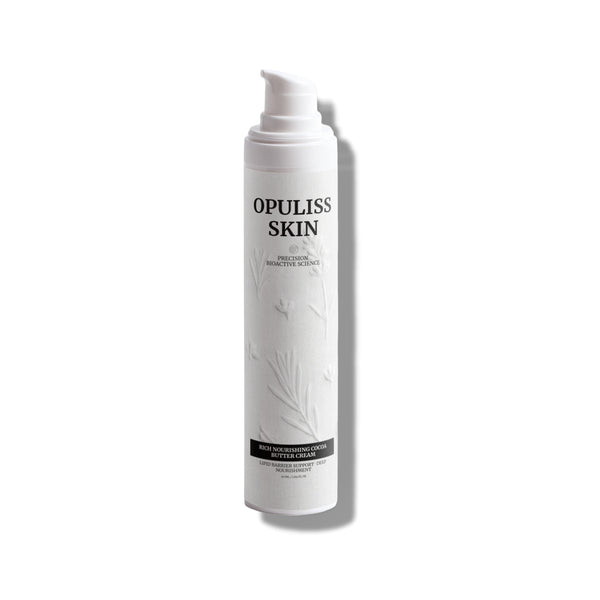
The RICH NOURISHING COCOA BUTTER CREAM is a 50 ml cream led by cocoa seed butter, with argan kernel oil, olive oil unsaponifiables and cloudberry fruit extract. It carries no hyaluronic acid of its own and has no added fragrance. It is 99 percent natural origin, 20 percent organic origin and vegan eligible.
The multi-weight hyaluronic acid glossary entry and the ceramide complex glossary entry explain each ingredient, the glycerin article covers the other humectant in these formulas, and the moisturiser finder matches a cream to your skin type.
Frequently Asked Questions
Can hyaluronic acid pull water out of your skin? +
The idea is that a humectant draws water up from deeper skin and loses it to dry air. We found no study on people that measured this. The human trials described above measured hydration rising, including one run in a room at 30 percent humidity, which tested hyaluronic acid together with glycerin and a Centella asiatica extract.
Which molecular weight of hyaluronic acid is better in dry air? +
No trial we found compared weights in dry air. In one trial on older adults, a low weight form gave a higher hydration reading than a high weight form, with no difference in water loss. In one laboratory study on skin samples, a low weight form raised water loss. A multi-weight formula carries both.
Should hyaluronic acid go on damp skin? +
It is common advice, and the Opuliss hyaluronic routine recommends it. It follows from the idea that a humectant needs water to hold. We found no trial that compared damp and dry skin, so count it as a sensible habit rather than a measured result.
Do I still need a cream over hyaluronic acid in dry air? +
The one dry room trial above applied its fluid with no cream over it, and still measured lower water loss than untreated skin at 24 hours. The case for a cream on top is reasoning from how humectants and occlusives work together, and dry air is where that reasoning matters most.
How quickly does dry air affect skin? +
In one study, the water content of the outer layer of healthy skin fell within three hours in low humidity, and the surface texture measured rougher after the exposure.
References
- Milani M, Sparavigna A. The 24-hour skin hydration and barrier function effects of a hyaluronic 1%, glycerin 5%, and Centella asiatica stem cells extract moisturizing fluid: an intra-subject, randomized, assessor-blinded study. Clin Cosmet Investig Dermatol. 2017, 10:311-315. DOI 10.2147/CCID.S144180. PubMed PMID 28860834 (Milani 2017).
- Egawa M, Oguri M, Kuwahara T, Takahashi M. Effect of exposure of human skin to a dry environment. Skin Res Technol. 2002, 8(4):212-218. DOI 10.1034/j.1600-0846.2002.00351.x. PubMed PMID 12423539 (Egawa 2002).
- Goad N, Gawkrodger DJ. Ambient humidity and the skin: the impact of air humidity in healthy and diseased states. J Eur Acad Dermatol Venereol. 2016, 30(8):1285-1294. DOI 10.1111/jdv.13707. PubMed PMID 27306376 (Goad 2016).
- Rajkumar J, Chandan N, Lio P, Shi V. The Skin Barrier and Moisturization: Function, Disruption, and Mechanisms of Repair. Skin Pharmacol Physiol. 2023, 36(4):174-185. DOI 10.1159/000534136. PubMed PMID 37717558 (Rajkumar 2023).
- Essendoubi M, Gobinet C, Reynaud R, et al. Human skin penetration of hyaluronic acid of different molecular weights as probed by Raman spectroscopy. Skin Res Technol. 2016, 22(1):55-62. DOI 10.1111/srt.12228. PubMed PMID 25877232 (Essendoubi 2016).
- Sundaram H, Mackiewicz N, Burton E, et al. Pilot Comparative Study of the Topical Action of a Novel, Crosslinked Resilient Hyaluronic Acid on Skin Hydration and Barrier Function in a Dynamic, Three-Dimensional Human Explant Model. J Drugs Dermatol. 2016, 15(4):434-441. PubMed PMID 27050698 (Sundaram 2016).
- Pavicic T, Gauglitz GG, Lersch P, et al. Efficacy of cream-based novel formulations of hyaluronic acid of different molecular weights in anti-wrinkle treatment. J Drugs Dermatol. 2011, 10(9):990-1000. PubMed PMID 22052267 (Pavicic 2011).
- Muhammad P, Novianto E, Setyorini M, et al. Effectiveness of topical hyaluronic acid of different molecular weights in xerosis cutis treatment in elderly: a double-blind, randomized controlled trial. Arch Dermatol Res. 2024, 316(6):329. DOI 10.1007/s00403-024-03003-2. PubMed PMID 38829483 (Muhammad 2024).
Shop the article
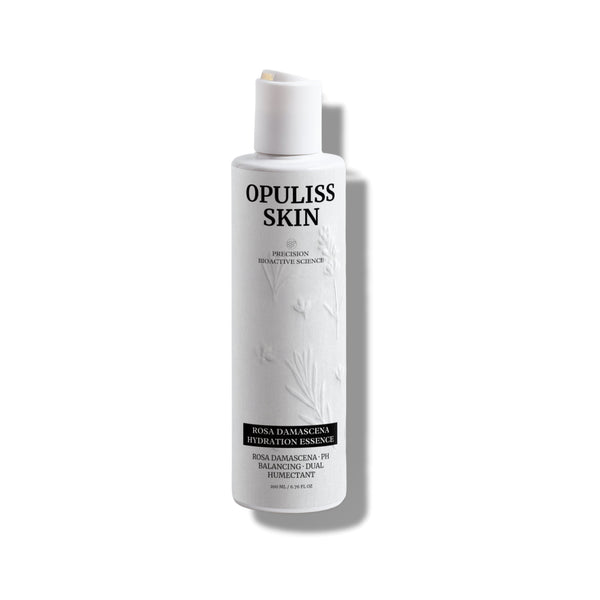
 ROSA DAMASCENA HYDRATION ESSENCEHydrates and balances with damask rose essence.$180.00
 HYALURONIC PREBIOTIC HYDRATING GELHydrates lightly with multi-weight hyaluronic acid.$169.00
 CERAMIDE BARRIER NIGHT CREAMStrengthens the barrier overnight with ceramides.$281.00
 RICH NOURISHING COCOA BUTTER CREAMDeeply nourishes dry skin with cocoa butter.$281.00