The Scent of Lavender: What the Inhalation Studies Actually Measured

In short studies, people who smelled lavender oil rated themselves more relaxed and fresher than those who smelled a plain oil, and a lavender scented cleansing gel briefly lifted mood. What the scent is made of, why linalool appears on labels, and the Opuliss Skin products that carry lavender.
Does the scent of lavender change how you feel? In short studies, it did. People who smelled lavender oil rated themselves more relaxed and fresher than people who smelled a plain oil, and a lavender scented cleansing gel briefly lifted mood. The effects were measured over minutes, in a laboratory, and say nothing about health.
Lavender is one of the oldest scents in personal care, and a great deal is claimed for it. This page keeps to what was measured: what the scent is made of, what happened when people smelled it, and why the same molecules appear by name on ingredient labels. Our separate article on what lavender actually does in skincare covers its place in a skincare formula.
What lavender scent actually is
The scent of lavender comes from its essential oil, a mixture of small aroma molecules. An analysis of lavender oils, from a cultivated crop and from commercial products, found that every sample was dominated by two molecules, linalool at 20 to 45 percent and linalyl acetate at about 21 to 40 percent, the pair the European Pharmacopoeia describes for lavender oil. One commercial sample carried less linalyl acetate than the Pharmacopoeia recommends.3
Lavender flower water is a different material. It is the water collected from distilling the flowers, and it carries some of the same molecules. A study of the aromatic waters of lavandin, a close lavender hybrid, found linalool, linalyl acetate, camphor and related compounds among their main components.4 So a flower water and an essential oil smell alike for a reason, but they are not the same ingredient on a label.
How it works
A scent works through smell, not through the skin. In one study, healthy volunteers inhaled lavender oil or sweet almond oil, a plain base oil, while researchers recorded their brain activity and physical signs of arousal and asked them to rate their mood. After lavender, the physical signs of arousal fell. The volunteers rated themselves as more active, fresher and more relaxed than those who inhaled the plain oil, and their brain recordings showed more power in the theta and alpha wave bands. The authors read the whole pattern as a relaxing effect.1
A second study used a finished cosmetic. Healthy adults smelled a cleansing gel with a lavender floral blend, developed to be relaxing. The scent had a short-lived effect of improving mood and making people feel more relaxed, and they completed simple sums faster. The authors noted that the pattern matched the relaxation seen with other sensory experiences, such as massage and music.2
What the evidence shows and does not
What it shows: smelling lavender oil, or a cleansing gel scented with a lavender blend, was followed in the short term by lower readings of physical arousal and by people rating themselves as more relaxed.12 Lavender oil is built mainly from linalool, linalyl acetate and related molecules.3
What it does not show: both studies were small, short and conducted in a laboratory, and one compared lavender only against a plain base oil. They measured how people felt over minutes, not over weeks, and they did not study any health condition. A scent that relaxes one person can be unwelcome to another. None of this is a promise about a bottle. It is a description of what a scent was measured to do.
There is also a caution that belongs beside the scent. On long exposure to air, linalool can form hydroperoxides that can sensitise skin, and reactions to them are reported in patch testing. A study that analysed fine fragrances and deodorants, including aged products returned by consumers, found very low levels, probably carried in from raw materials, with no sign that they formed during storage, and at levels far below those that sensitised skin in animal tests. The authors concluded that a link between hydroperoxides forming in cosmetics and those patch test reactions had not been shown.5 It is one reason a patch test before first use is sensible. Our guide to reading the fragrance line on a label explains what those names mean.
The Opuliss products that use it
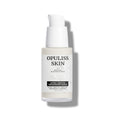
Both are Opuliss Skin products. Each page lists the full ingredients and advises a patch test before first use.
The SALICYLIC CLARITY TONER is a 200 ml leave-on toner whose third ingredient is organic lavender flower water, alongside sweet flag root extract, cucumber fruit extract and a prebiotic sugar complex on a glycerin and betaine base. It is 99 percent natural origin and vegan eligible.
The REPAIR HAND CREAM SANDALWOOD is a 270 ml hand cream whose scent includes lavender essential oil among cedarwood and patchouli, and whose page names linalool and linalyl acetate among the fragrance compounds it declares. It is 99 percent natural origin and vegan eligible.
The ingredient library carries entries for the botanicals in both formulas.
Frequently Asked Questions
Does lavender scent really help you relax? +
In short laboratory studies, people who smelled lavender oil or a lavender scented gel rated themselves as more relaxed, and physical signs of arousal fell. The effect was measured over minutes, and a scent that suits one person may not suit another.
Why does linalool appear on labels of lavender products? +
It is one of the two main molecules in lavender oil, and it is among the fragrance compounds that labels name individually. On long exposure to air it can also form compounds that sensitise skin.
Is lavender flower water the same as lavender oil? +
No. The flower water is collected when the flowers are distilled and carries some of the same aroma molecules. It appears on labels as Lavandula Angustifolia Flower Water, a different ingredient from the essential oil.
Should I patch test a lavender scented product? +
Yes. Test it on the inner forearm for 24 hours before first use, which is the advice on each Opuliss product page linked above.
References
- Sayorwan W, Siripornpanich V, Piriyapunyaporn T, et al. The effects of lavender oil inhalation on emotional states, autonomic nervous system, and brain electrical activity. J Med Assoc Thai. 2012, 95(4):598-606. PubMed PMID 22612017 (Sayorwan 2012).
- Field T, Diego M, Hernandez-Reif M, et al. Lavender fragrance cleansing gel effects on relaxation. Int J Neurosci. 2005, 115(2):207-22. PubMed PMID 15764002 (Field 2005).
- Todorova V, Ivanov K, Georgieva Y, et al. Comparison between the Chemical Composition of Essential Oil from Commercial Products and Biocultivated Lavandula angustifolia Mill. Int J Anal Chem. 2023, 2023:1997157. DOI 10.1155/2023/1997157. PubMed PMID 36684478 (Todorova 2023).
- Politi M, Menghini L, Conti B, et al. Reconsidering Hydrosols as Main Products of Aromatic Plants Manufactory: The Lavandin (Lavandula intermedia) Case Study in Tuscany. Molecules. 2020, 25(9). DOI 10.3390/molecules25092225. PubMed PMID 32397385 (Politi 2020).
- Kern S, Dkhil H, Hendarsa P, et al. Detection of potentially skin sensitizing hydroperoxides of linalool in fragranced products. Anal Bioanal Chem. 2014, 406(25):6165-78. DOI 10.1007/s00216-014-8066-3. PubMed PMID 25138721 (Kern 2014).