What Peptides Really Do in Skincare
What do peptides actually do in skincare? Peptides are short chains of amino acids that act as messengers in the skin. The one Opuliss builds on, Hexapeptide-11, has published research behind it for the look of firmness and elasticity, not a promise to force your skin to make collagen. Here is what the evidence shows, and where it begins and ends.
Peptides are one of the most talked about categories in modern skincare, and one of the most over claimed. At Opuliss, we use a specific, studied peptide and describe it for exactly what the research supports. What we will not do is tell you a cream reprograms your cells.
What are peptides, actually?
A peptide is a short chain of amino acids, the same building blocks that make up the proteins in skin. Some peptides act as signals. Applied to the skin, they are studied as messengers that support the skin's own renewal processes. Our hero is Hexapeptide-11 (trade name Peptamide 6), a yeast-derived signal peptide.
One honest clarification. Not every ingredient with "peptide" on the label is a peptide. Dipalmitoyl Hydroxyproline, a common companion ingredient, is a single amino acid joined to two fatty acids, so we describe it as the skin-conditioning lipid it is, not as a peptide active.
What does the research honestly show?
Hexapeptide-11 has been studied in published, peer-reviewed research. In laboratory work on human skin cells, it reduced markers of cellular senescence, the tiredness skin cells accumulate over time, with no measurable toxicity to normal skin cells.1 That same study included a test on human volunteers, where it improved skin elasticity.1
A later laboratory study reported similar protective, senescence-modulating behavior in skin and dermal cells.2 Read together, the evidence supports positioning Hexapeptide-11 for the visible look of firmness and elasticity. It is a signal peptide, so it works with the skin's own processes. It does not force collagen production, and we do not claim it does.
What is the honest caveat?
Most of this evidence is laboratory work, anchored by one human elasticity reading. That is a reasonable, honest basis for an appearance claim, and it is not the same as a large clinical trial, so we say supported by published research rather than clinically proven. Hexapeptide-11 is well tolerated, but our serum contains naturally occurring fragrance compounds, so fragrance-sensitive skin should patch test first.
How does Hexapeptide-11 fit into your Opuliss ritual?
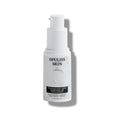
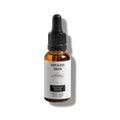
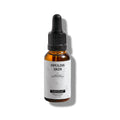
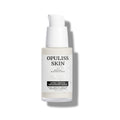
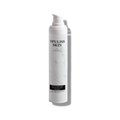
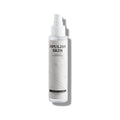
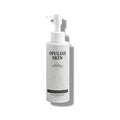
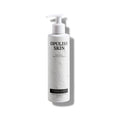
We built the Hexapeptide Firming Serum around this peptide, for the visible look of firmness and smoother, more elastic-looking skin over time. Apply a few drops to clean skin morning or evening, before heavier creams and oils. Layer with broad-spectrum SPF 30 or higher during the day.
Frequently Asked Questions
Do peptides boost collagen production? +
We do not make that claim. Forcing collagen production is a drug-level claim, and it is not what the published research on Hexapeptide-11 tested. The studies support the appearance of firmness and elasticity, so that is the language we use.
Is Hexapeptide-11 a "Botox in a bottle" peptide? +
No. Hexapeptide-11 is a signal peptide studied for skin-cell renewal markers and elasticity. It does not work like a muscle relaxer, and we avoid that comparison because it is not what the science shows.
Are peptides safe for sensitive skin? +
Peptides are generally well tolerated. Sensitivity is more likely to come from other parts of a formula, such as fragrance, so patch test a new product on the inner forearm first if your skin runs reactive.
References
- Sklirou AD, Ralli M, Dominguez M, Papassideri I, Skaltsounis AL, Trougakos IP. Hexapeptide-11 is a novel modulator of the proteostasis network in human diploid fibroblasts. Redox Biol. 2015;5:205-215. DOI 10.1016/j.redox.2015.04.010. PubMed PMID 25974626.
- Gruber JV, Ludwig P, Holtz R. Modulation of cellular senescence in fibroblasts and dermal papillae cells in vitro. J Cosmet Sci. 2013;64(2):79-87. PubMed PMID 23578831.
Citations verified against PubMed on 18 July 2026.
Welcome to The World of Opuliss
The Science of Skincare
Want More Skincare Science?
Join the Opuliss Beauty global community for expert insights, ingredient deep dives, and exclusive offers delivered straight to your inbox.
By subscribing, you'll be tagged as a newsletter subscriber and join our community of skincare enthusiasts.