Plant-Based Retinol Alternatives: Bakuchiol and BioRetinol
Discover how Retinol rebuilds collagen networks, accelerates cellular turnover, and restores skin's structural integrity. Learn the molecular science behind this gold standard anti-aging ingredient and explore Opuliss Beauty's precision formulated Retinol treatments for nightly renewal.
Does Opuliss use retinol? No. Opuliss Skin uses zero pure retinol. Instead we build on two plant-based retinol alternatives, bakuchiol and BioRetinol (from Bidens pilosa), that are studied for retinol-style visible results with far better tolerance and, unlike retinol, are stable in daylight. Here is the honest case for choosing the alternative.
Retinol earned its reputation. It is one of the most studied ingredients in skincare. It also stings, flakes, and breaks down in light, which is why it is sold as a night product. At Opuliss, we went a different way, and we can show our work.
Why a retinol alternative, and not retinol?
Two honest problems with retinol drove the choice. It commonly irritates, with visible scaling and stinging, and it degrades in sunlight, so it has to stay a night-only step. The plant-based alternatives we use are photostable and gentle enough for daytime, which is the opposite of retinol's main limitation.
How does bakuchiol test head to head against retinol?
Bakuchiol is the most rigorously studied retinol alternative. In a randomized, double-blind, 12-week trial, bakuchiol was compared directly against retinol on facial photoageing.1 Both significantly reduced the look of wrinkles and hyperpigmentation, with no statistical difference between them, and the retinol users reported more facial scaling and stinging.1
"Bakuchiol is comparable with retinol in its ability to improve photoageing and is better tolerated than retinol."1
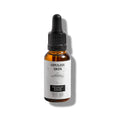
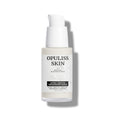
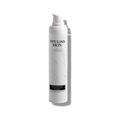
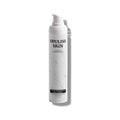
This is why we built the Bakuchiol Renewal Oil around bakuchiol, for the visible look of smoother, more even skin without retinol's irritation.
What is BioRetinol, the gentle daily-use approach?
Our second route is BioRetinol, an extract of Bidens pilosa. In laboratory and skin-tissue research, it engaged the same skin-renewal pathway that retinol works through, without retinol's chemical structure.2 That makes it our gentle, daily-use alternative.
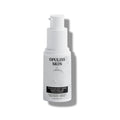
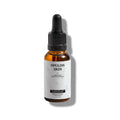
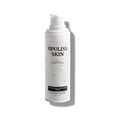
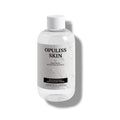
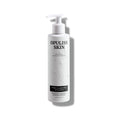
BioRetinol anchors three formulas: the BioRetinol Serum, the BioRetinol Daily Cream, and the BioRetinol Eye Serum. Because Bidens is a member of the daisy (Asteraceae) family, patch test first if you have a known daisy or ragweed allergy.
What is the honest caveat?
We describe these as retinol alternatives, not as retinol, and not as "more effective than retinol." The bakuchiol trial tested a specific concentration on a research formula, so we frame our results as supported by published research rather than clinically proven for our exact formula. Each product carries the evidence for its own active: the bakuchiol trial speaks to the Renewal Oil, the Bidens research speaks to the BioRetinol trio.
Frequently Asked Questions
Is bakuchiol just a natural form of retinol? +
No. Bakuchiol has no chemical resemblance to retinol and does not convert into it. It is a separate plant compound that has been studied as a functional alternative, with its own head-to-head trial against retinol.1
Can I use these in the morning? +
Yes. Unlike retinol, bakuchiol and BioRetinol are stable in light and are formulated for daytime or evening use. We still recommend daily broad-spectrum SPF, as we do with any routine.
Will a retinol alternative work as fast as retinol? +
The bakuchiol trial found comparable visible results to retinol over 12 weeks, with better tolerance.1 As with any renewal ingredient, consistency over weeks matters more than speed.
References
- Dhaliwal S, Rybak I, Ellis SR, et al. Prospective, randomized, double-blind assessment of topical bakuchiol and retinol for facial photoageing. Br J Dermatol. 2019;180(2):289-296. DOI 10.1111/bjd.16918. PubMed PMID 29947134.
- Dieamant G, Pereda MDCV, Nogueira C, et al. Antiageing mechanisms of a standardized supercritical CO2 preparation of black jack (Bidens pilosa L.) in human fibroblasts and skin fragments. Evid Based Complement Alternat Med. 2015;2015:280529. DOI 10.1155/2015/280529. PubMed PMID 25883669.
Citations verified against PubMed on 18 July 2026.
Welcome to The World of Opuliss
The Science of Skincare
Want More Skincare Science?
Join the Opuliss Beauty global community for expert insights, ingredient deep dives, and exclusive offers delivered straight to your inbox.
By subscribing, you'll be tagged as a newsletter subscriber and join our community of skincare enthusiasts.