Rosehip Oil: A Clear Look at 'Nature's Retinol'
What rosehip oil actually does for skin: a fatty-acid-rich conditioning oil that softens and smooths, the antioxidant compounds it naturally carries, and why it is not a natural retinol.
What does rosehip oil actually do for skin? Rosehip (Rosa canina) fruit oil is a cold-pressed plant oil that softens and conditions the skin. It is rich in essential fatty acids and naturally contains antioxidant compounds. What it is not, despite a popular myth, is a natural form of retinol. Here is the honest account, and the one claim we refuse to make.
Rosehip oil is a genuinely lovely emollient with a genuinely overstated reputation. At Opuliss, we use it as a conditioning oil and describe it as exactly that, no more.
What is rosehip oil, actually?
Rosehip oil is pressed from the seeds of Rosa canina, the wild dog rose. It is one of the richest common plant oils in essential fatty acids, with high levels of linoleic and alpha-linolenic acid.1 On the skin, a fatty-acid-rich oil like this sits at the surface, softening and smoothing and helping slow water loss. That is its real, honest job: a skin-conditioning emollient.
What antioxidant compounds does it carry?
Cold-pressed rosehip oil naturally contains antioxidant compounds, including tocopherols (the vitamin E family) and carotenoids.2,3 In laboratory testing, the oil itself showed measurable free-radical-scavenging capacity.2 We describe these as antioxidant compounds the oil contains, an ingredient-level property, rather than a promise that a facial oil defends your skin from aging.
Is rosehip oil really nature's retinol?
Rosehip is often sold as a natural retinol or a source of trans-retinoic acid. We do not make that claim, because it does not hold up. The original trans-retinoic acid finding was measured in a different rose species, at a level roughly a thousand times below an active topical retinoid, and the safety literature on Rosa canina makes no mention of retinoid activity at all. Rosehip is a conditioning oil, not a retinoid, and calling it one would be dishonest.
What is the honest caveat?
Rosehip oil is well tolerated by most skin as an emollient. It is not a treatment for scars, wrinkles, or any skin condition, and it is not a sunscreen. If your skin runs reactive or fragrance-sensitive, patch test on the inner forearm first.
How does rosehip oil fit into your ritual?
We use rosehip as a supporting conditioning oil, for the look and feel of soft, comfortable, healthy-looking skin. It layers well as a final nourishing step in the evening, over your treatment serums and moisturizer. Let your targeted, cited actives carry the corrective work, and let rosehip do the conditioning.
Frequently Asked Questions
Is rosehip oil a natural retinol? +
No. That claim traces to a study on a different rose species, at a level far too low to act like a retinoid, and it is not supported for Rosa canina. Rosehip is a fatty-acid-rich conditioning oil, and we describe it that way.
Does rosehip oil fade scars or wrinkles? +
We do not claim it treats scars or wrinkles. Its honest role is to soften, smooth, and condition, for skin that looks and feels comfortable and healthy.
Can I use rosehip oil in the daytime? +
Yes, as a conditioning oil it can be used morning or evening. It offers no sun protection, so pair any daytime routine with a broad-spectrum SPF.
References
- Szentmihalyi K, Vinkler P, Lakatos B, Illes V, Then M. Rose hip (Rosa canina L.) oil obtained from waste hip seeds by different extraction methods. Bioresour Technol. 2002;82(2):195-201. DOI 10.1016/s0960-8524(01)00161-4. PubMed PMID 12003323.
- Grajzer M, Prescha A, Korzonek K, et al. Characteristics of rose hip (Rosa canina L.) cold-pressed oil and its oxidative stability studied by the differential scanning calorimetry method. Food Chem. 2015;188:459-466. DOI 10.1016/j.foodchem.2015.05.034. PubMed PMID 26041218.
- Fromm M, Bayha S, Kammerer DR, Carle R. Identification and quantitation of carotenoids and tocopherols in seed oils recovered from different Rosaceae species. J Agric Food Chem. 2012;60(43):10733-10742. DOI 10.1021/jf3028446. PubMed PMID 23020156.
Citations verified against PubMed on 18 July 2026.
Welcome to The World of Opuliss
The Science of Skincare
Want More Skincare Science?
Join the Opuliss Beauty global community for expert insights, ingredient deep dives, and exclusive offers delivered straight to your inbox.
By subscribing, you'll be tagged as a newsletter subscriber and join our community of skincare enthusiasts.
Shop the article


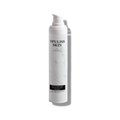
 CELLULAR ANTI-AGING BAKUCHIOL RENEWAL OILSmooths and evens tone with gentle bakuchiol.$295.00
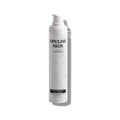
 THE RADIANCE BODY OILNourishes and adds luminous glow with rosehip and argan.$110.00
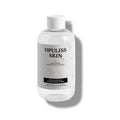
 HYDRATING BODY SERUM SANDALWOODHydrates body skin with hyaluronic acid.$240.00
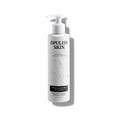
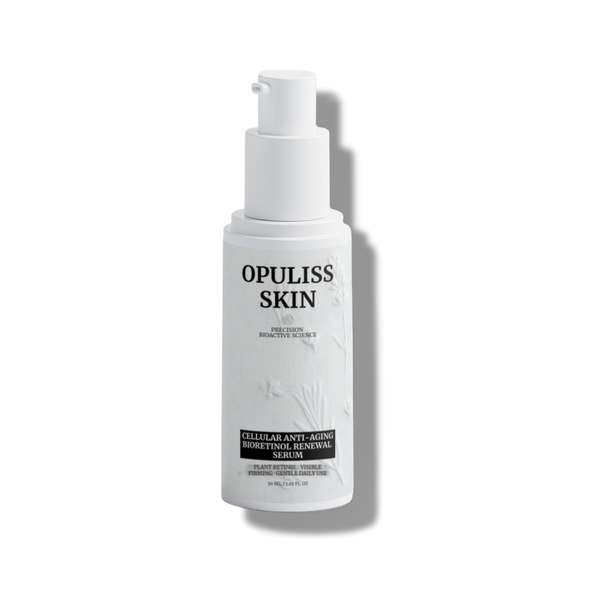
 CELLULAR ANTI-AGING BIORETINOL SERUMBuilt on Bidens Pilosa, a plant alternative to retinol.$325.00