Why Skin Feels Drier in Winter, and Where It Shows

In winter the outer layer of skin holds less water, loses more of it, and carries fewer of the lipids and natural moisturising compounds that help it hold water. What studies measured between winter and summer, why the lips need their own step, and the Opuliss Skin body products for the season.
Why does skin feel drier in winter? Because the outer layer of skin measurably changes with the season. In winter it holds less water, loses more of it, and carries fewer of the lipids and natural moisturising compounds that help it hold water. The lips, which lose water far faster than the cheek, need a step of their own.
Winter dryness is usually put down to cold air alone. The measurements tell a fuller story, in which the skin itself arrives at winter with less of what it uses to hold water. This page sets out what was measured, where it shows, and what a winter body routine can sensibly do about it.
What winter measurably changes in skin
The clearest comparison measured the skin on women's lower legs in winter and then again in the same women in summer. In summer the skin lost less water and looked less dry, and it held more water. It also carried more pyrrolidone carboxylic acid, one of the skin's own moisturising compounds, and more ceramides, fatty acids and cholesterol, the lipids that fill the gaps between skin cells. Less protein came away on sticky tape in summer, which the authors read as better cohesion of the outer layer.1
An older study reached the same place from a different direction. It measured the lipids in the outer layer of skin at three body sites across the year and found their levels dramatically depleted in winter compared with spring and summer at every site examined.2
Put together, winter skin is not only meeting drier air. It has fewer of the lipids that slow water loss and less of the compounds that hold water in, at the same time.
Where winter dryness shows
The lower legs are the site the seasonal study measured, and it is where the winter and summer readings differed.1
The lips behave differently from the rest of the face. A study of the red part of the lips, measured in winter, found that lips lost water almost three times as fast as the cheek, and that their surface held only about a third as much water. The surface cells of the lips were larger and incompletely formed, which the authors suggested was responsible for the lips' weaker barrier and poorer hold on water.3 So in winter the lips need their own step.
For the face, our guides to moisturiser for heated and air-conditioned rooms and choosing a texture by climate cover the indoor air and texture side of winter.
What a winter body routine can do
Two kinds of ingredient answer the two things winter takes away. Humectants draw and hold water in the outer layer. Oils and butters sit among the skin's lipids and slow water loss.
Glycerin is a humectant. A review of its work in skin describes it improving the water content of the outer layer, the skin's barrier function and its mechanical properties, and notes that raising the skin's water content with glycerol matters most where skin is made worse by dry and cold conditions, with winter dryness named as the example.4
Hydroxyethyl Urea is a humectant too. It is a relative of urea rather than urea itself, and an expert safety panel that reviewed it lists its functions in cosmetics as a humectant and a hair and skin conditioning agent, and found it safe as used when formulated to be non-irritating.5
- Apply to skin that is still slightly damp. A humectant has water to hold, and an oil or butter can slow its loss.
- Give the lower legs the richest texture. They are where the seasonal study measured the change.
- Give hands their own step. They are washed many times a day, so a hand cream earns its own place.
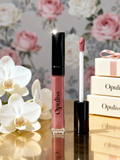
- Reapply a plain balm to the lips. Lips lose water far faster than the cheek.
What the evidence shows and does not
What it shows: in winter the outer layer of skin carries fewer lipids and less of its own moisturising compounds, holds less water and loses more, and the lips lose water far faster than the cheek.123 Glycerin improves the water content of the outer layer.4
What it does not show: the seasonal studies measured particular groups at particular body sites, and the lip study measured one population in winter only. The glycerin review describes the ingredient, not a finished cream, and the safety assessment of Hydroxyethyl Urea is a safety finding, not a measure of how much it moisturises. None of these studies tested the Opuliss products named below. None of this is a promise about a bottle. It is a way of choosing one.
The Opuliss products for winter body care
All three are Opuliss Skin products. Each page lists the full ingredients and advises a patch test before first use.
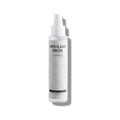
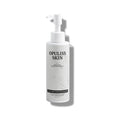
The UREA RENEWAL BODY CREAM is a 280 ml body cream built on 5 percent Hydroxyethyl Urea, 2 percent panthenol and Sodium Hyaluronate, over a base of organic sunflower seed oil and glycerin. It is vegan eligible. It is the rich step for the lower legs.
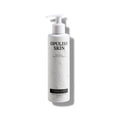
THE RADIANCE BODY OIL is a 145 ml dry-finish oil of sunflower, sweet almond, jojoba, argan, rosehip, raspberry seed and pumpkin seed oils with Tocopherol, for pressing onto damp skin after washing. It is 99 percent natural origin and vegan eligible.
The REPAIR HAND CREAM SANDALWOOD is a 270 ml hand cream with sea buckthorn fruit extract, African mango kernel butter, cloudberry fruit extract and cocoa seed butter over a glycerin and Sodium PCA base. It is 99 percent natural origin and vegan eligible.
The ingredient library carries entries for glycerin, Sodium PCA and the butters named here.
Frequently Asked Questions
Is winter dryness caused by cold air or by the skin itself? +
Both. Seasonal studies found that in winter the skin itself carries fewer of the lipids that slow water loss and less of its own moisturising compounds, so it meets dry air with less to hold water with.
Why do lips dry out faster than the rest of the face? +
A winter study found lips lost water almost three times as fast as the cheek and held about a third as much water at the surface. The authors suggested the incompletely formed surface cells of the lips are the reason.
Is Hydroxyethyl Urea the same as urea? +
No. It is a related molecule listed separately on ingredient labels. An expert safety panel lists its cosmetic functions as a humectant and a skin conditioning agent. A study of plain urea does not automatically describe it.
Should I switch to a richer body cream in winter? +
Often, yes, especially on the lower legs. A cream with a humectant and oils or butters answers both things winter takes away: water held in the skin and the lipids that slow its loss.
References
- Wei KS, Stella C, Wehmeyer KR, et al. Effects of season stratum corneum barrier function and skin biomarkers. J Cosmet Sci. 2016, 67(3):185-203. PubMed PMID 29394019 (Wei 2016).
- Rogers J, Harding C, Mayo A, et al. Stratum corneum lipids: the effect of ageing and the seasons. Arch Dermatol Res. 1996, 288(12):765-70. PubMed PMID 8950457 (Rogers 1996).
- Kobayashi H, Tagami H. Functional properties of the surface of the vermilion border of the lips are distinct from those of the facial skin. Br J Dermatol. 2004, 150(3):563-7. PubMed PMID 15030342 (Kobayashi 2004).
- Fluhr JW, Darlenski R, Surber C. Glycerol and the skin: holistic approach to its origin and functions. Br J Dermatol. 2008, 159(1):23-34. DOI 10.1111/j.1365-2133.2008.08643.x. PubMed PMID 18510666 (Fluhr 2008).
- Akinsulie A, Bergfeld WF, Belsito DV, et al. Safety Assessment of Hydroxyethyl Urea as Used in Cosmetics. Int J Toxicol. 2024, 43(3_suppl):128S-134S. DOI 10.1177/10915818241237791. PubMed PMID 38465394 (Akinsulie 2024).