Sunflower Seed Oil in Skincare: What the Base Oil and Its Vitamin E Do

Sunflower seed oil is a plant oil that, in a four week forearm study, kept the skin's outer layer intact and improved its hydration without causing redness, where olive oil did the opposite. How its fatty acids vary, where vitamin E fits, and the Opuliss Skin products built on it.
What does sunflower seed oil do for skin? In a four week forearm study, it kept the skin's outer layer intact and improved its hydration without causing redness, while olive oil applied the same way weakened that layer. It usually sits in a product's oil base.
Sunflower seed oil rarely gets a page of its own, because it usually sits near the top of an ingredient list doing quiet work rather than starring on the front of the pack. This page explains what it is, what was measured when it was applied to skin, and where vitamin E comes into it.
What sunflower seed oil actually is
Sunflower seed oil is pressed from the seeds of Helianthus annuus and appears on ingredient lists as Helianthus Annuus (Sunflower) Seed Oil. It is a triglyceride oil, and its fatty acids are mainly oleic, linoleic, stearic and palmitic acid.2
The balance between them is not fixed. A study of 287 varieties, about 90 percent of the plant's diversity, grown in eight environments, found that the fatty acid make-up of the oil depends on where the plant is grown, and that high oleic varieties held their make-up more steadily across those environments.2 So the ingredient name tells you the plant and the part used, not the exact fatty acid split in a given bottle.
Across the Opuliss Skin range, sunflower seed oil appears in the full ingredient lists of 21 products, read on 30 September 2026, most often as part of the oil base.
How it works
A plant oil works on the skin's outer layer, where cells sit in a mortar of lipids that slows water loss. Linoleic acid, one of the fatty acids in sunflower seed oil, has a particular link to that mortar. A review of its role in skin describes it being built into the skin's own complex lipids, including a family of ceramides.3
The same review notes that most of the evidence for applied linoleic acid comes from animal and skin cell models rather than from people.3 That is why the forearm study below matters more than the chemistry. It measured what the whole oil did on human skin.
What the evidence shows and does not
What it shows: in randomised forearm studies on adults, six drops of sunflower seed oil applied twice a day for four weeks preserved the integrity of the skin's outer layer, caused no redness and improved hydration. Olive oil applied the same way significantly reduced the integrity of that layer and caused mild redness. The authors concluded that not all natural oils are good for the skin.1 The volunteers included people with and without a history of a skin condition, and the findings were reported across both.1
Vitamin E is part of the picture in a different way. Skin receives a supply of its own. A study measuring vitamin E in the skin found far more of it in the upper layers of facial skin than on the upper arm, a ratio of 20 to 1, and traced it to sebum, which carries vitamin E up to the surface. The authors suggested this may help protect the skin's surface lipids from oxidation.4 In a formula, vitamin E appears as Tocopherol, which an expert safety panel lists as working in cosmetics as an antioxidant or skin conditioning agent, and found safe as used.5
What it does not show: the forearm studies were short, used the oil on its own, and did not test any finished product, including the Opuliss ones below. The fatty acid work describes the oil's variability, not its effect on skin. The vitamin E findings describe the skin's own supply, not a benefit from adding more. Our separate article on vitamin E, the antioxidant that is not a sunscreen covers what topical vitamin E can and cannot do. None of this is a promise about a bottle. It is a description of an ingredient.
The Opuliss products that use it
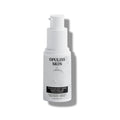
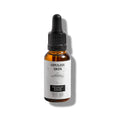
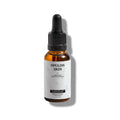
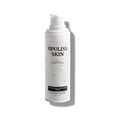
All four are Opuliss Skin products. Each page lists the full ingredients and advises a patch test before first use.
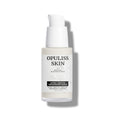
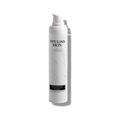
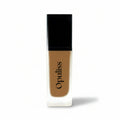
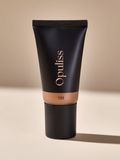
THE RADIANCE BODY OIL is a 145 ml dry-finish body oil led by sunflower seed oil, with sweet almond, jojoba, argan, rosehip, raspberry seed and pumpkin seed oils and Tocopherol as an antioxidant. It is 99 percent natural origin and vegan eligible.
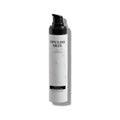
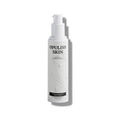
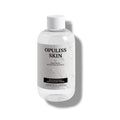
The CHAMOMILE CLEANSING OIL is a 150 ml face cleanser on a base of caprylic and capric triglyceride and sunflower seed oil that turns to a milk with water. It is 100 percent natural origin and vegan.
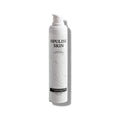
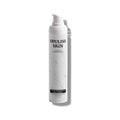
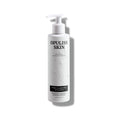
The CERAMIDE BARRIER NIGHT CREAM is a 50 ml overnight moisturiser built on a natural ceramide complex with Sodium Hyaluronate, Tocopherol and Ascorbyl Palmitate, in a base of cocoa butter, jojoba seed oil and sunflower seed oil. The RICH NOURISHING COCOA BUTTER CREAM is a 50 ml rich cream with sunflower seed oil second on its list, led by cocoa seed butter and argan kernel oil, with no added fragrance. Both are 99 percent natural origin and vegan eligible.
The vitamin E entry in our ingredient glossary and the ingredient library carry the details for the other ingredients named here.
Frequently Asked Questions
Is sunflower seed oil better for skin than olive oil? +
In the forearm study that compared them directly, yes. Sunflower seed oil preserved the skin's outer layer and improved hydration, while olive oil applied the same way weakened that layer and caused mild redness.
Is all sunflower seed oil the same? +
No. Its fatty acid make-up depends on the variety and where it was grown, and high oleic varieties exist. The ingredient name does not say which kind a formula uses.
Why is Tocopherol listed separately if skin already has vitamin E? +
Because in a formula it has a job of its own. An expert safety panel lists Tocopherol as working in cosmetics as an antioxidant or skin conditioning agent. The skin's own supply, delivered through sebum, is a separate matter.
Can sunflower seed oil go on the face? +
It sits in face cleansers and creams as well as body oils. The forearm study measured it on the arm, so for the face the product's own patch test advice is the sensible first step.
References
- Danby SG, AlEnezi T, Sultan A, et al. Effect of olive and sunflower seed oil on the adult skin barrier: implications for neonatal skin care. Pediatr Dermatol. 2013, 30(1):42-50. DOI 10.1111/j.1525-1470.2012.01865.x. PubMed PMID 22995032 (Danby 2013).
- Ingold M, Gao Q, Mandel JR, et al. The stability of fatty acid composition in sunflower oil is dependent on environment and affected by structural variation. Theor Appl Genet. 2026, 139(9). DOI 10.1007/s00122-026-05346-y. PubMed PMID 42622697 (Ingold 2026).
- Wang X, Jia Y, He H. The Role of Linoleic Acid in Skin and Hair Health: A Review. Int J Mol Sci. 2024, 26(1). DOI 10.3390/ijms26010246. PubMed PMID 39796110 (Wang 2024).
- Thiele JJ, Weber SU, Packer L. Sebaceous gland secretion is a major physiologic route of vitamin E delivery to skin. J Invest Dermatol. 1999, 113(6):1006-10. PubMed PMID 10594744 (Thiele 1999).
- Fiume MM, Bergfeld WF, Belsito DV, et al. Safety Assessment of Tocopherols and Tocotrienols as Used in Cosmetics. Int J Toxicol. 2018, 37(2_suppl):61S-94S. DOI 10.1177/1091581818794455. PubMed PMID 30235959 (Fiume 2018).